
Shared bedroom, a Space-saving solution

Shared bedroom, a Space-saving solution

Designing a shared children’s bedroom requires careful listening, attention to individual needs and a deep understanding of space. When the room is located in an attic, with varying heights and sloping ceilings, the challenge becomes even more engaging.
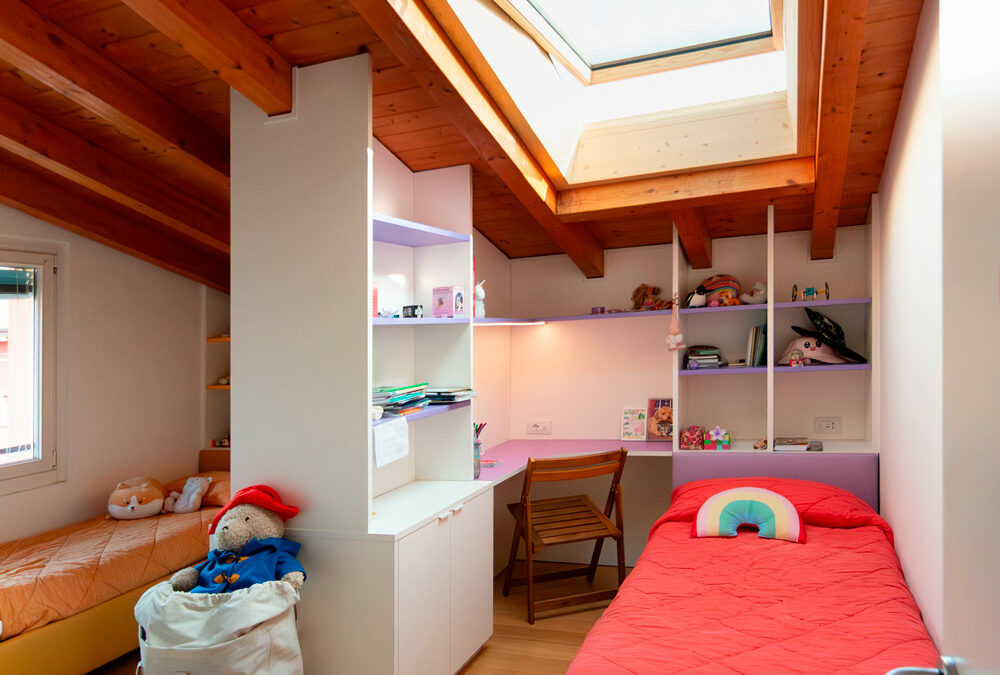
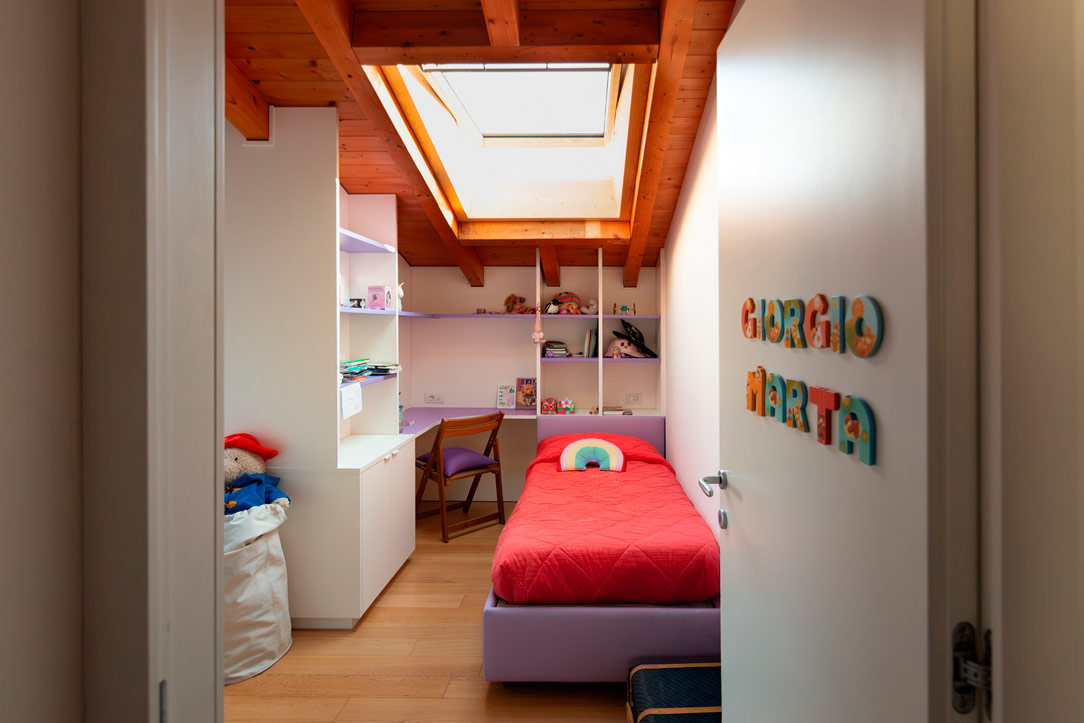
In this project, we transformed a modern yet intimate attic into a functional, bright and perfectly organized space-saving bedroom, designed to welcome two children of different ages and support them in their everyday life.

Shared bedroom

Two distinct areas within one space

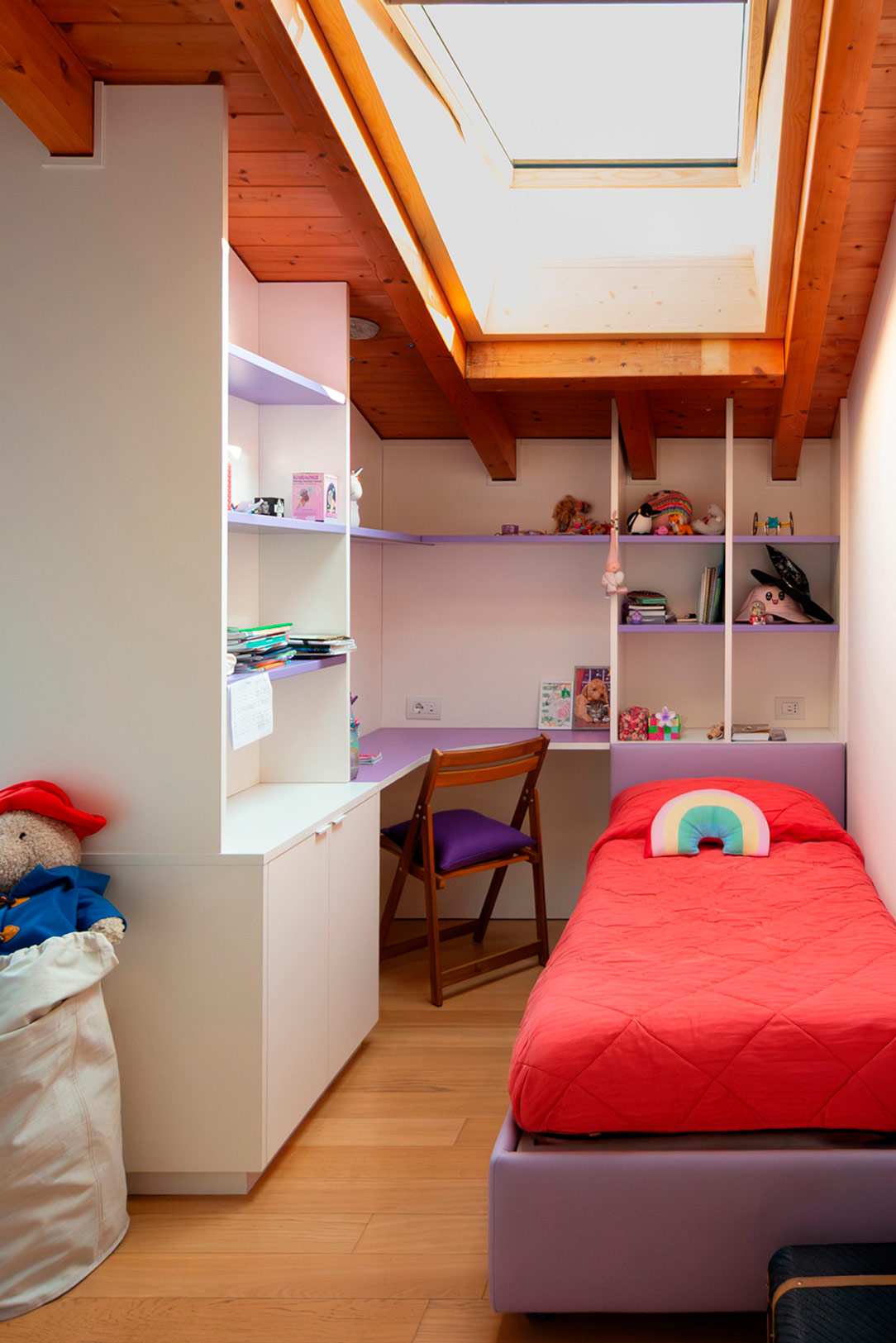
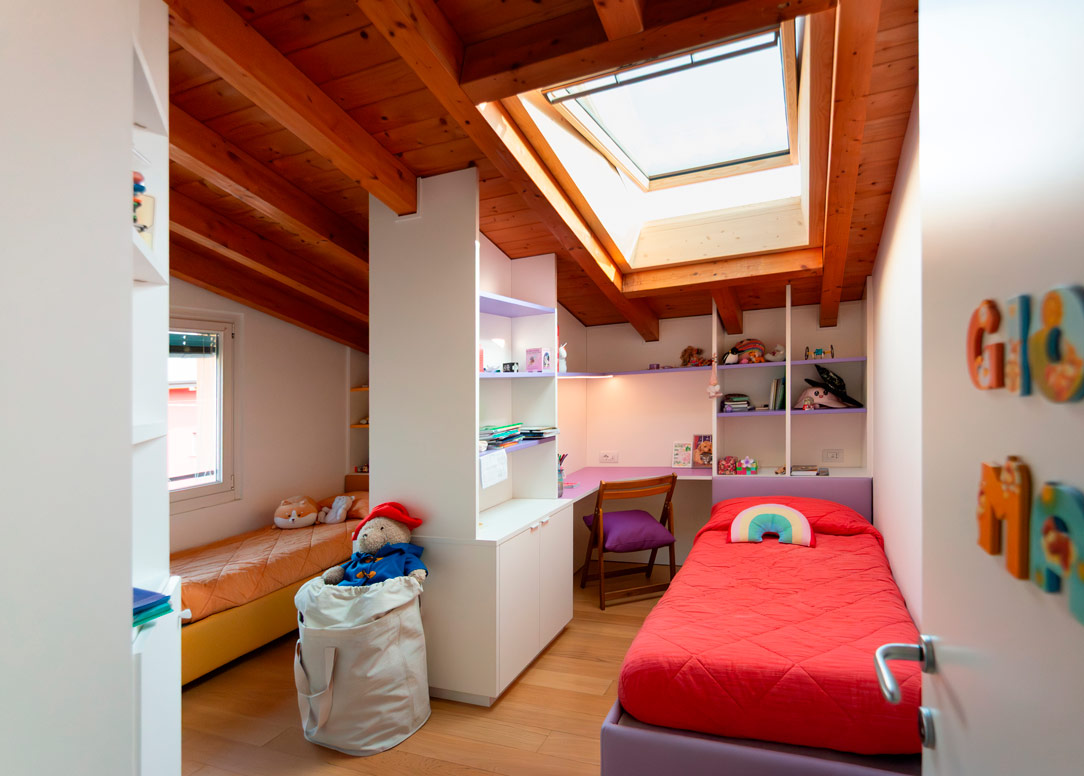
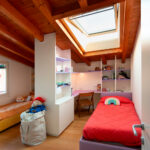
The bedroom benefits from two valuable sources of natural light: a vertical window and a Velux roof window. Light enters from different directions, allowing us to divide the room into two well-lit areas, each dedicated to one child, ensuring visual comfort and a clear, well-ordered perception of the space.

An existing wardrobe, positioned along a side wall, remained shared between the two children. The true heart of the project is a custom-made dividing storage wall, developed at the center of the room: an element that separates without closing off, organizes without weighing down, and maintains balance, continuity and dialogue between the two areas.

portion 1 Space-saving bedroom
portion 2 Space-saving bedroom

Study area, bookshelf and storage: everything in its place

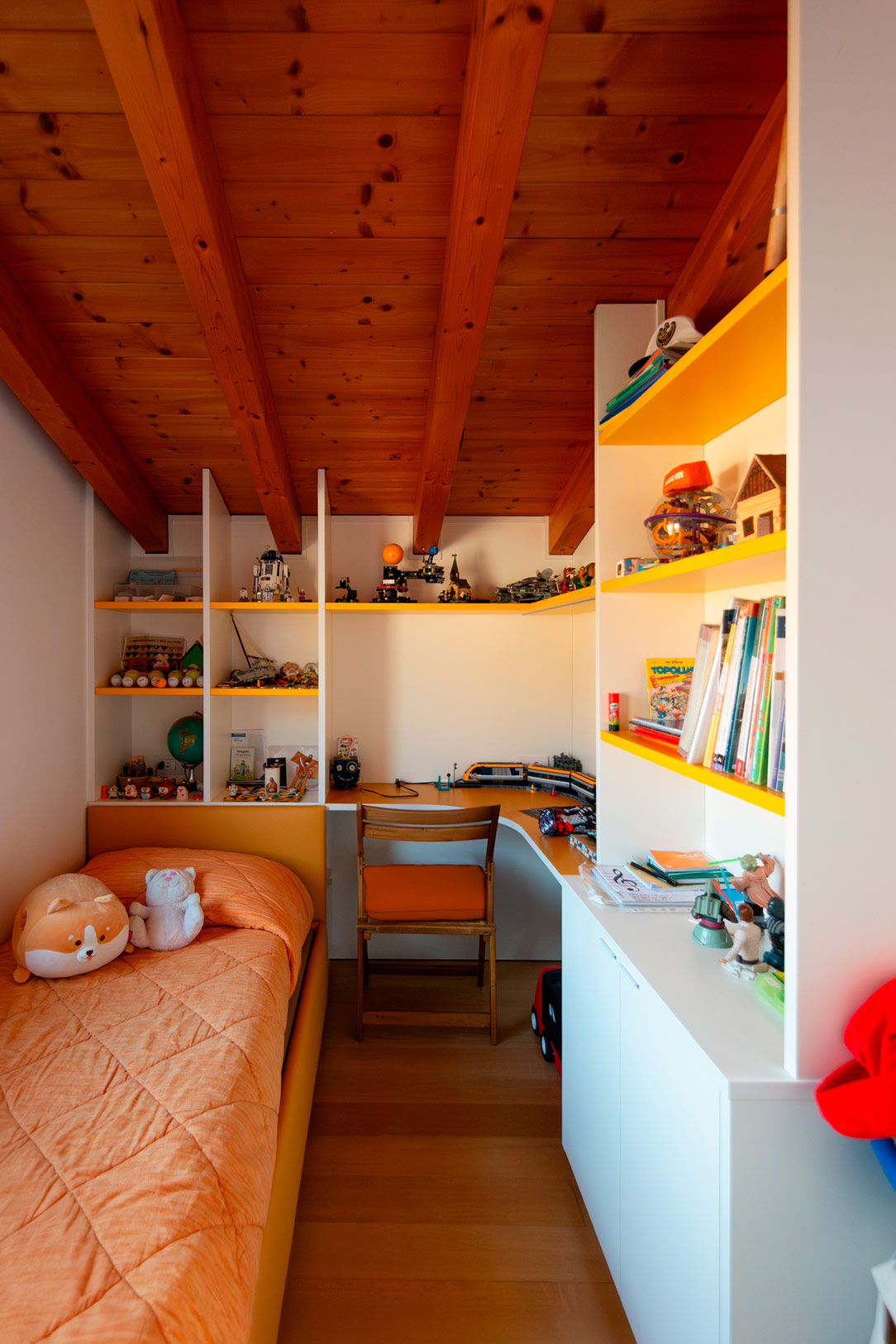
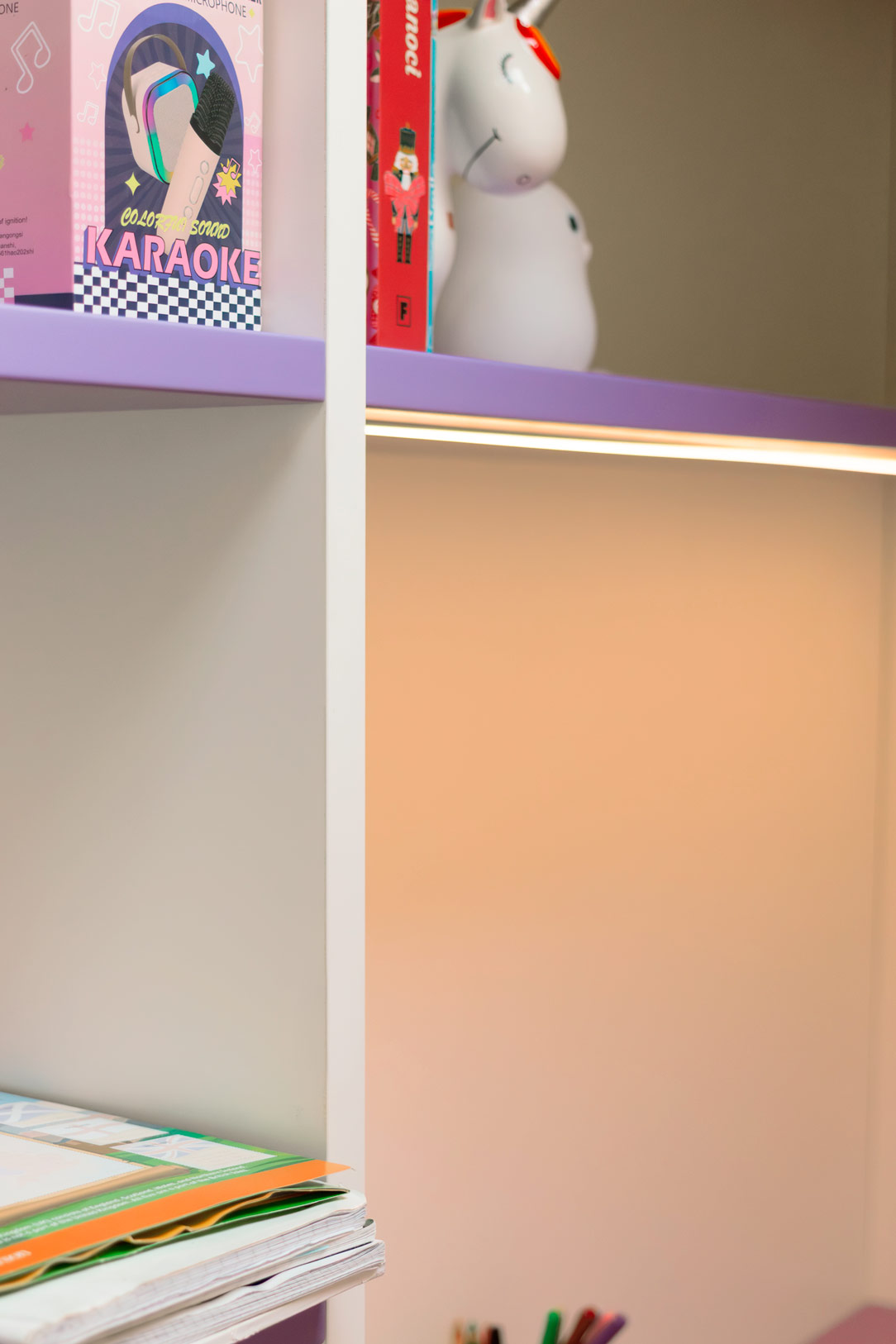
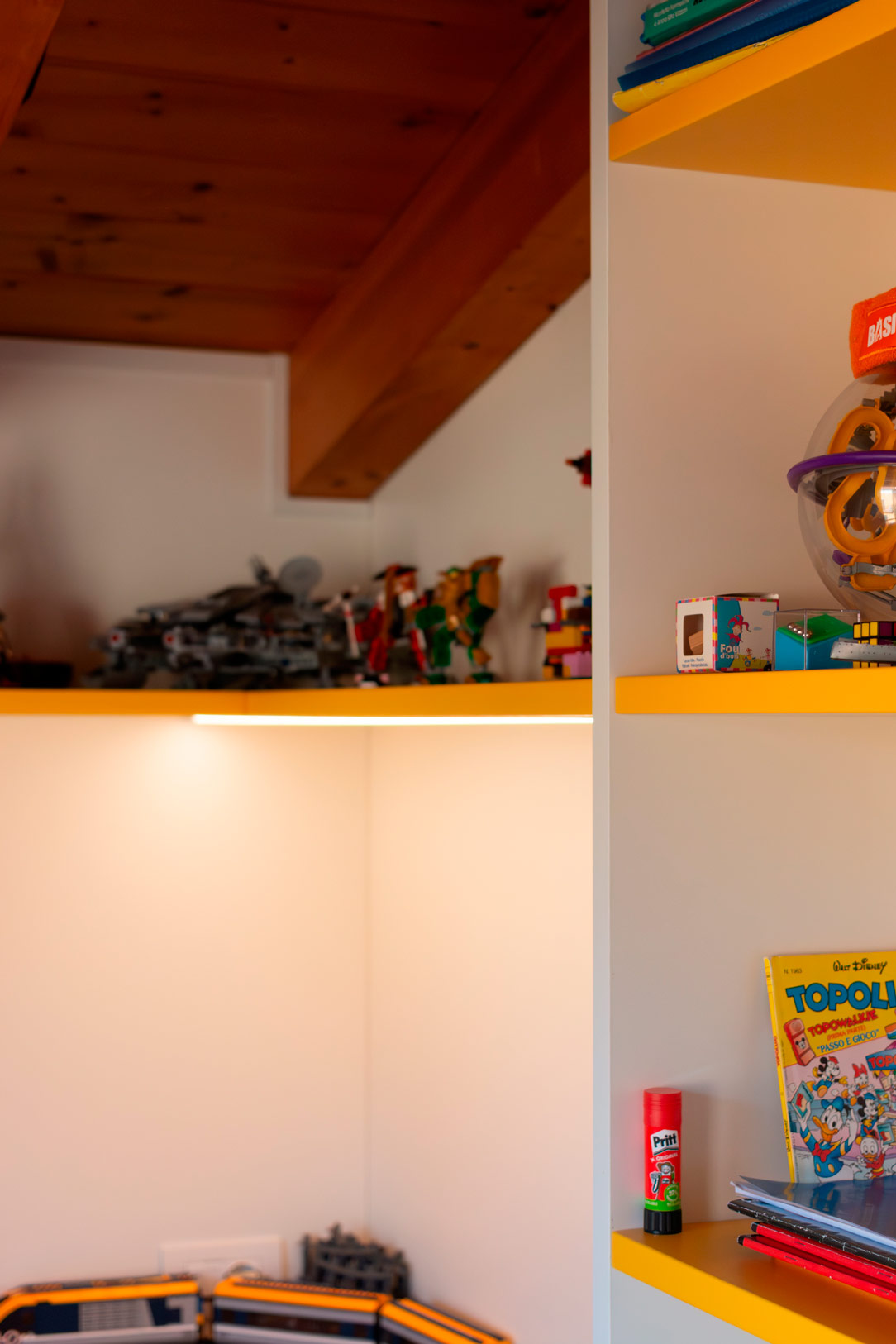
Each side of the bedroom was designed in a mirrored and complete way. Both workstations include a corner study desk, precisely lit by under-cabinet LED lighting, a bed-back bookshelf, integrated and easily accessible, and a second section of furniture shaped to follow the slope of the ceiling.

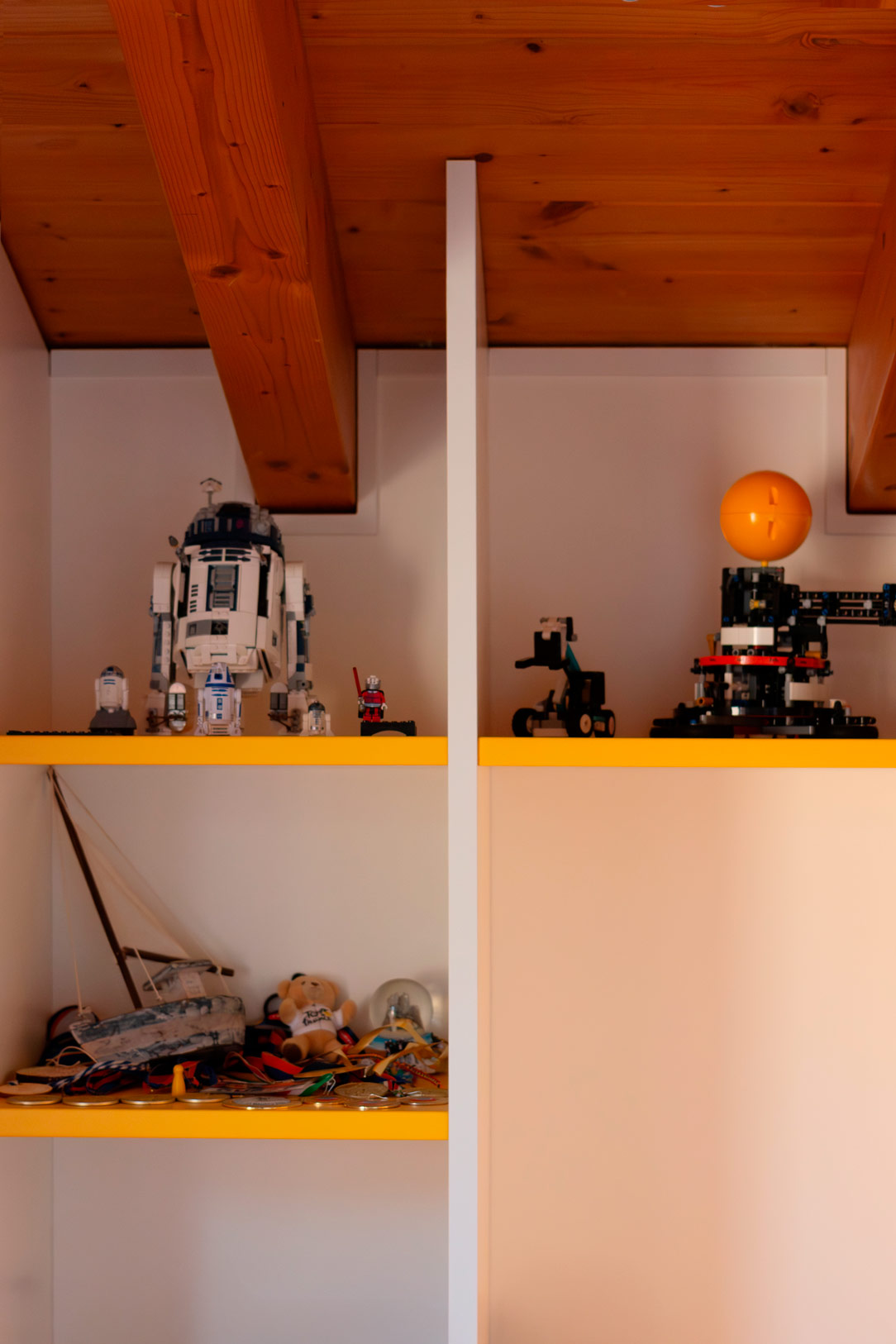
Shelves, closed compartments and storage units hold books, notebooks and school supplies, turning every available centimeter into usable space. The bespoke design approach allowed us to see the attic’s constraints not as limits, but as an opportunity to create furniture that follows and enhances the architecture.

shaped shelves
led on the desk
led on the desk
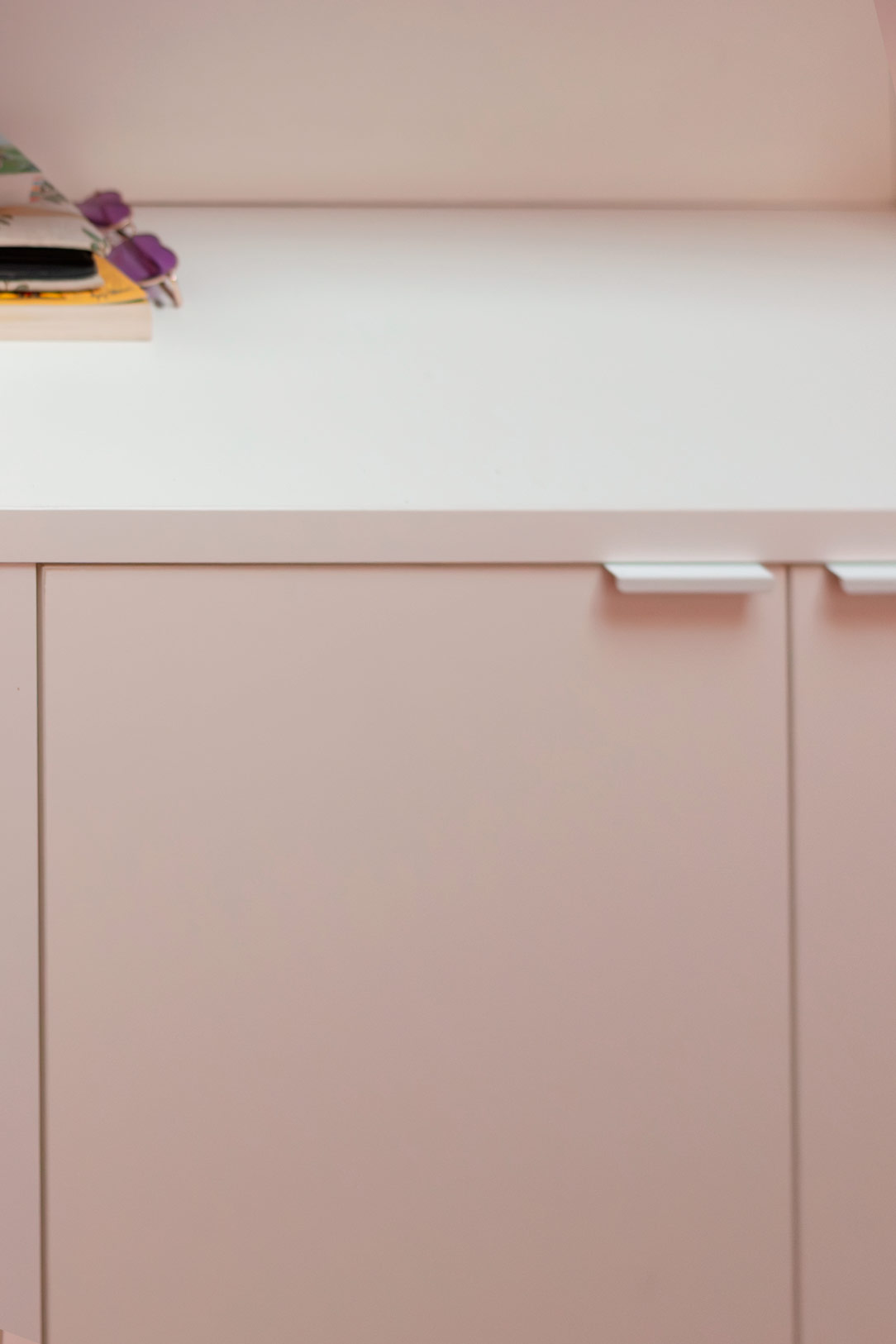
doors closed
backbed with shelves
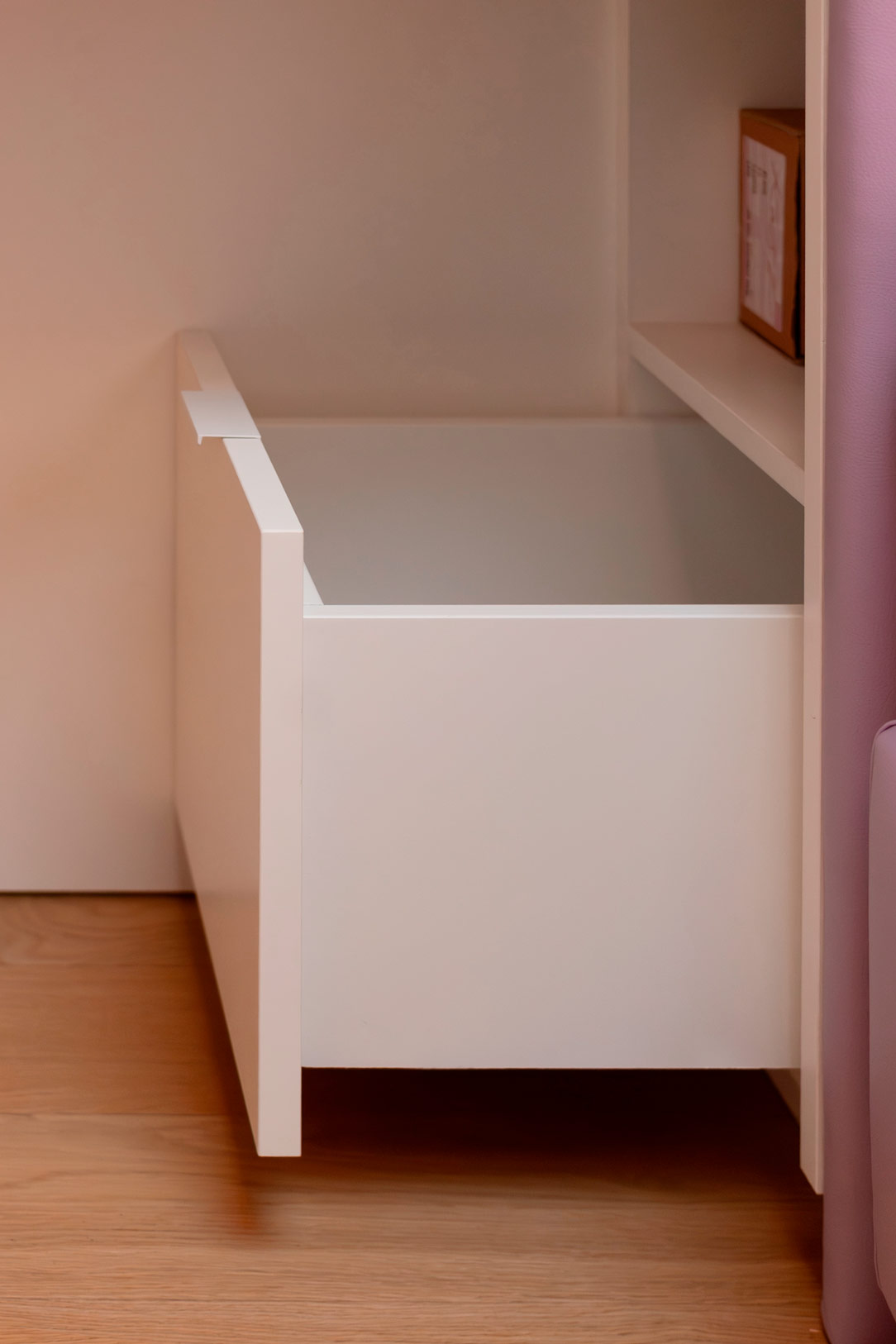
drawer

Storage beds: practicality that makes a difference

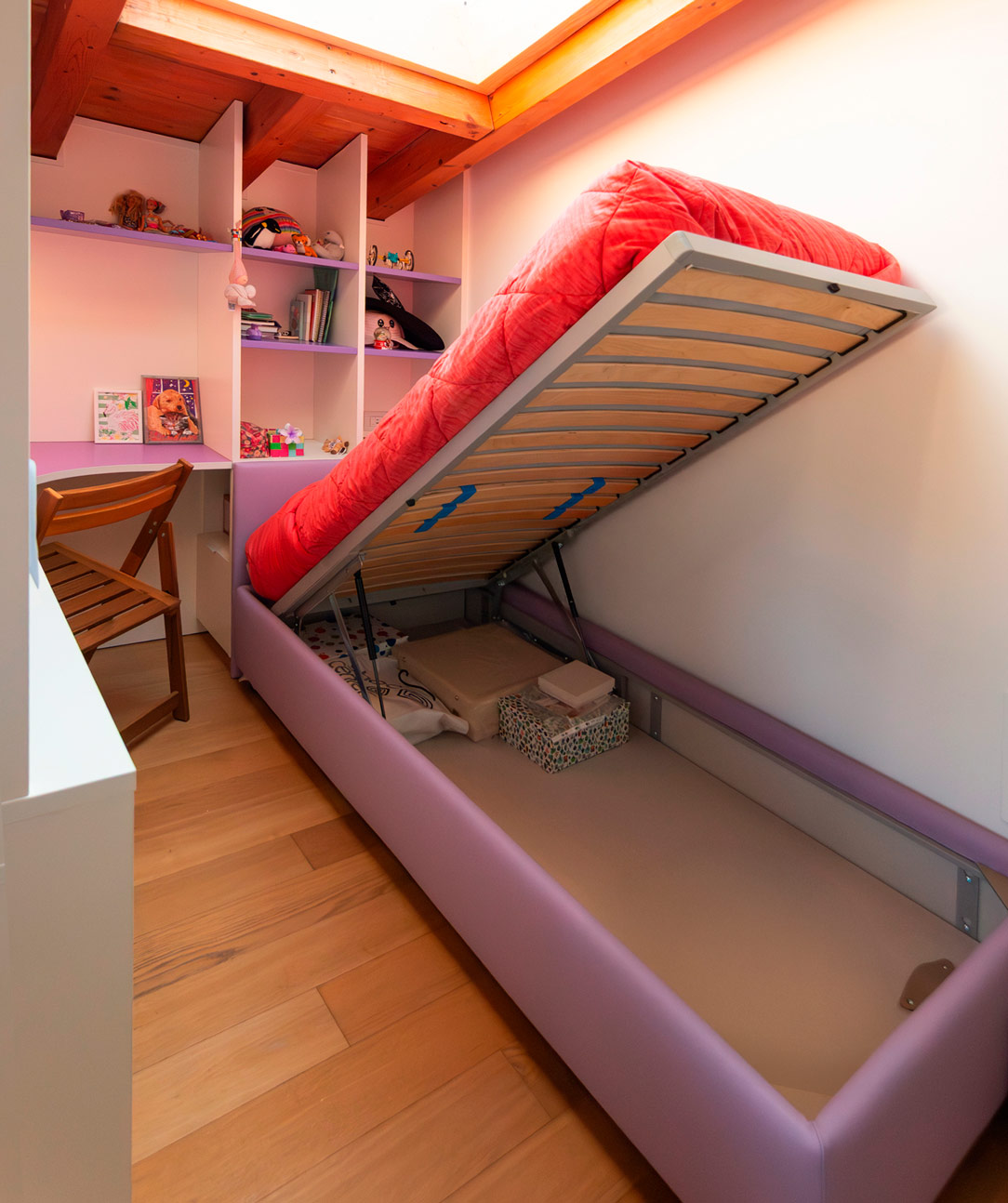
The two single beds are storage beds, an ideal choice for a space-saving children’s bedroom. The lifting mechanism allows the bed to be raised effortlessly, even when fully made with pillows included. Inside, there is ample space for duvets, suitcases and everything that does not need to remain visible, keeping the room tidy and visually light.

The bed is independent from the headboard and equipped with concealed wheels, making it easy to move for more thorough cleaning. The headboard itself is fixed to the bed-back bookshelf, which also takes advantage of the lower depth with a side shelf and a large pull-out drawer, designed for items that need to be within easy reach.

Storage bed

Colours chosen by the children, harmony throughout the room

La palette cromatica nasce direttamente dalle preferenze dei bambini. Il bianco,

The colour palette comes directly from the children’s preferences. White, chosen as the base colour, makes the space bright and airy, leaving room for colour accents that define the two areas.

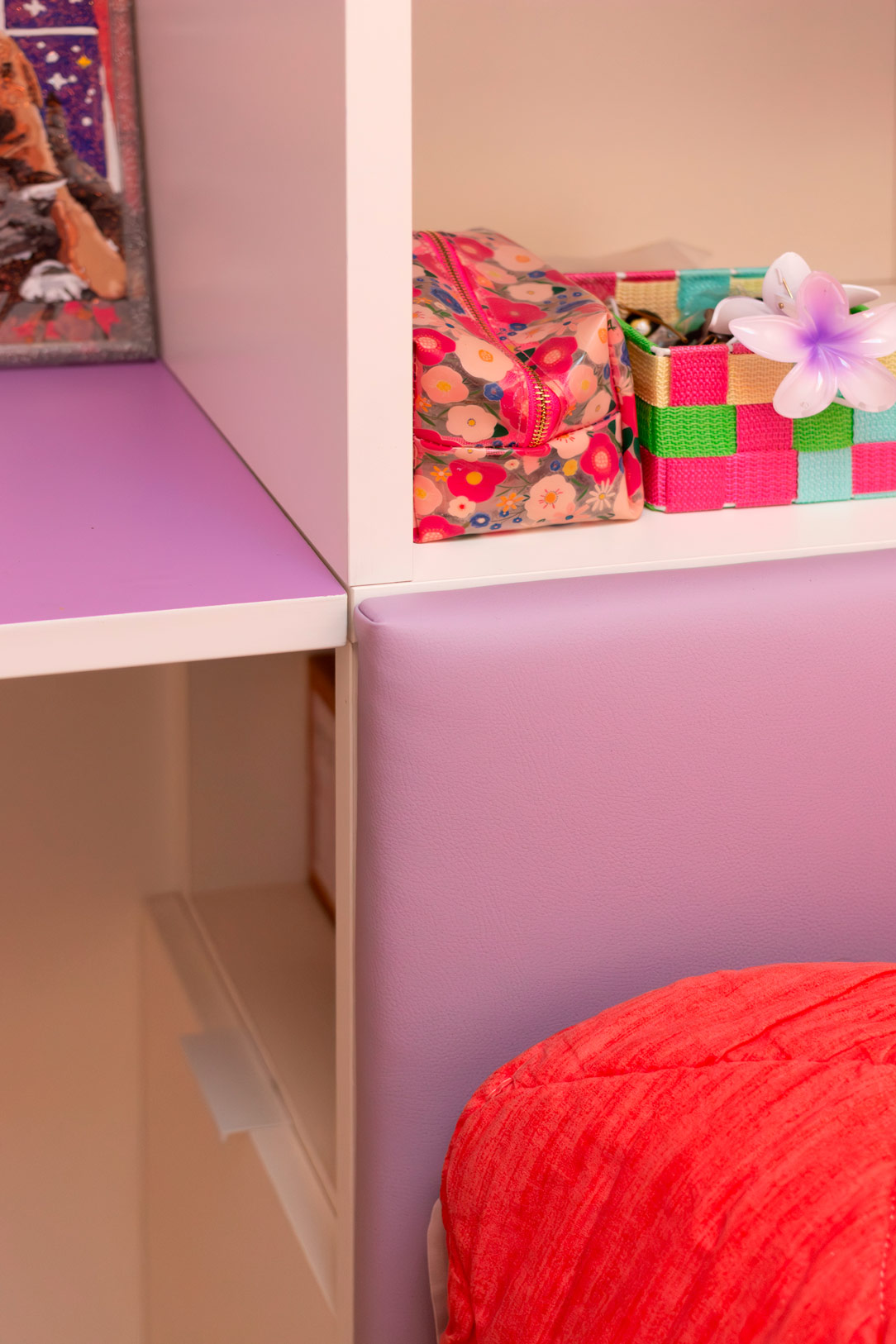
On one side, purple is used for shelves, desk and the eco-leather bed upholstery; on the other, mustard yellow is repeated in the same mirrored elements. Different colours, yet perfectly harmonious, helping each child to recognise and feel ownership of their own space without disrupting the overall balance of the room.

At this link, you can find another example of a space-saving children’s bedroom.

colors violet and mustard yellow

Classic White Wardrobe

Classic White Wardrobe

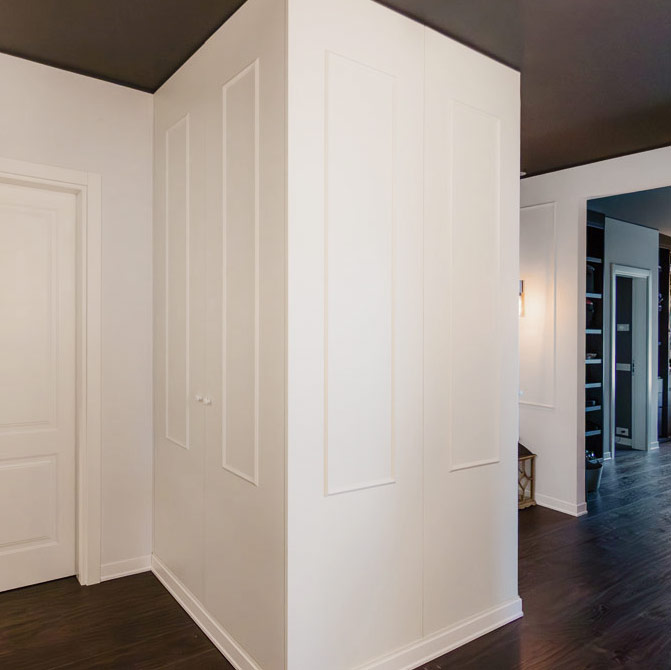
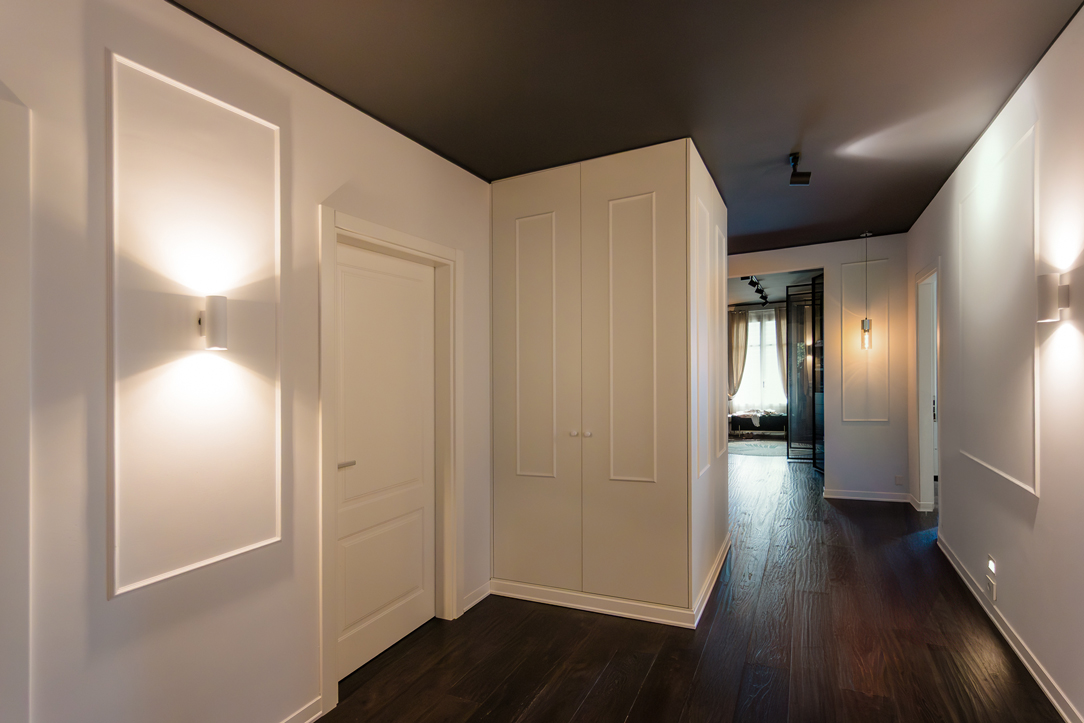
Nestled among the green hills of the Bergamo area, in a refined home, we designed and built a custom-made classic white wardrobe, seamlessly integrated into the existing interior.

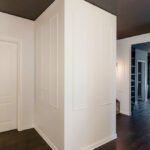
In the wide hallway of the sleeping area, the client’s request was to create additional storage space without compromising the elegance of the surroundings. The project turned a structural constraint – the central pillar – into a design feature, giving life to a double-sided wardrobe.

Classic White Wardrobe

The Balance Between Classic and Contemporary

This tailor-made solution was created to enhance and equip a spacious transitional area. The villa’s style has a distinct identity, defined by classical details such as wall mouldings, door casings, and an ornate skirting board – all set within a modern architectural framework.

Here you can find another example of classic-style furniture.

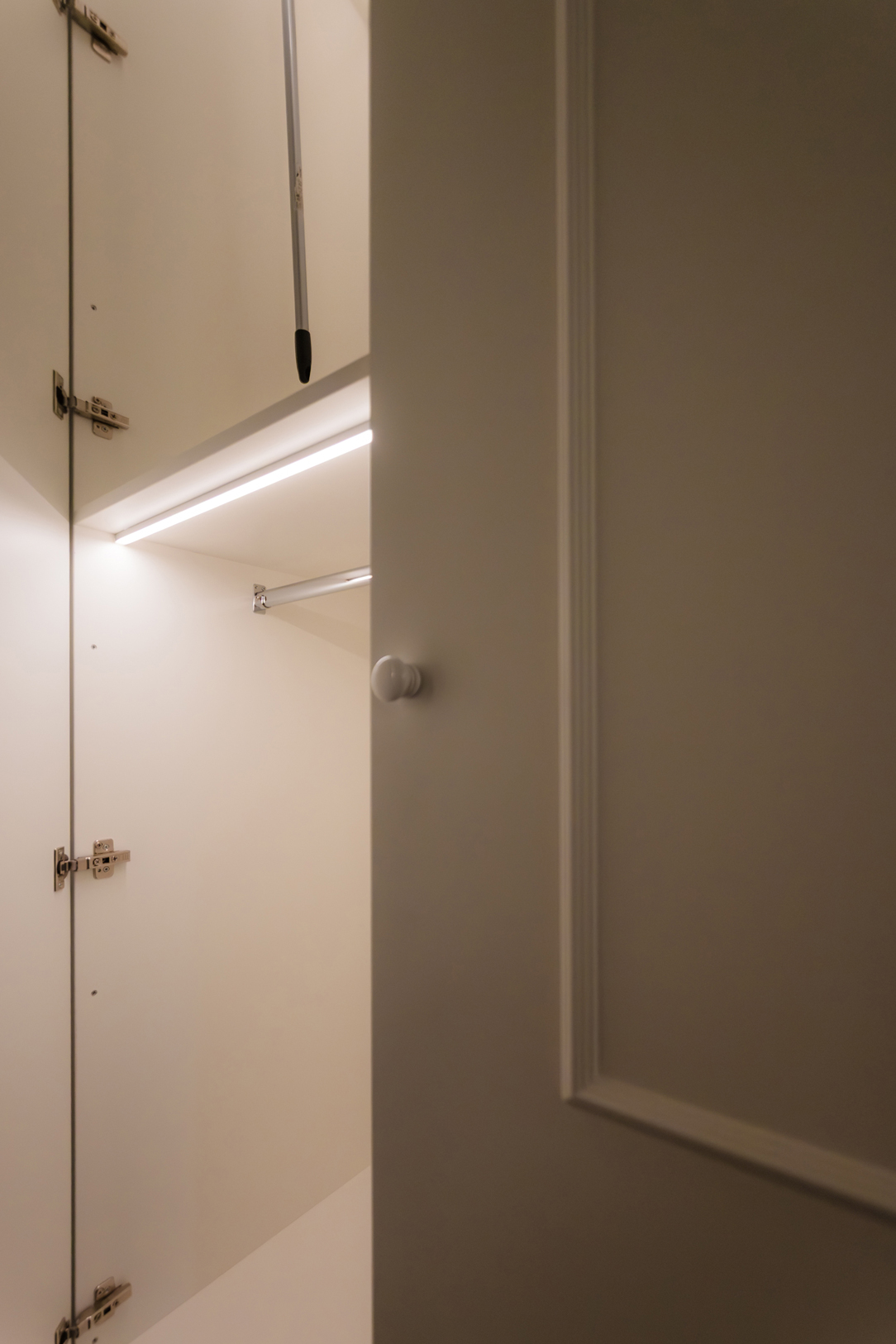
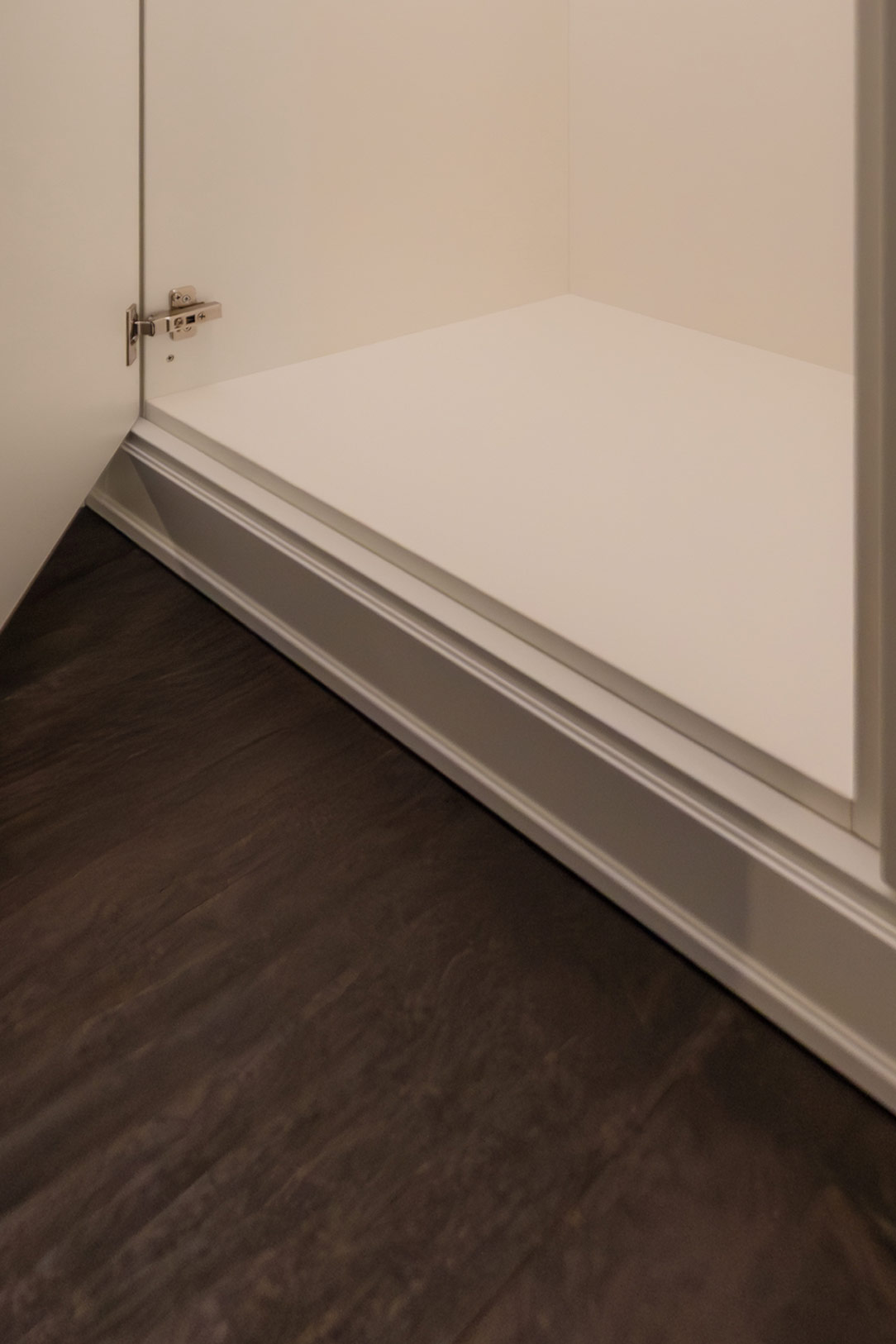
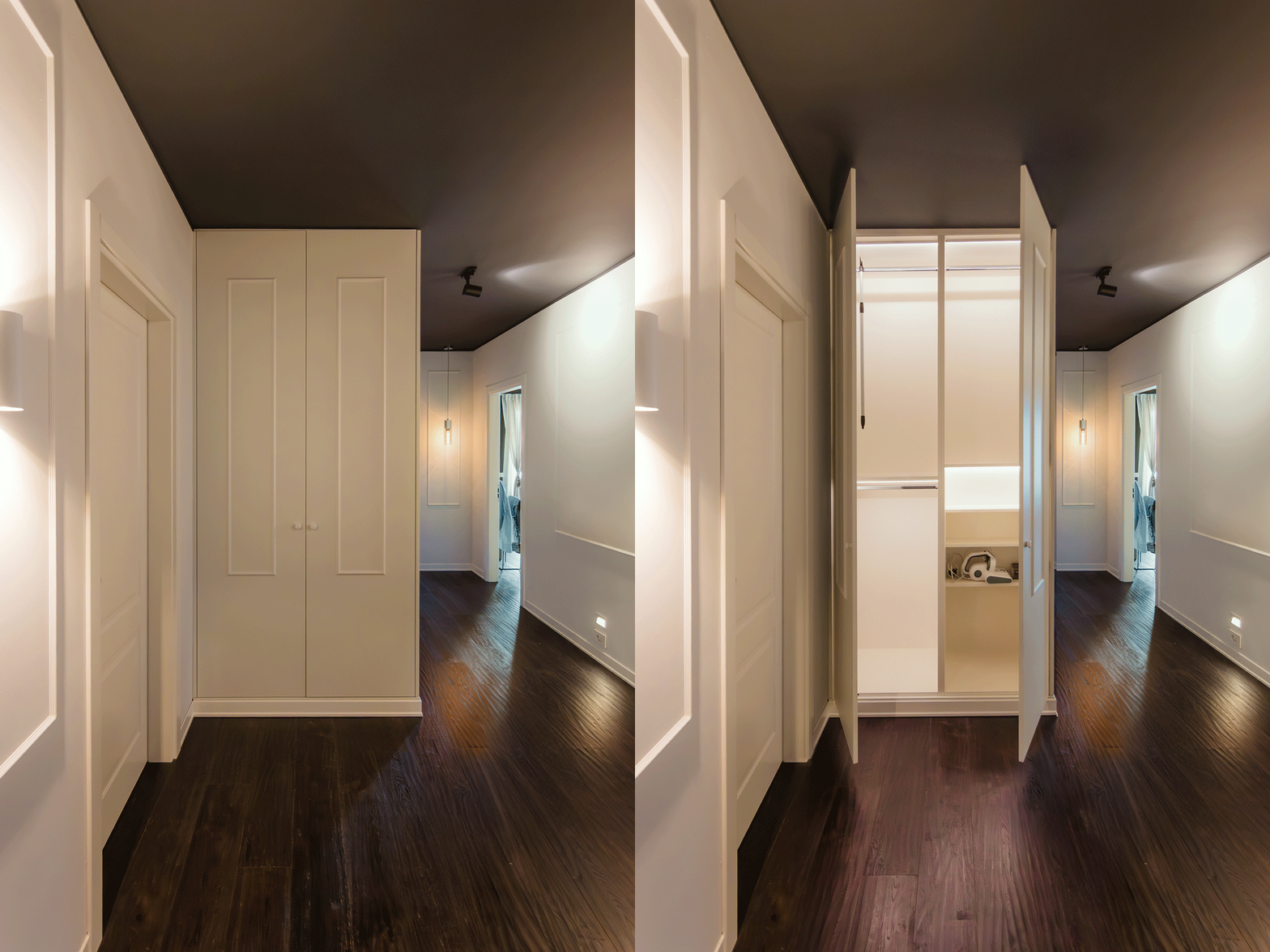
Our classic white wardrobe subtly reflects these elements: the front and side panels are decorated to echo the wall finishes, the skirting board continues seamlessly around the unit, and the tone-on-tone lacquer finish makes it almost invisible, perfectly blending into the surrounding space.

details handles
details lower part

Intelligent Functionality and Optimized Space


Beyond its refined appearance, the wardrobe meets multiple functional needs. It includes:


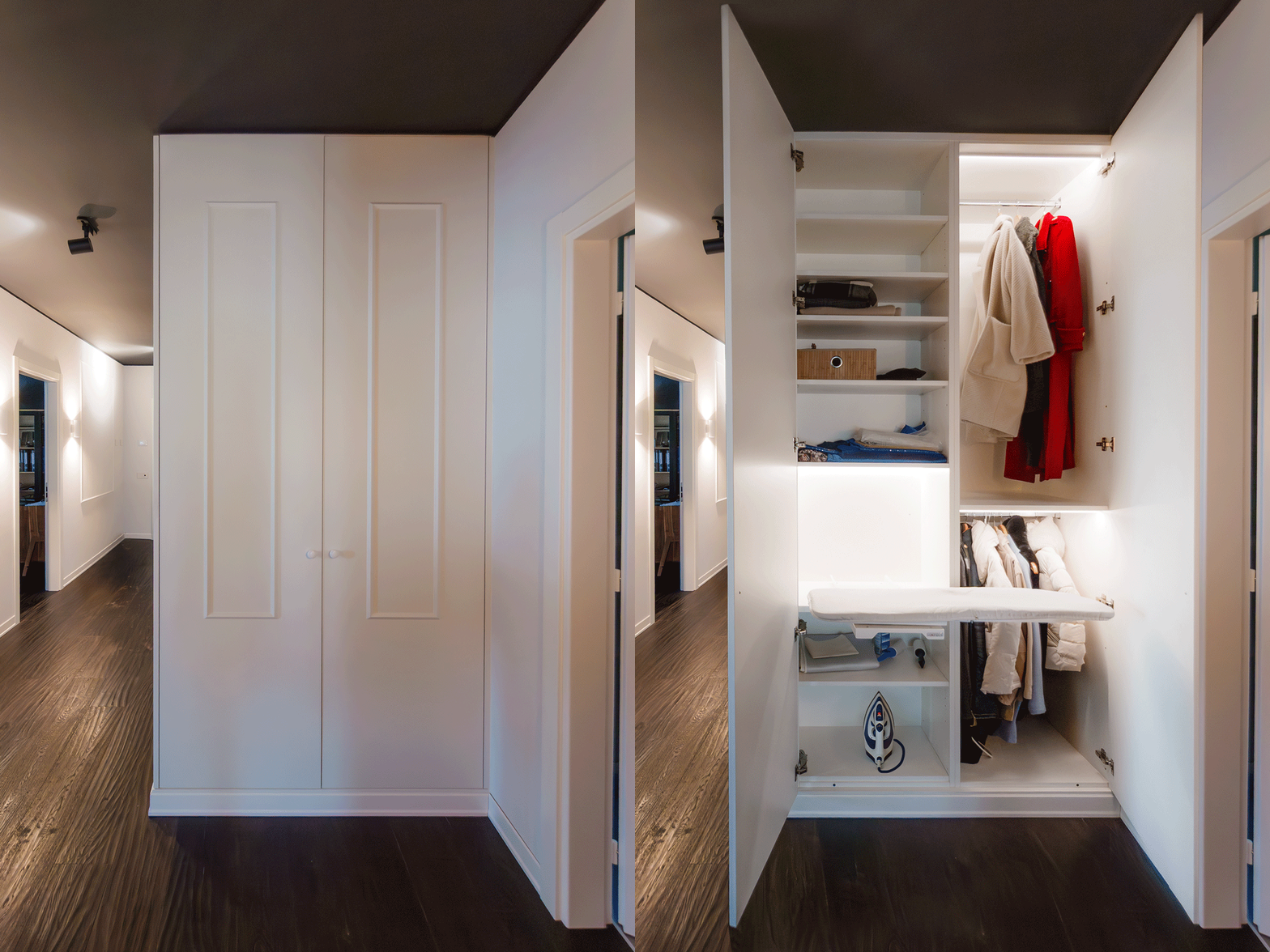
  • an additional hanging space for the adjacent bedrooms,
  • a dedicated area for cleaning supplies, with shallow rear shelves for detergents and a front compartment for buckets and a vacuum cleaner,
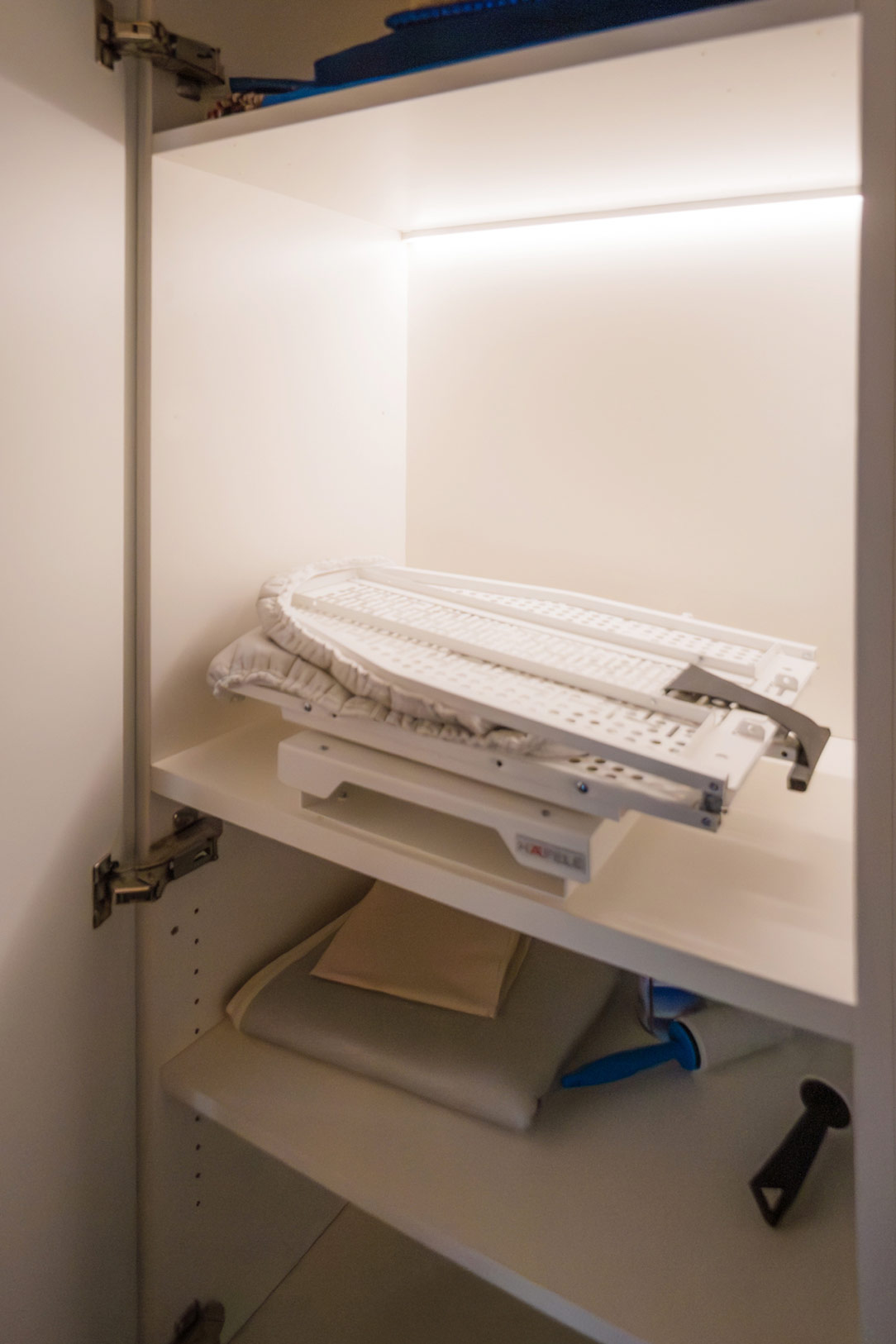
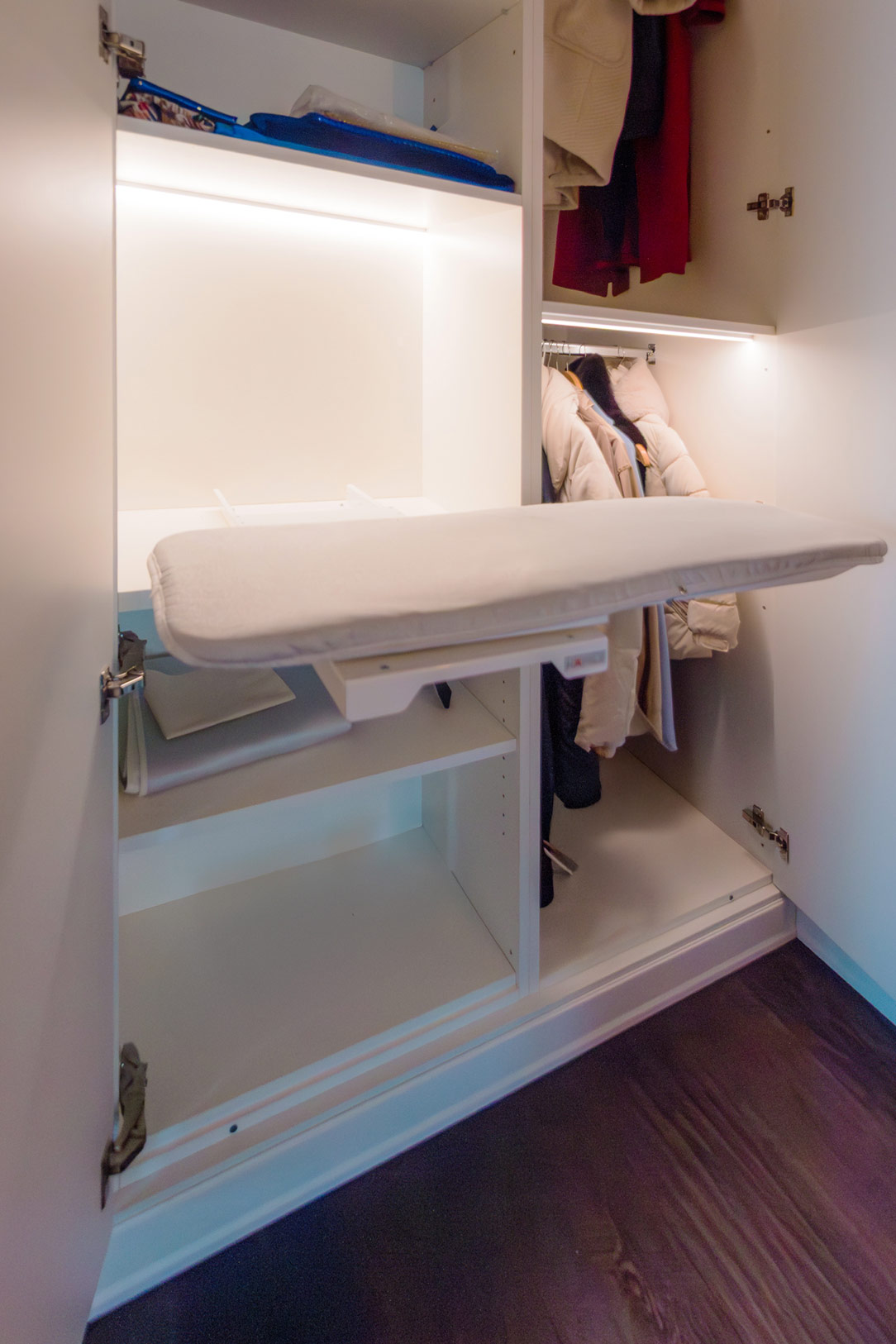
  • a fold-out ironing board, ready for quick touch-ups.
open and close wardrobe

This last feature of the ironing board, cleverly positioned in the shallower section of the wardrobe where the pillar limits depth, opens out toward the front and makes the most of every available centimeter. Integrated LED lighting ensures that each area of the wardrobe is well illuminated and easy to use.

open and close wardrobe
ironing board close
ironing board open

Conclusion

When practical needs arise, it’s possible, as in this case, to find solutions that don’t sacrifice aesthetic quality. It is entirely feasible to integrate a new element while preserving the elegance of the space and enriching it with made-to-measure functionality.

Bunk Beds and Multifunctional Kids’ Room

Bunk Beds and Multifunctional Kids’ Room

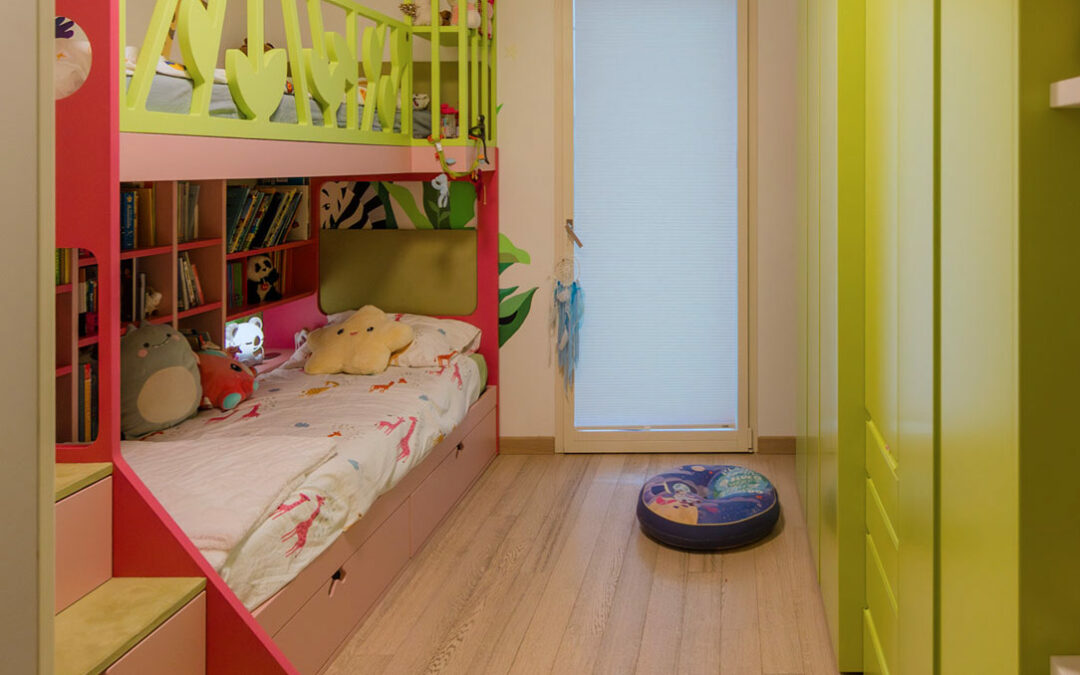
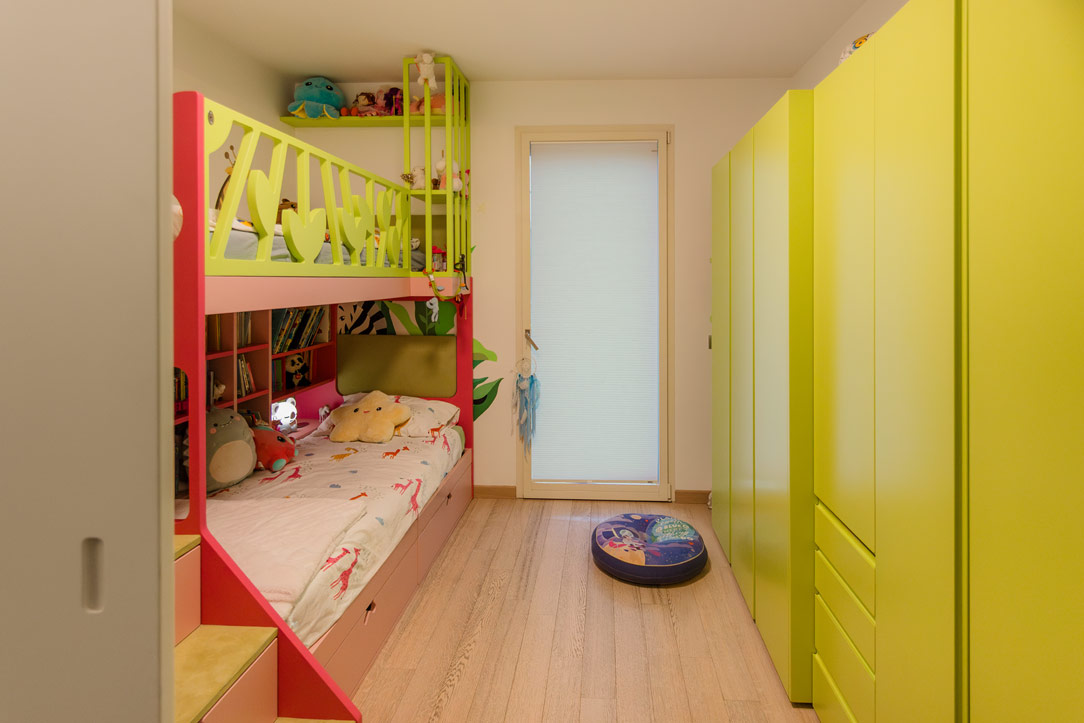
When space at home feels limited and needs are constantly growing, creative design can turn a simple kids’ room into a multifunctional, welcoming environment, perfect for children. This project showcases how two equipped bunk beds can become the centerpiece of an optimized kids’ room, complete with vibrant colors and space-saving solutions.

kids room bunk bed

The Challenge of Space: Harmonizing Kids’ Room and Storage

In a three-room apartment with diverse spatial needs, the second bedroom was initially designed with cabinetry to support the household. However, the arrival of two young daughters required a complete redesign of the space, transforming it into a kids’ room capable of housing their beds, toys, and a study corner, without sacrificing its original functionality. This transformation was not only aesthetic but also practical, turning the new room into a prime example of how to creatively manage space while meeting the growing needs of a family.

From custom Montessori-style small beds, the organization evolved into a thoughtfully structured kids’ room.

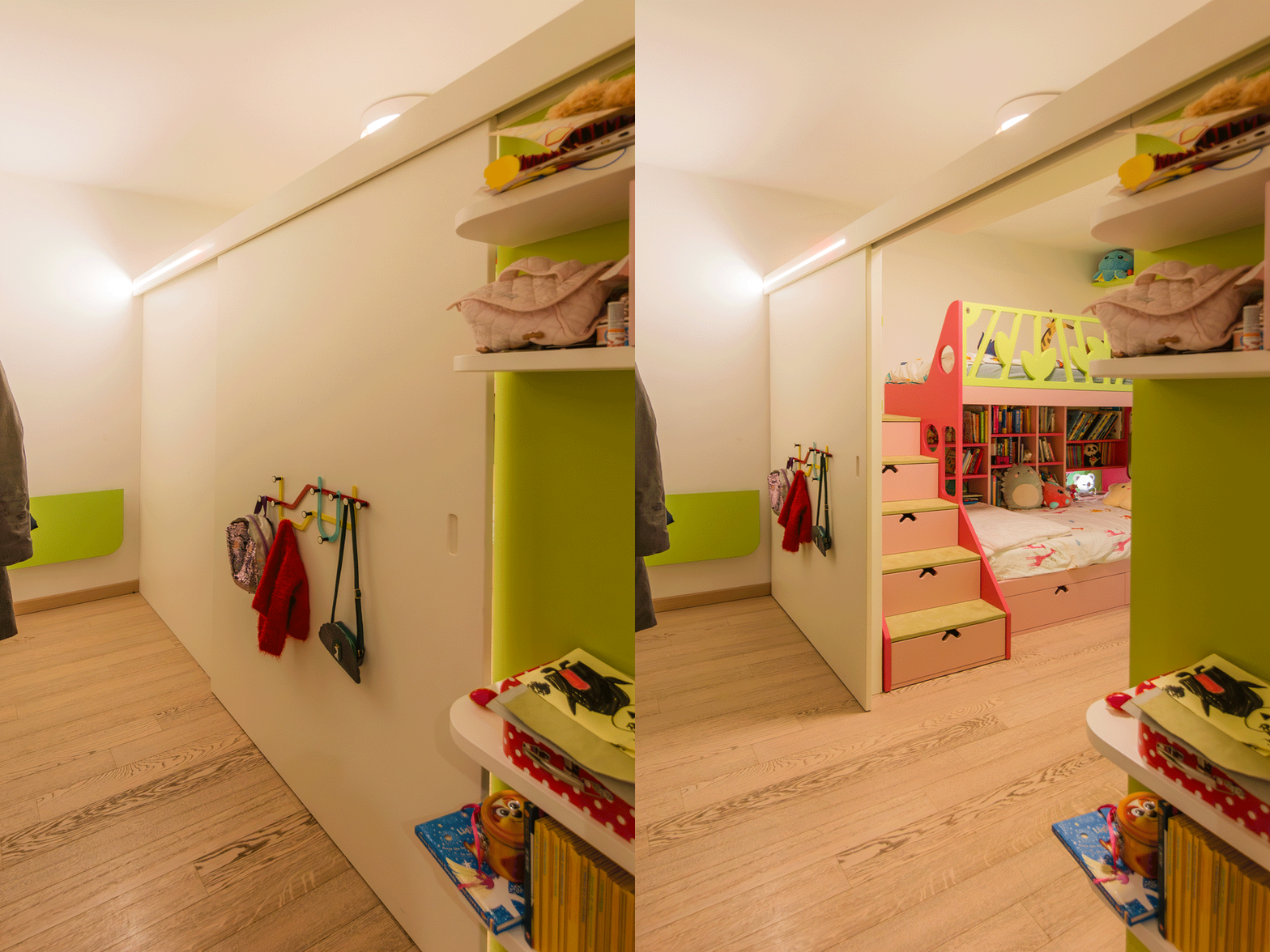
door open and door closed

Bunk Beds: Multifunctional and Storage-Friendly Solutions

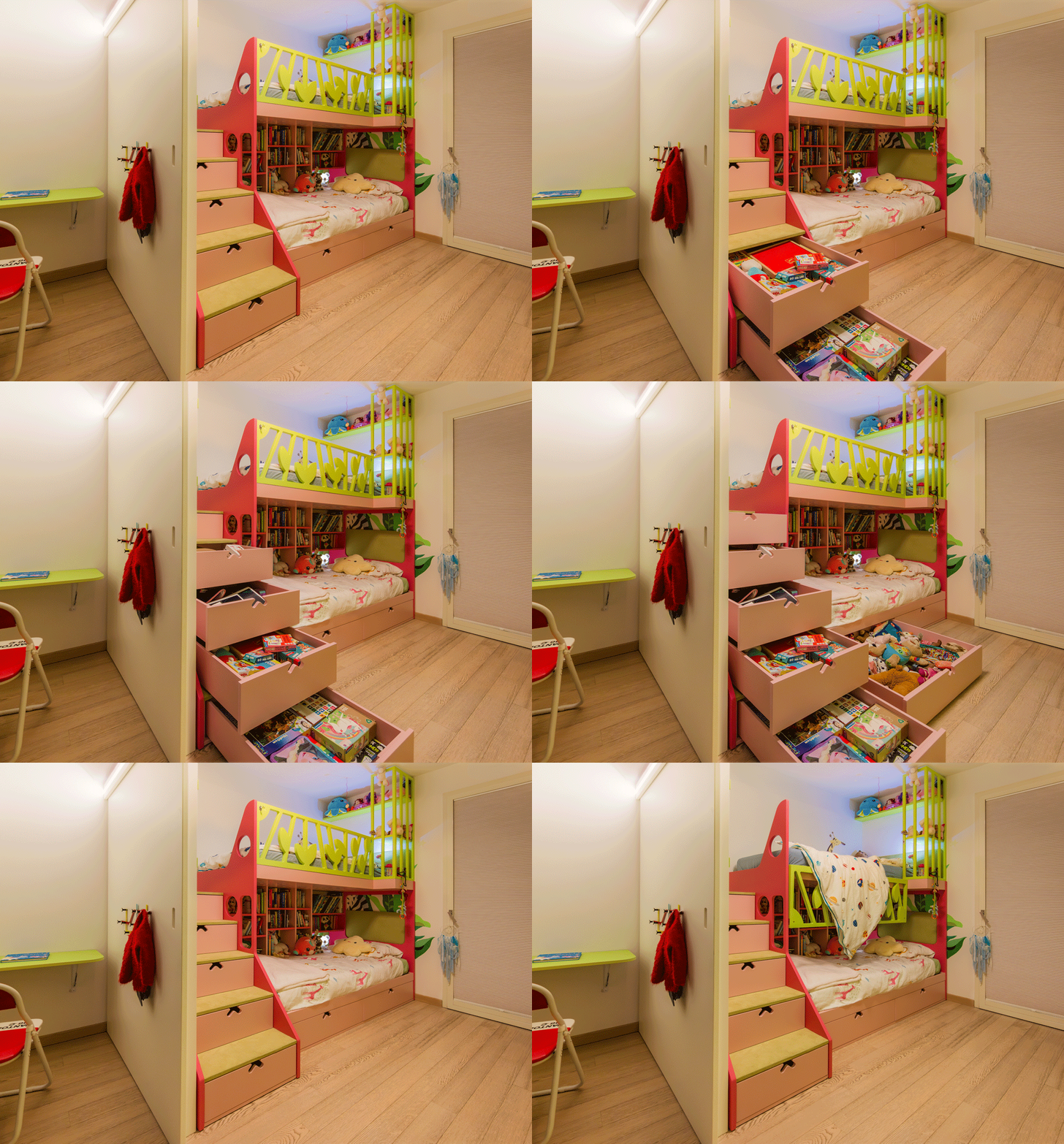
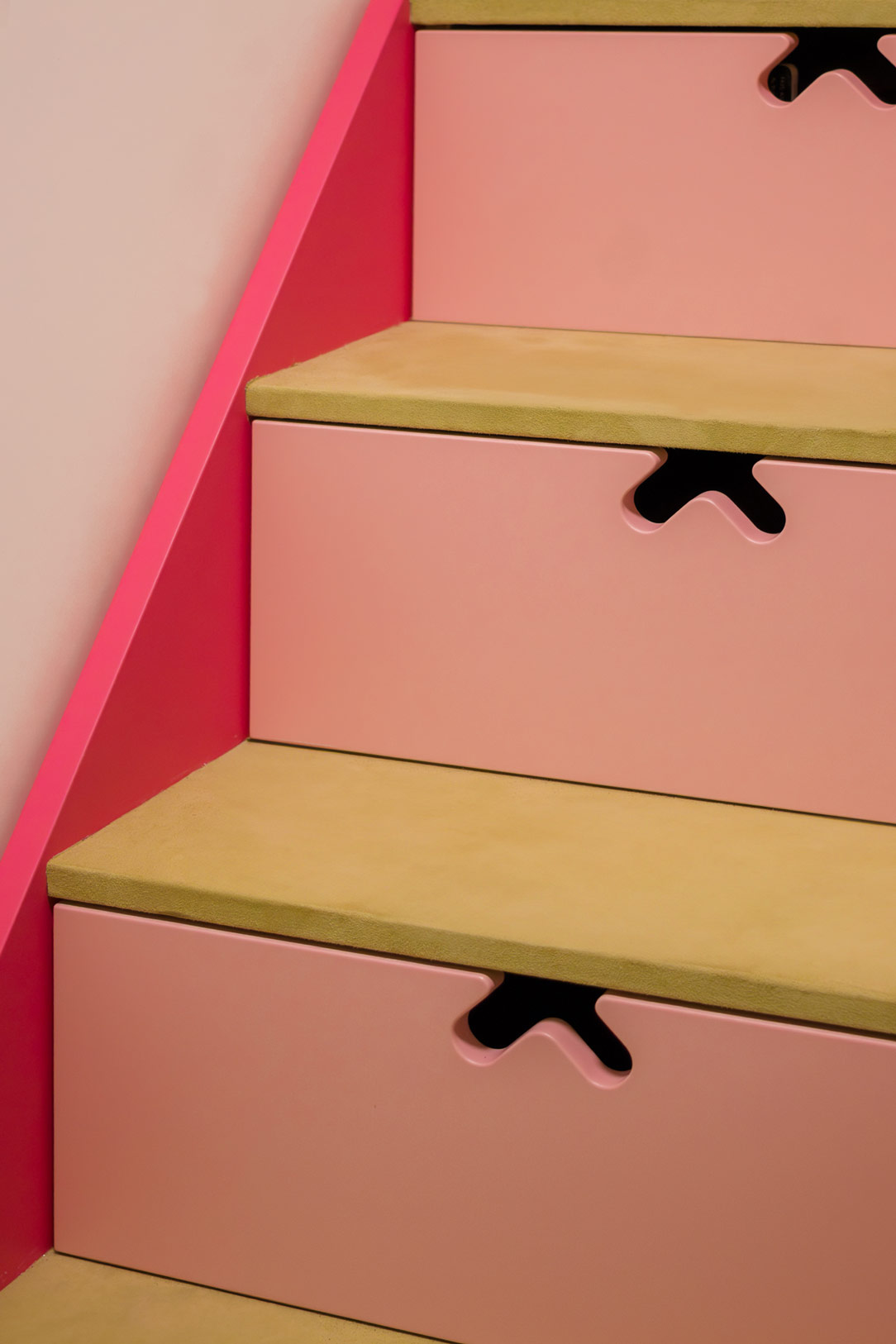
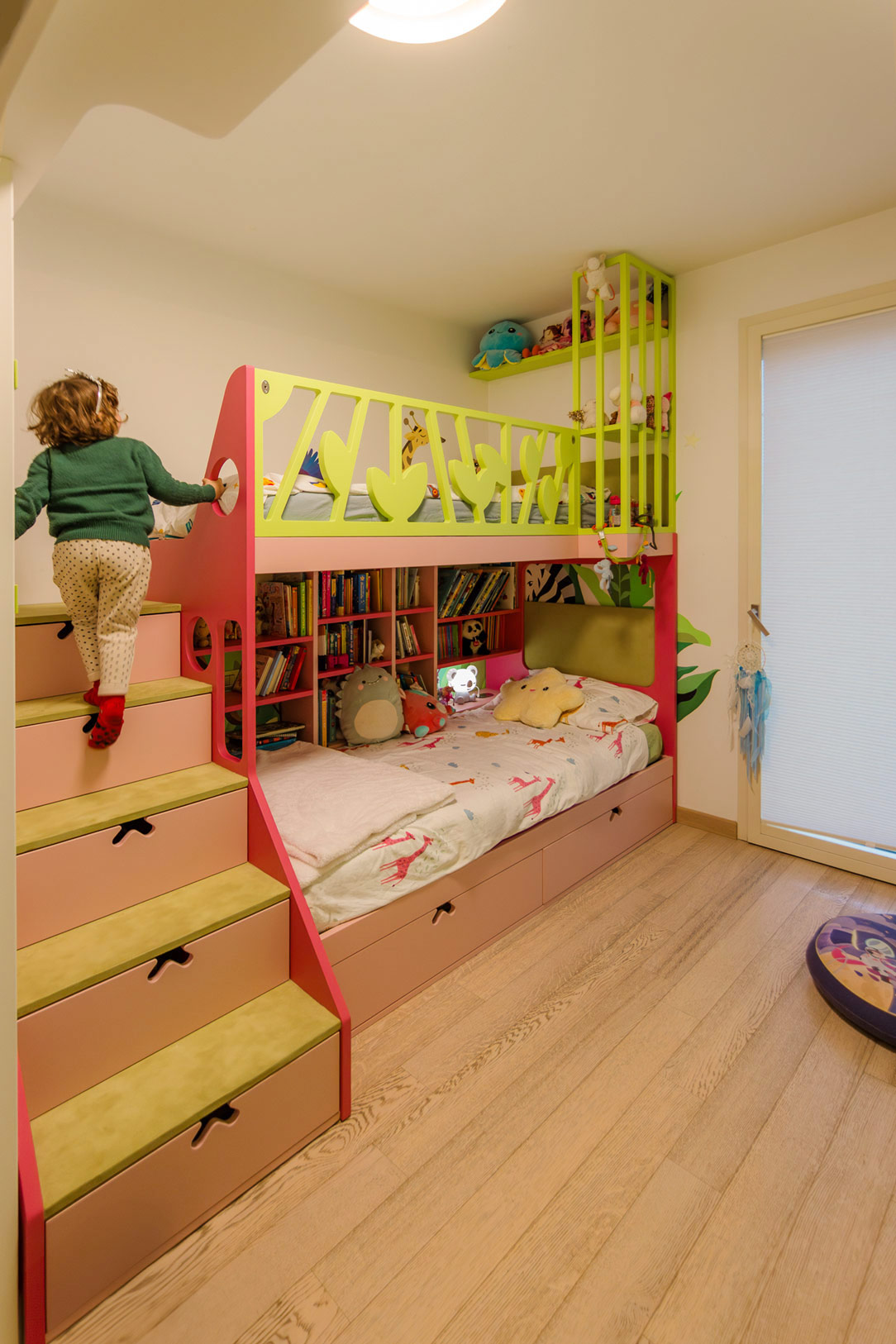
The bunk beds are the focal point of the project, utilizing every available inch. These are not merely offset stacked beds but a multifunctional structure offering ample storage space alongside comfort for the children. The staircase leading to the upper bunk doubles as a series of storage drawers, with the lower steps being deeper to accommodate larger items like bulky toys.

drawers open kids room
details shaped handles
details shaped bed structure

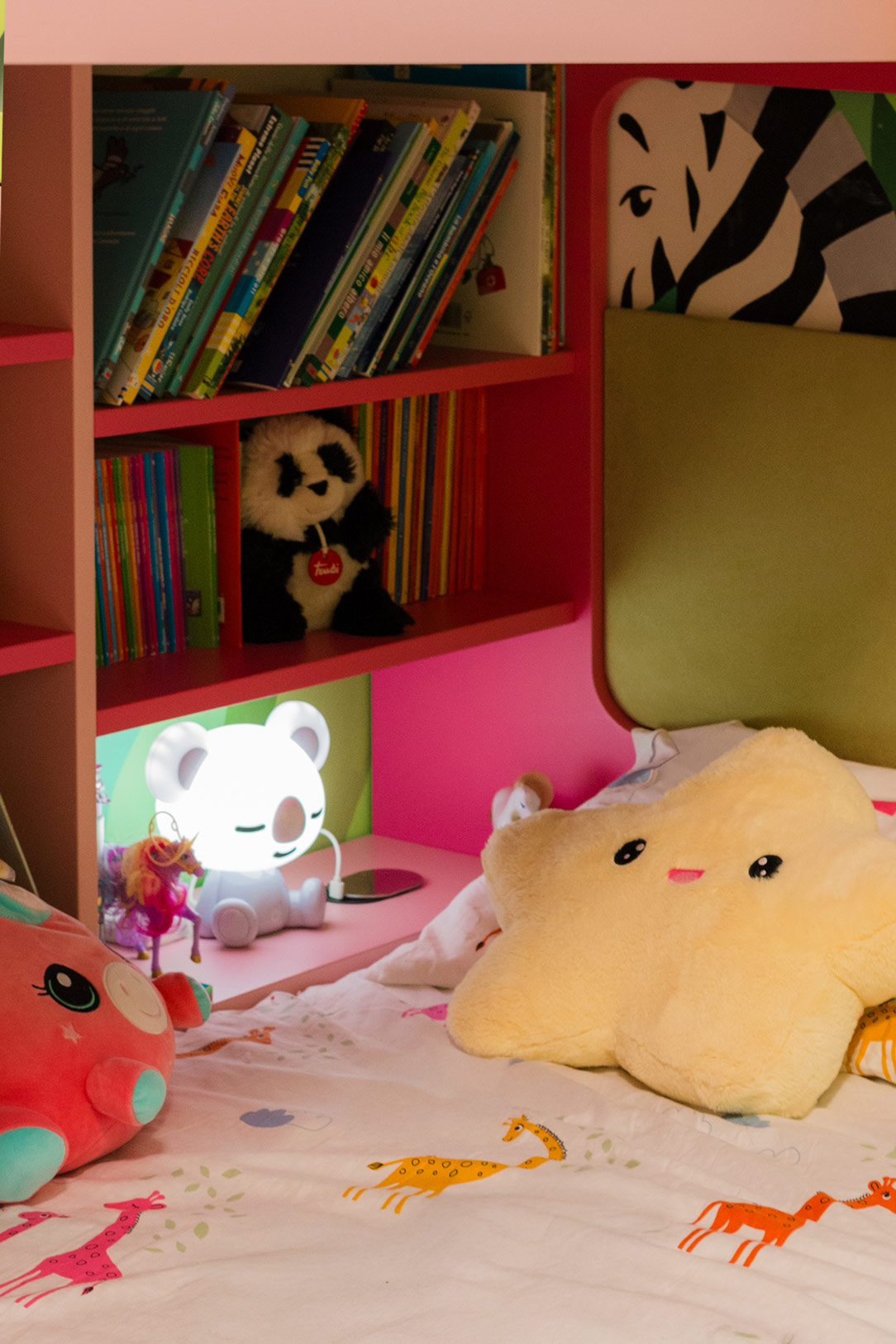
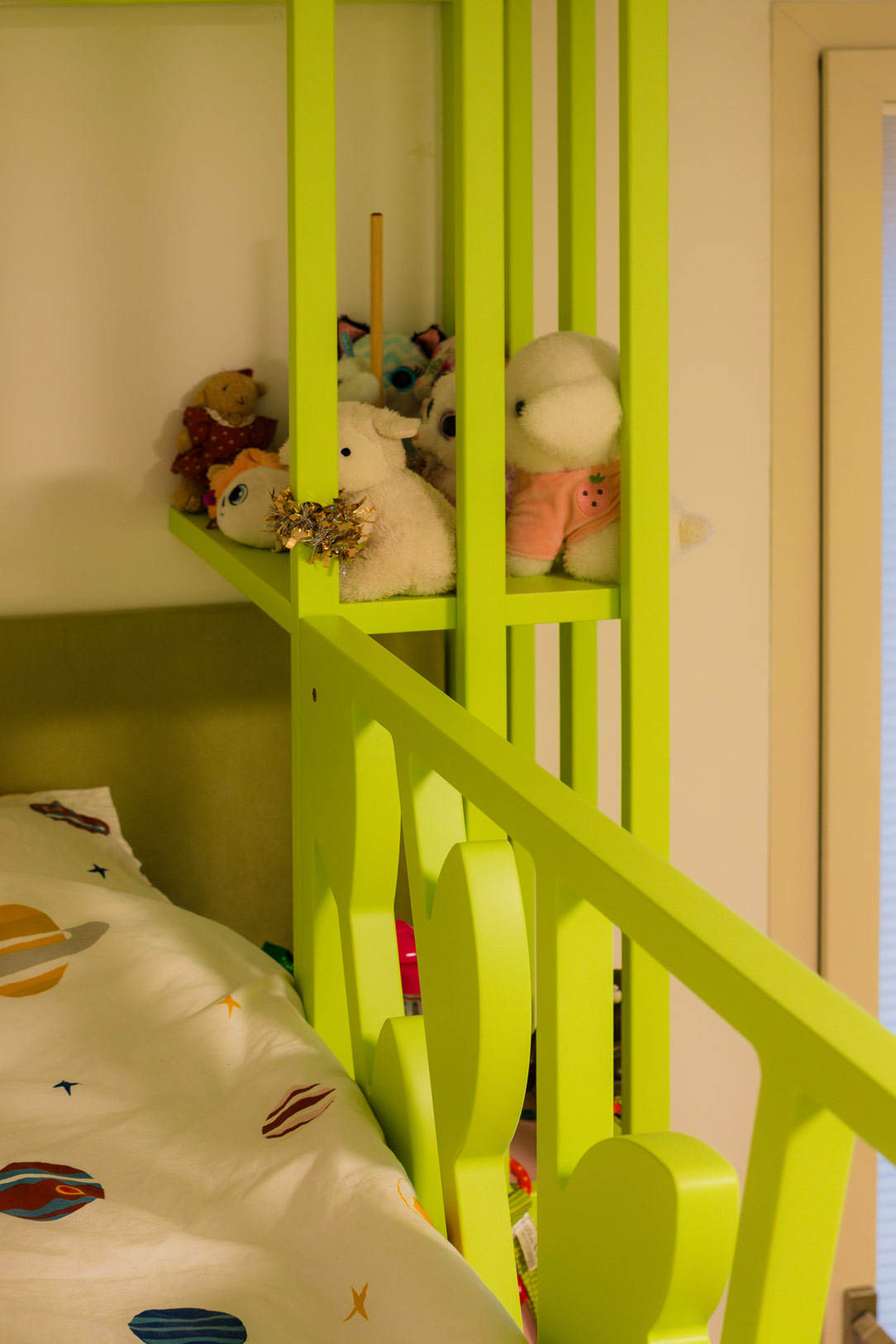
The lower bunk includes two pull-out drawers that take advantage of the full depth of the bed frame, perfect for storing stuffed animals, boxes, and more. Additionally, an asymmetrical bookshelf, about 40 cm deep, is nestled in the offset section, providing organized storage for books of varying sizes. The upper bunk is equipped with open shelves near the headboard, functioning as convenient storage or a nightstand for items the children want within reach during rest times.

details upper bed
bookshelf
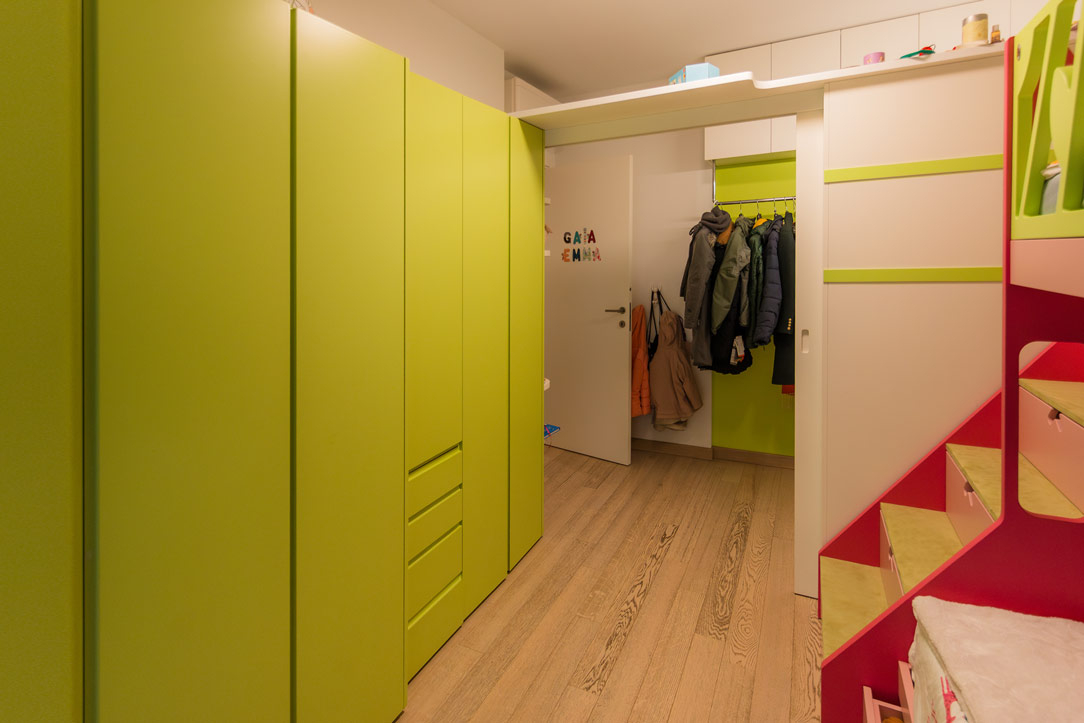
kids room wardrobe

Colors and Atmosphere: A Playful, Personalized Kids’ Room

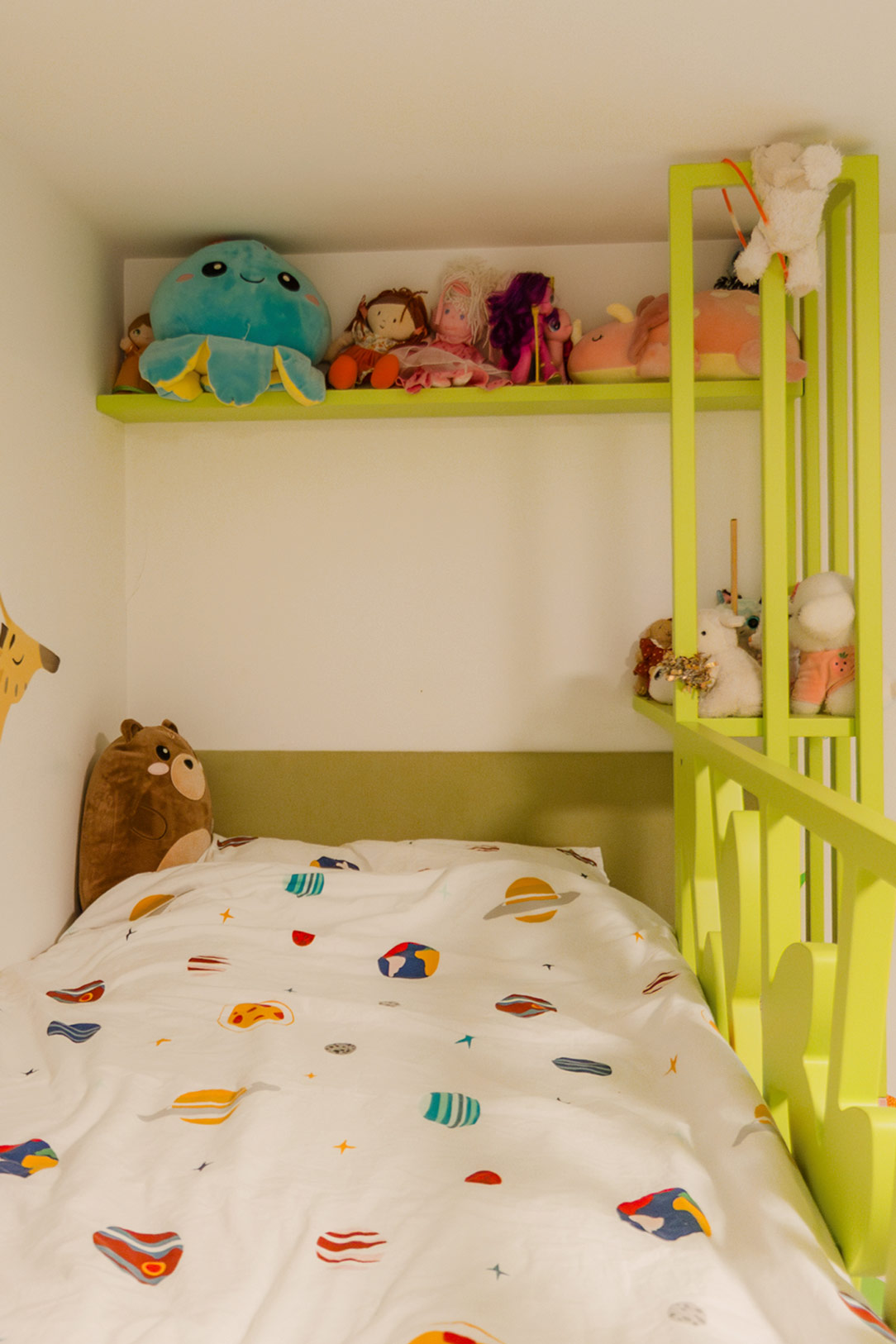
Colors play a crucial role in making the kids’ room inviting and lively. The bright green of the protective barrier echoes the jungle-themed mural on the back wall and matches the existing cabinetry. This shade, combined with two tones of pink—one bold and the other softer—creates a cheerful and imaginative environment perfect for sparking creativity in the little ones.

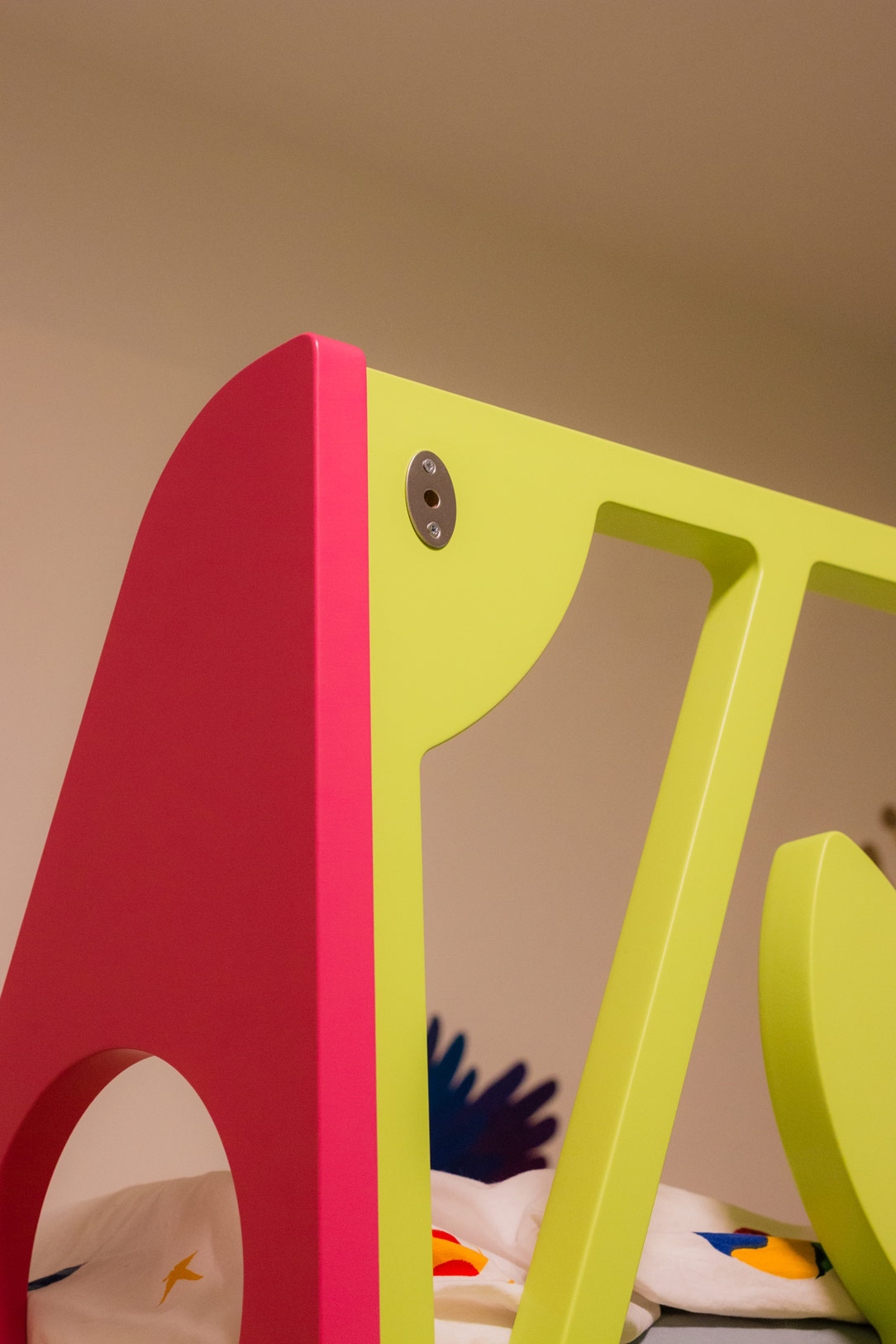
Details like the rounded shapes of the barrier and the shelf ends add to the room’s harmonious and safe design, ensuring a balance between aesthetics and functionality.

kids room bunk bed

Study Zone and Storage: Functionality for the Whole Family

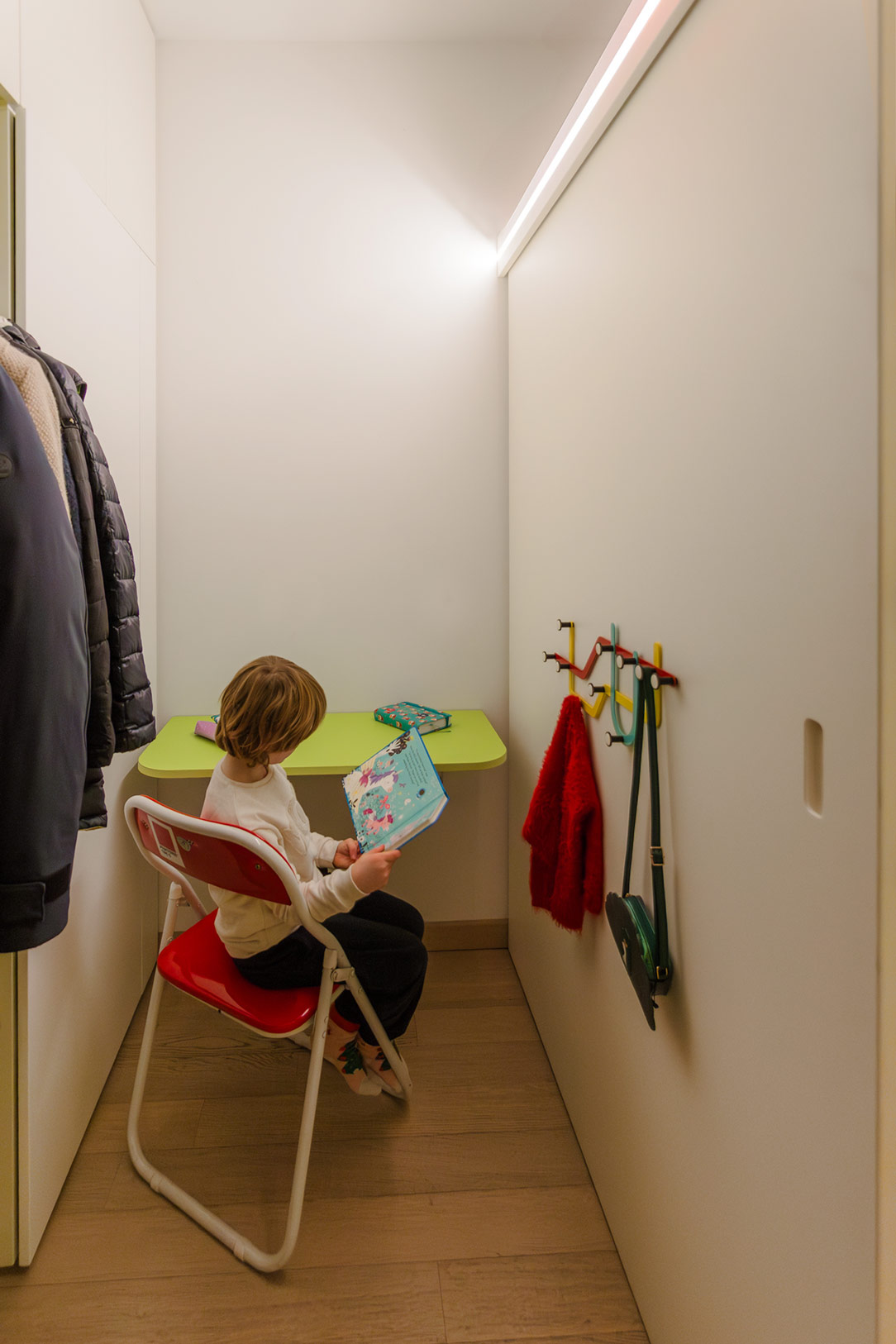
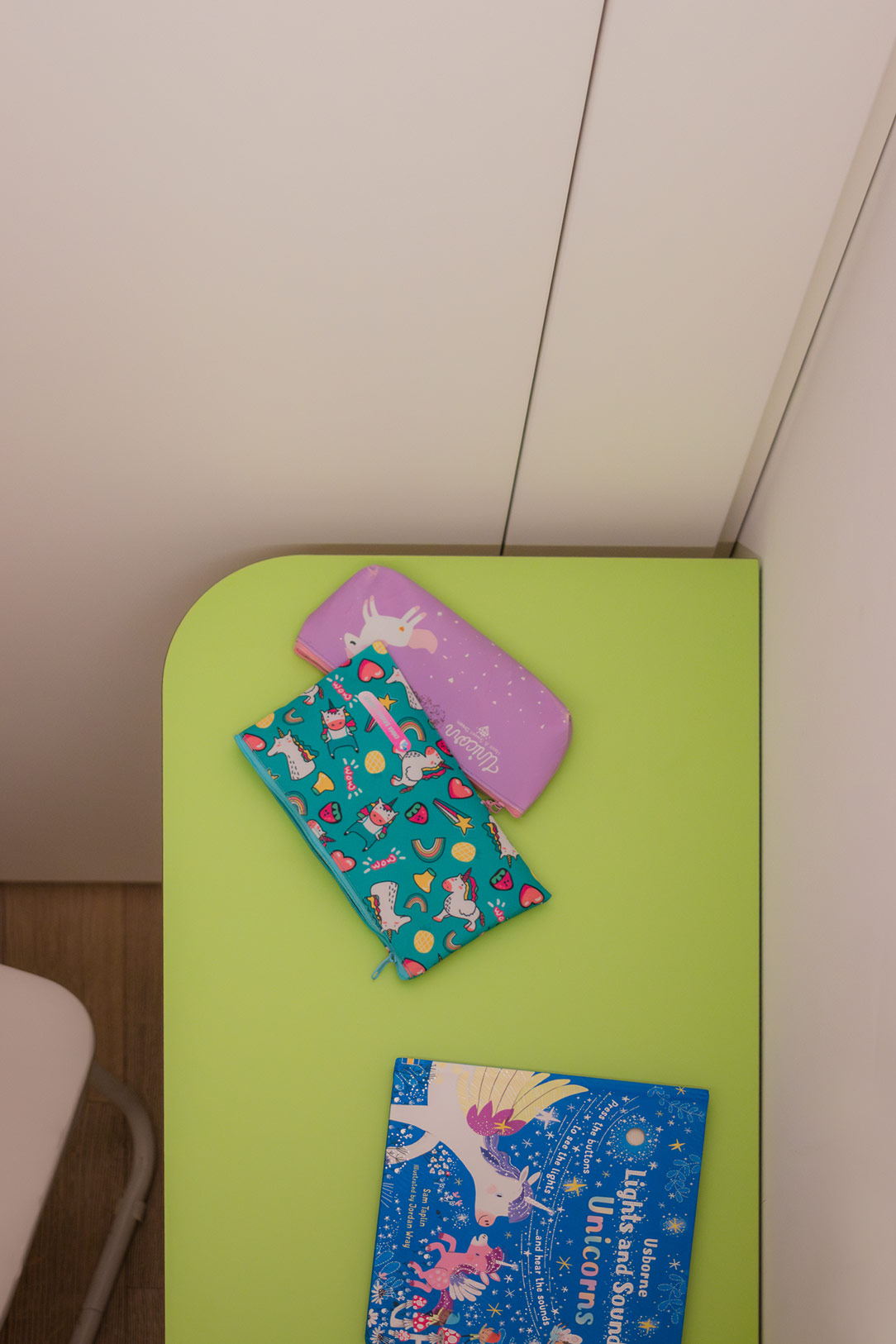
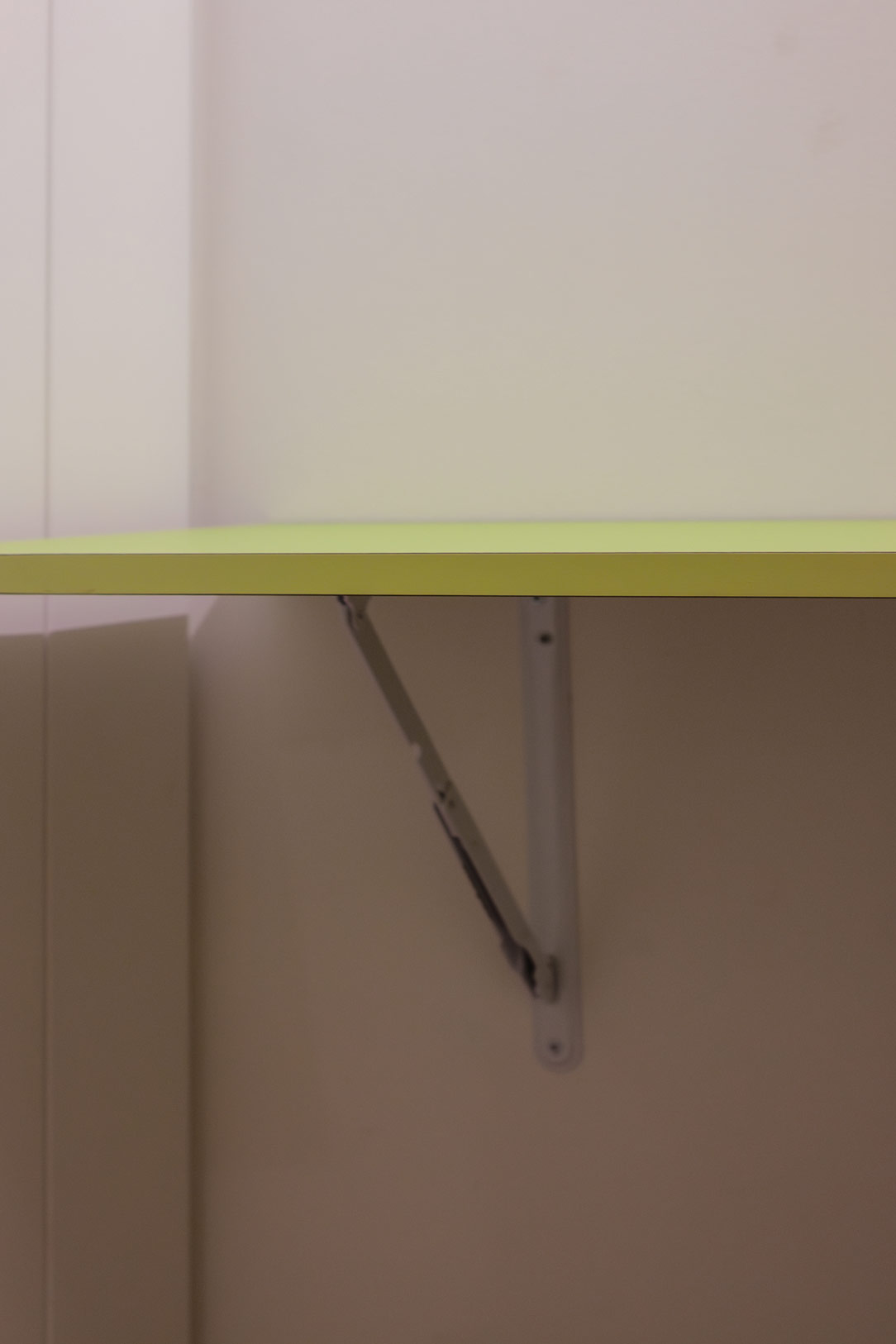
The available space was maximized by creating a small study zone between the sleeping area and the storage closet. A foldable, green, rounded work surface can be set up when needed, transforming into a handy desk for homework or creative activities. When not in use, the table easily folds back, freeing up the area.

study zone
details work surface

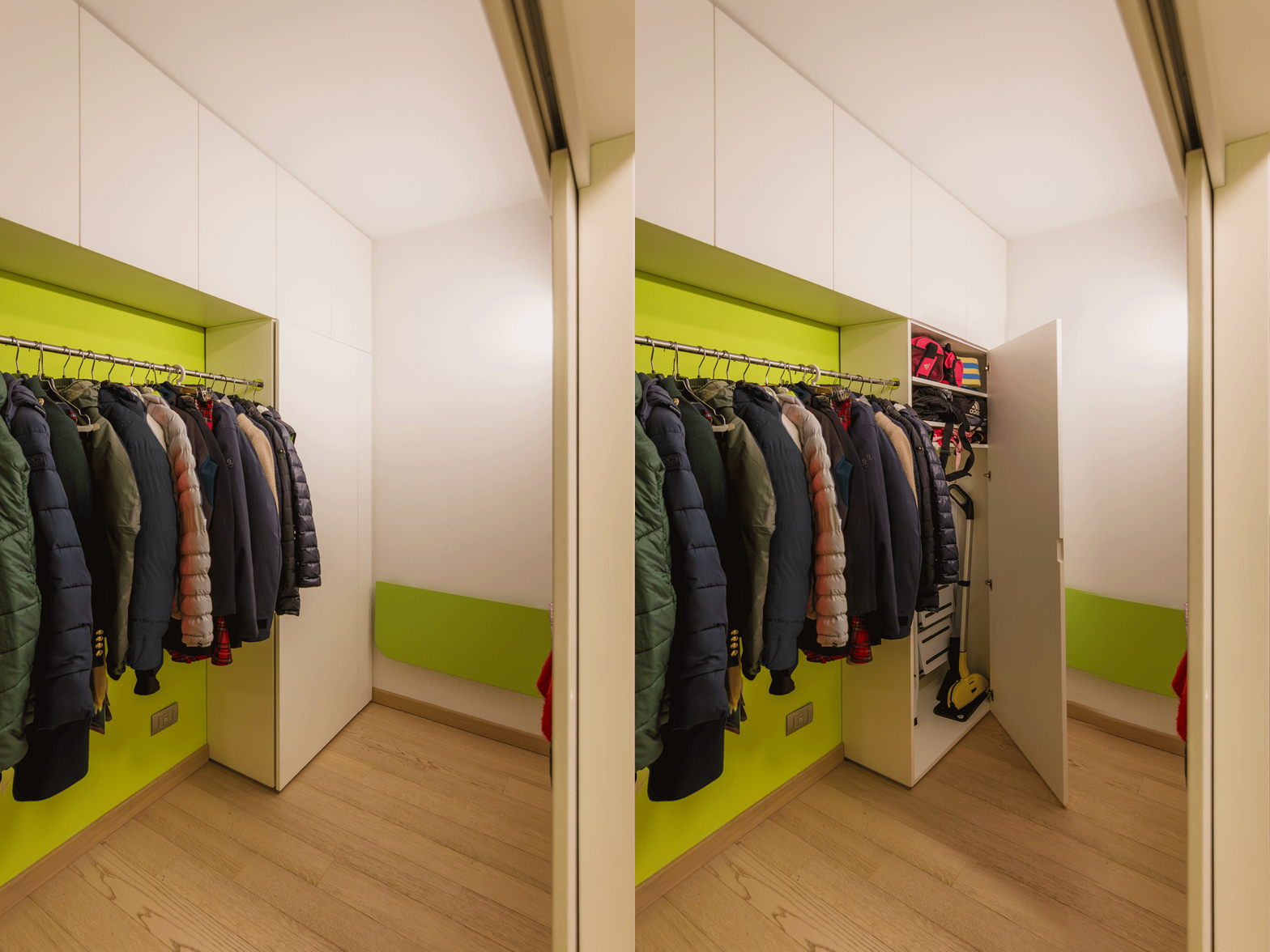
Adjacent to the study zone is a discreet yet accessible storage area. This hidden compartment keeps essential household items, such as the vacuum cleaner and ironing board, neatly tucked away.

open storage area

Stylish and Comfortable Details

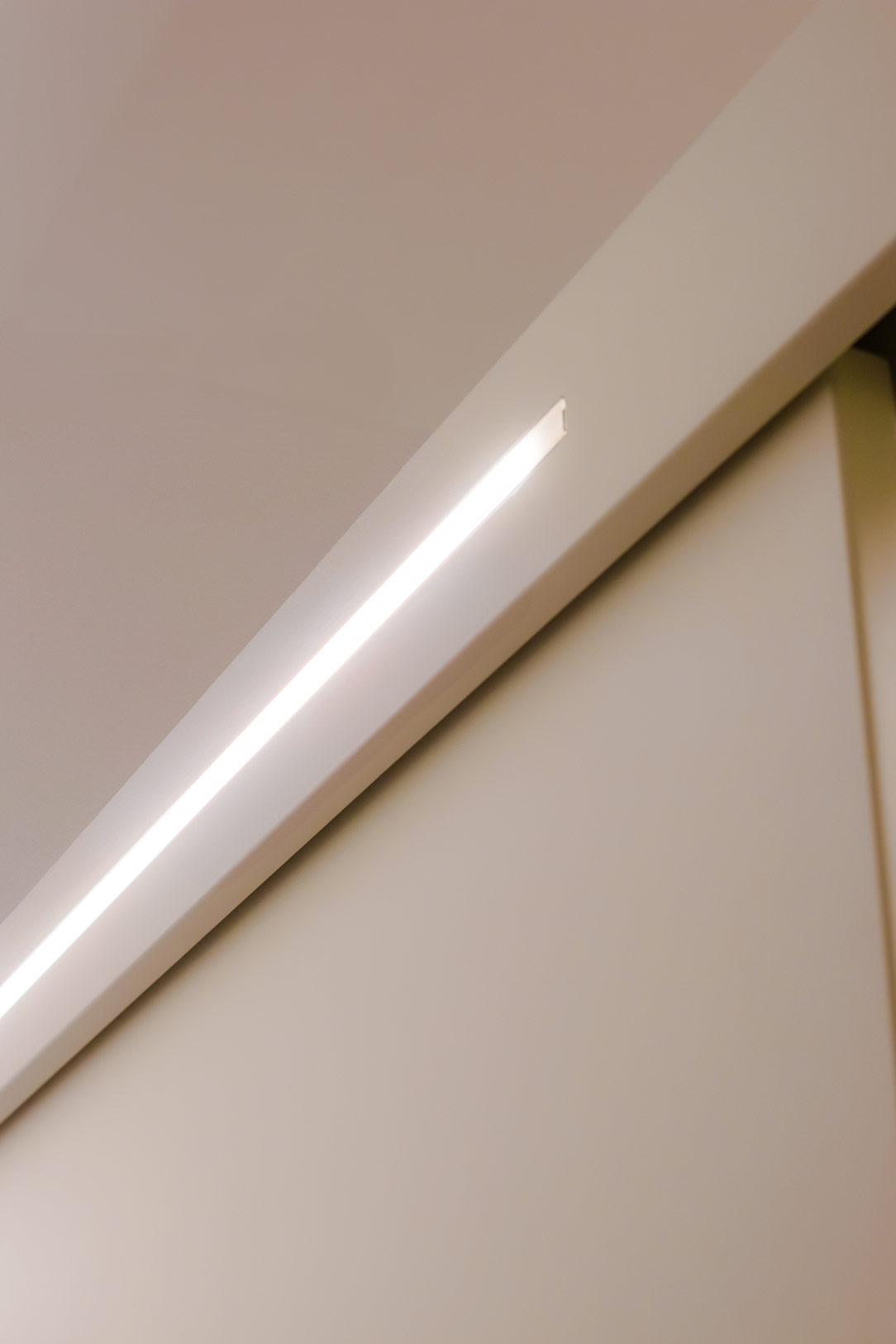
Every detail in the room was carefully crafted to ensure style, comfort, and practicality. The upper bunk’s protective barrier, inspired by the shape of leaves, ties in with the natural theme of the mural. Similarly, the sliding door is more than just a closure—it features a built-in coat hanger for the kids and a LED strip that effectively illuminates the entire room, with a focus on the study area.

shaped door
Led strip

Each bed also includes a strategically placed USB port, perfect for connecting reading lamps or electronic devices, adding a modern and practical touch.

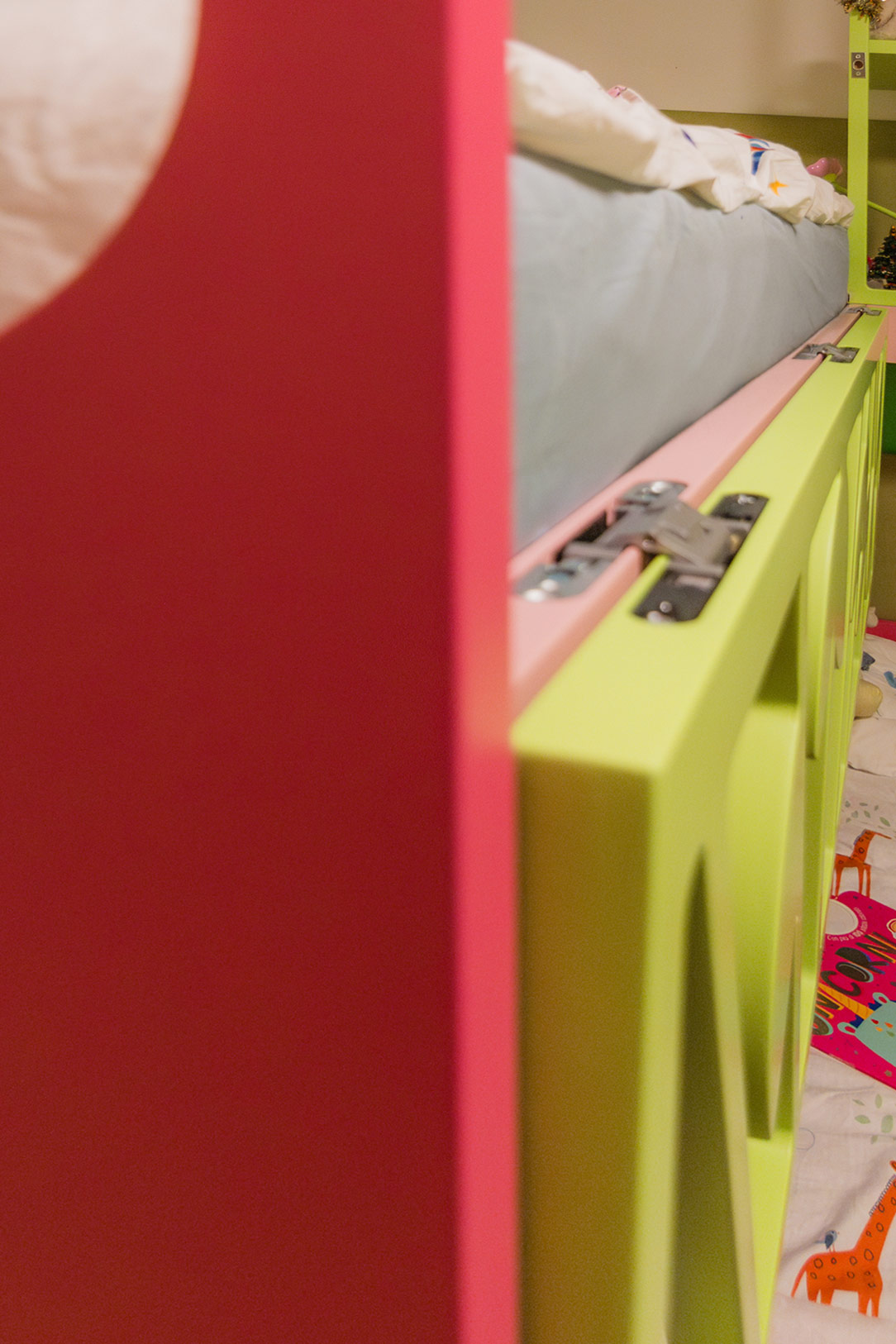
For easier bed linen changes on the upper bunk, the protective barrier features a tilting mechanism. Durable hinges are embedded in the bed base and the barrier, enabling it to fold down easily using a pin-opening system, ensuring hassle-free access to the mattress.

Additional child-friendly details include safety gates that provide an extra layer of protection, making the space secure and suitable for young explorers.

barrier
barrier opener
USB port
barrier upper bed

Conclusion

Thanks to a bespoke design, this multifunctional kids’ room has become a delightful retreat for the children, blending aesthetics, practicality, and space optimization. The bunk beds and versatile furnishings have transformed a small room into a world tailored to the needs and dreams of its little inhabitants.

Kitchen Countertops: A Complete Guide to the Most Popular Materials

Kitchen Countertops: A Complete Guide to the Most Popular Materials

Kitchen countertops: the materials available on the market offer a wide range of possibilities, each with unique characteristics. That’s why choosing the right kitchen worktop can often be a challenging decision. From solid wood, laminates, and HPL to stainless steel, quartz, granite, marble, and the latest ceramic materials, the options are nearly endless. In this article, we will focus on two highly popular categories: marble, natural stones, and quartz, alongside ceramic materials, exploring their features, advantages, and limitations.

Natural Materials: Marble and Stones

Marble

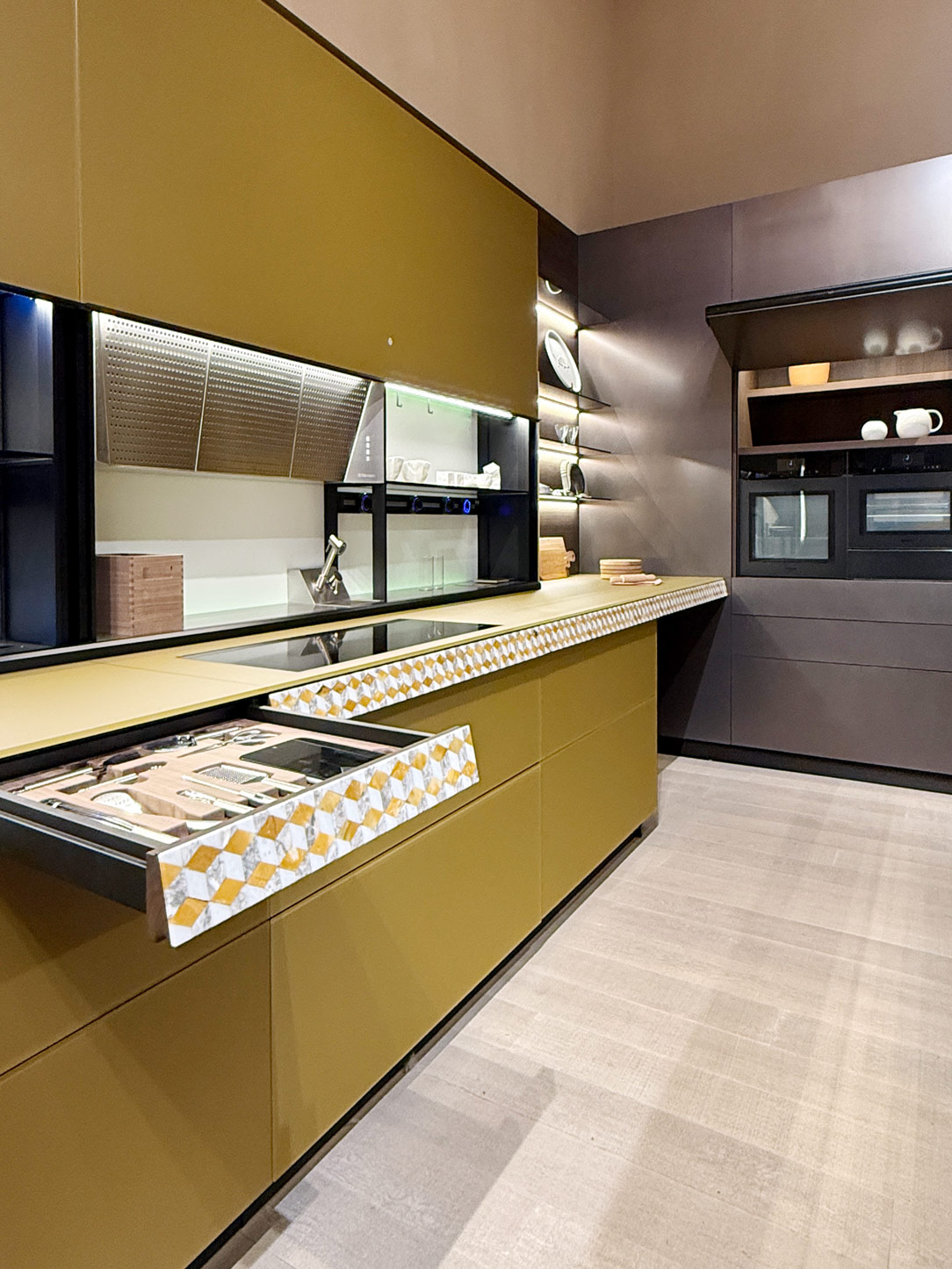
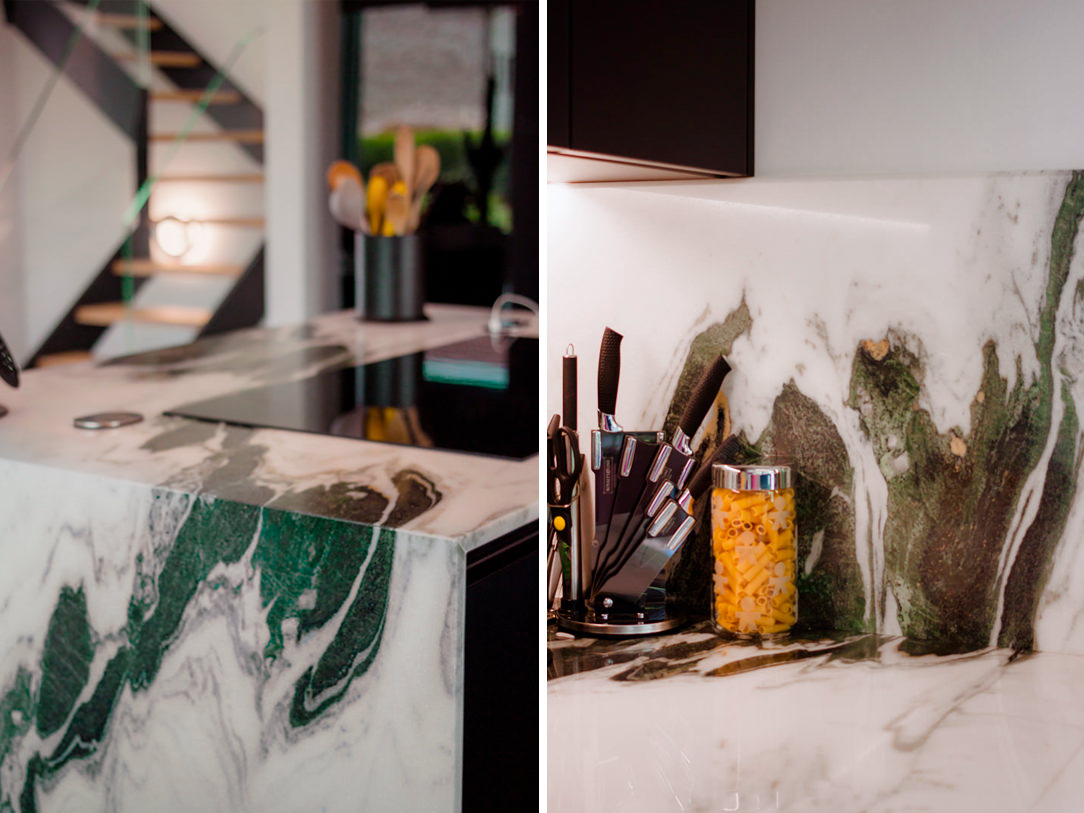
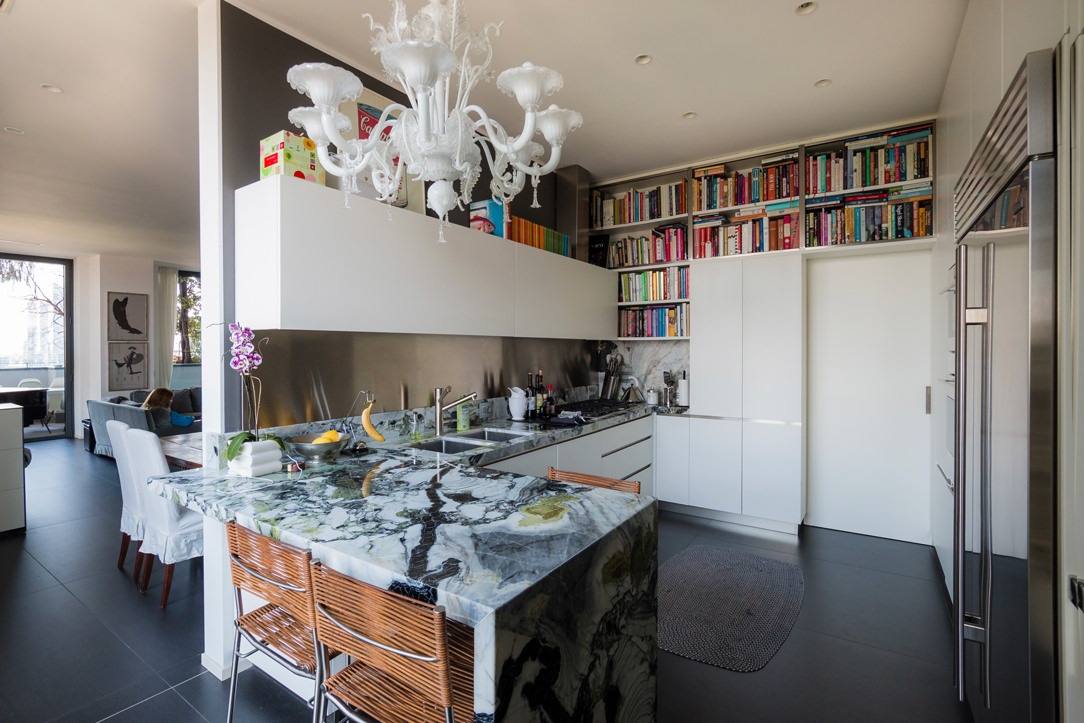
Marble is undoubtedly one of the most elegant and prestigious materials for a kitchen countertop. Its beauty lies in the uniqueness of each slab: no two are alike, thanks to the veins, striations, and unique transparencies that add depth and a three-dimensional quality to the surface. These details often result from natural elements crystallized over thousands of years. A perfect example is Panda White marble, with its golden veins standing out against a dark background, ideal for bringing brightness to a modern kitchen design.

entrance furniture
details panda white marble

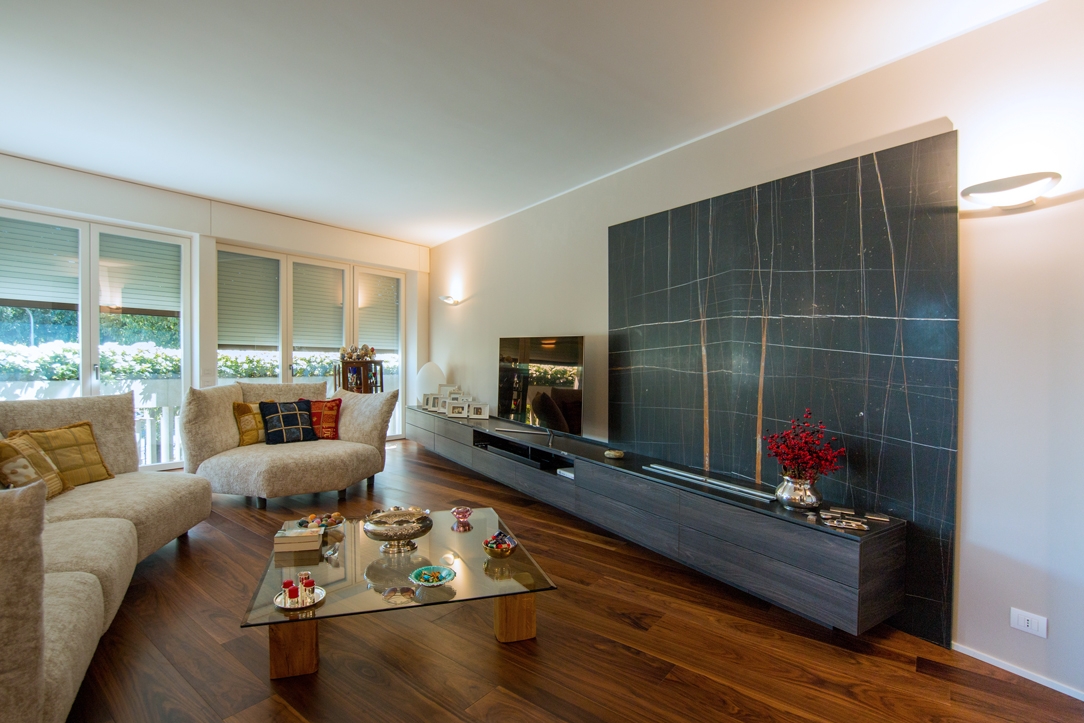
Marble slabs are typically available in thicknesses of 1.2, 2, or 3 cm. Their use can involve arrangements in “book-matched” patterns, creating a mirrored effect that is particularly striking when used on walls. Alternatively, the veins can be aligned to follow the functional surface of the countertop, emphasizing the material’s natural beauty.

elegant apartment Milan

The cutting process must be carefully planned to ensure that openings for sinks or cooktops do not compromise the most striking parts of the slab.

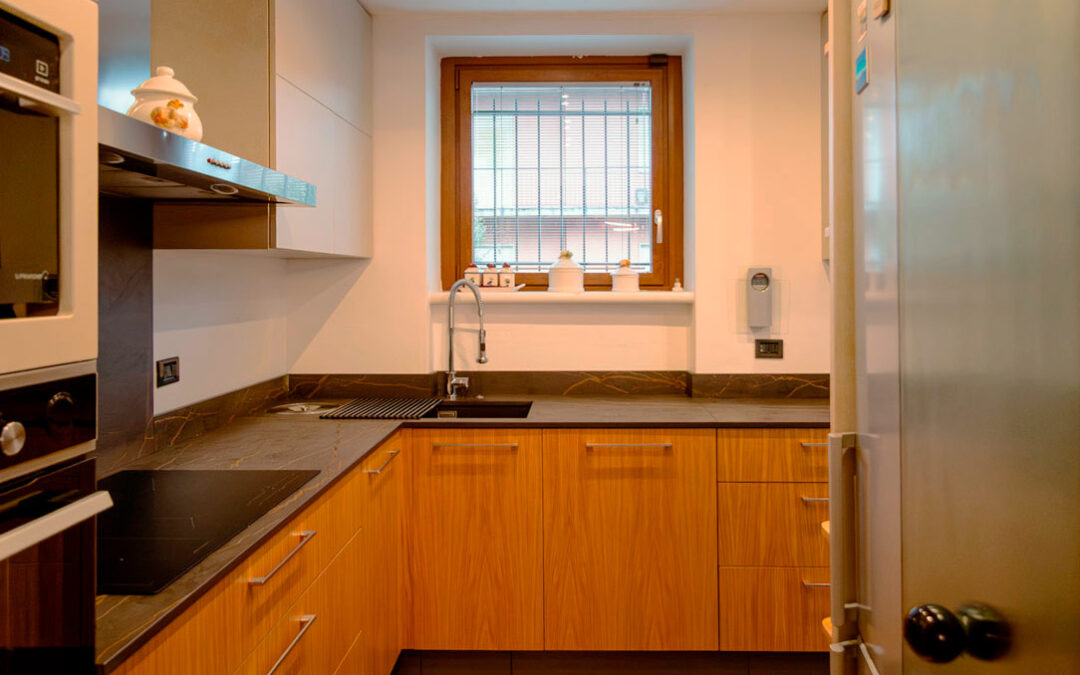
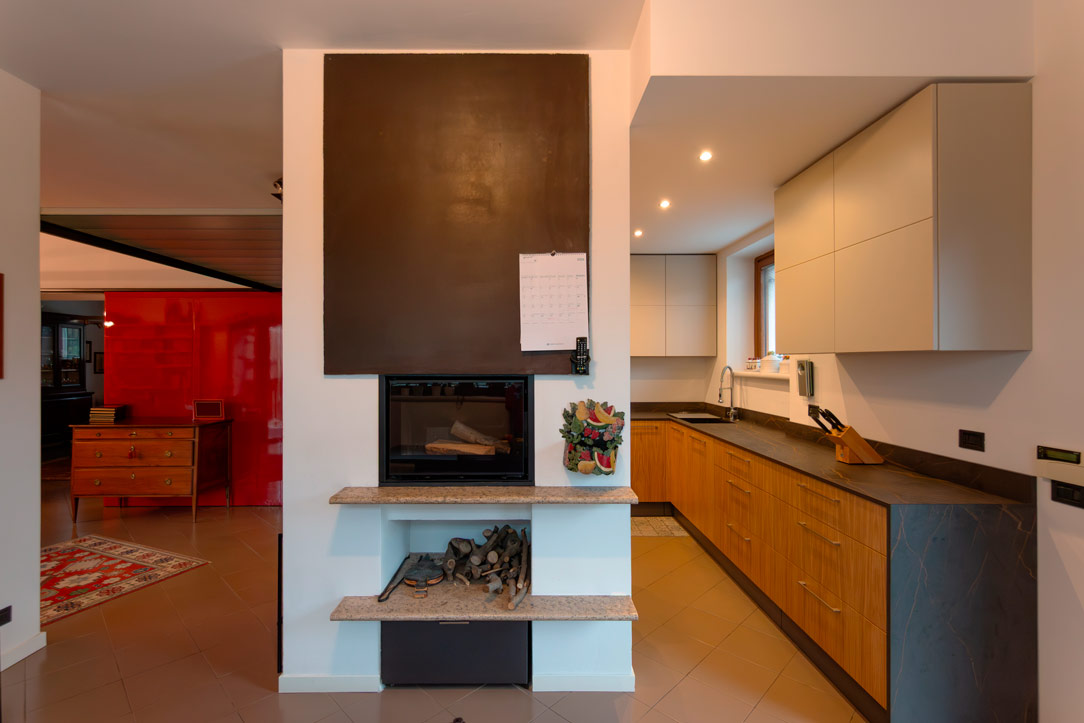
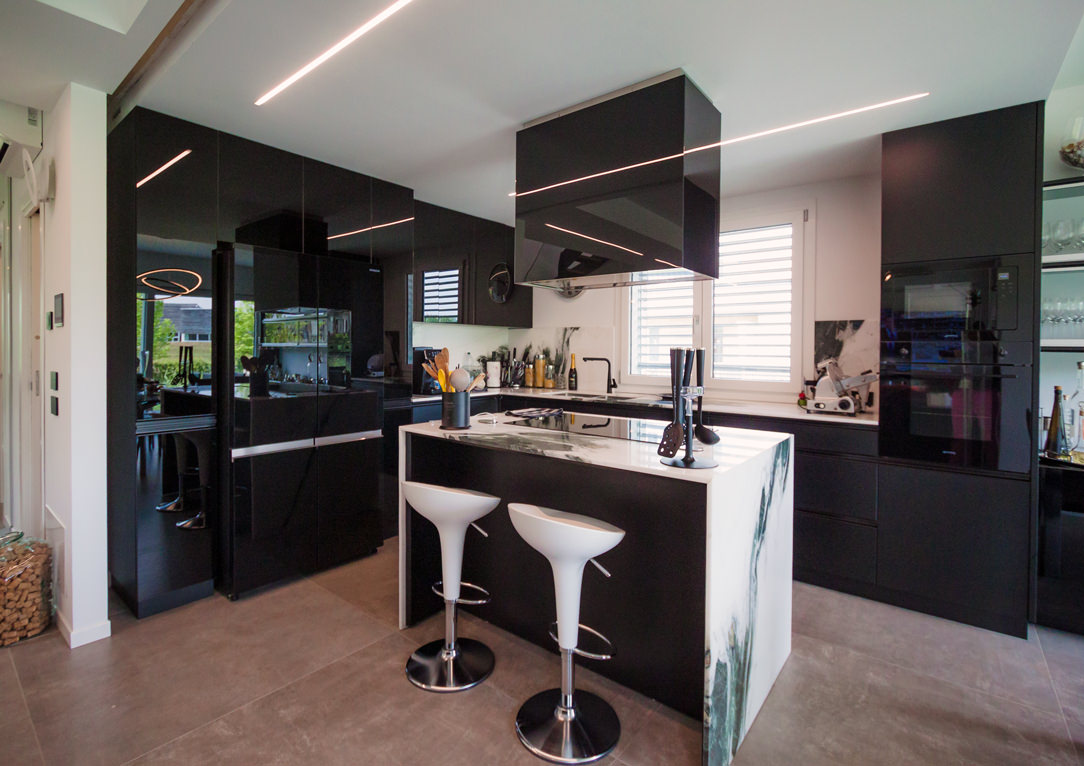
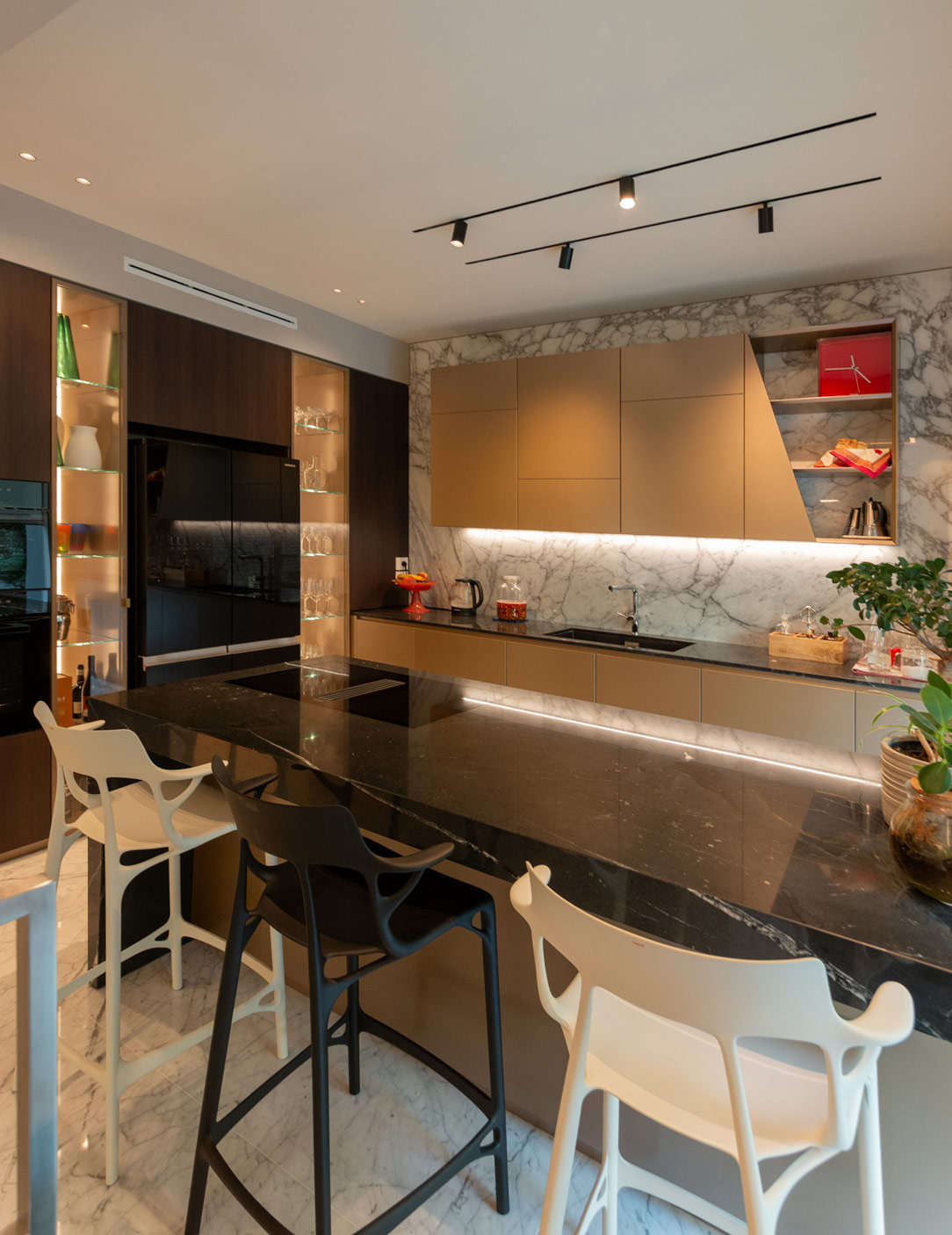
In recent years, dark or heavily veined marble has gained significant popularity. A notable example is polished Negresco marble, which pairs beautifully with metallic kitchens, creating an effect of unparalleled elegance.

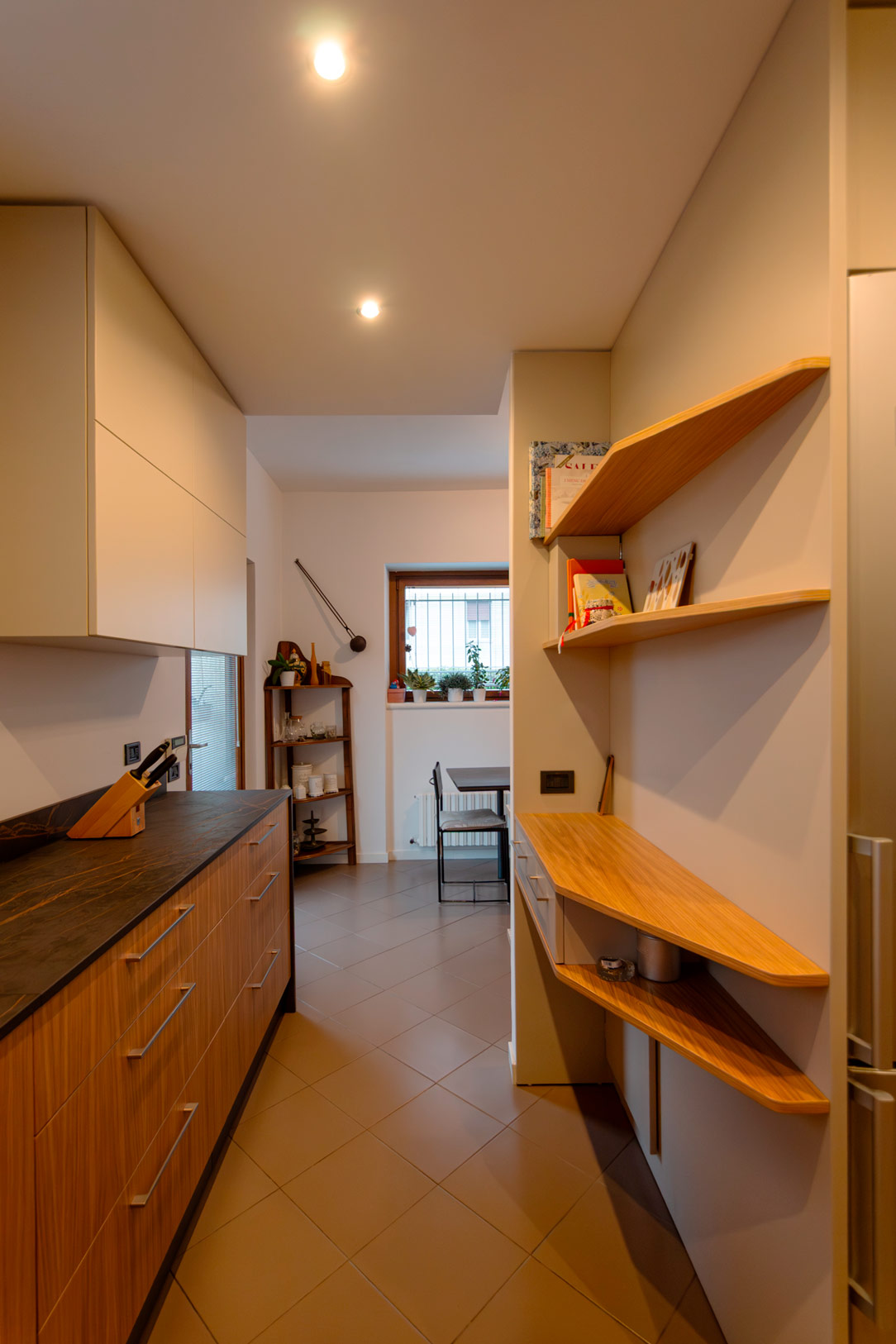
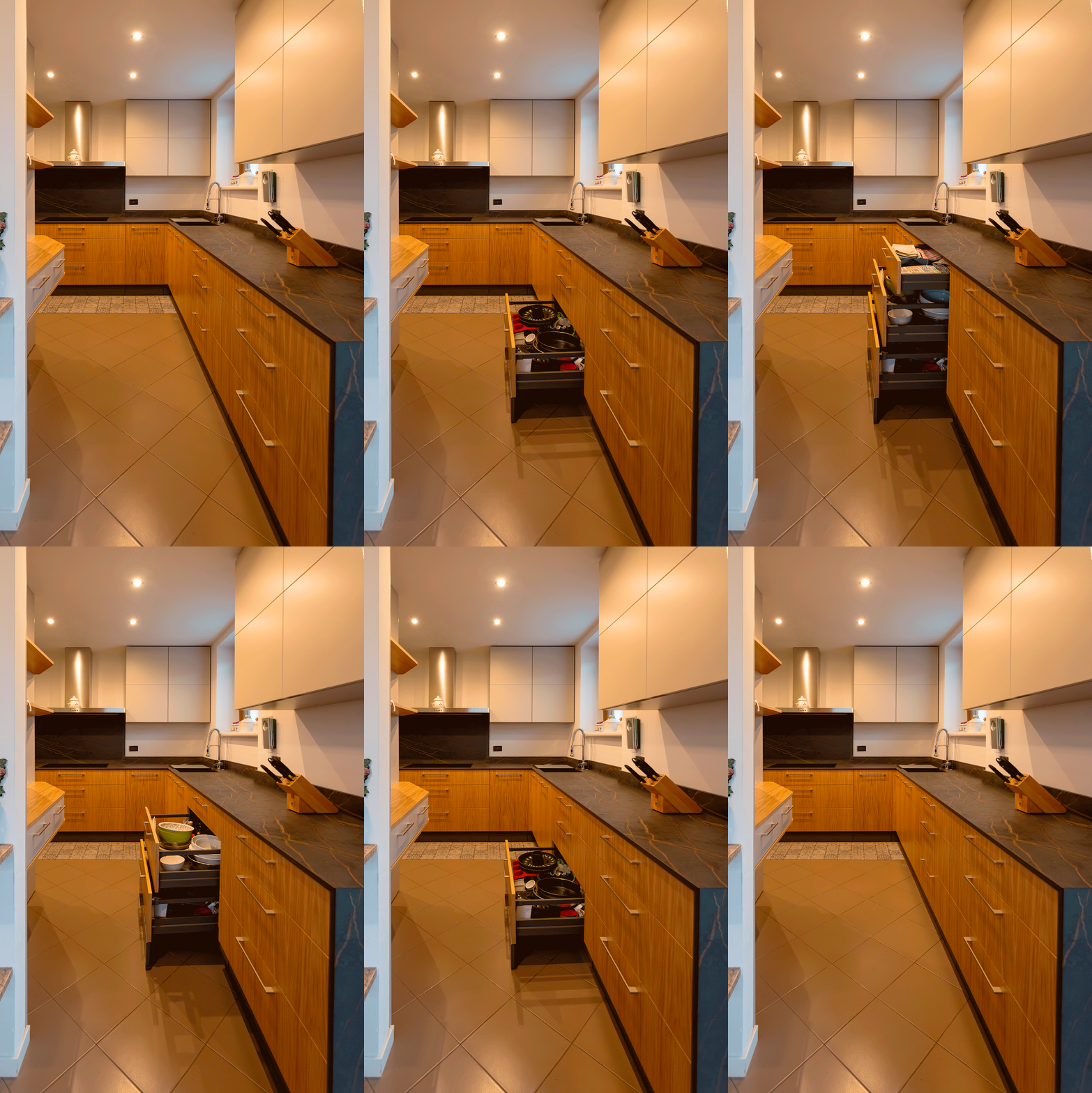
kitchen

Natural Stones

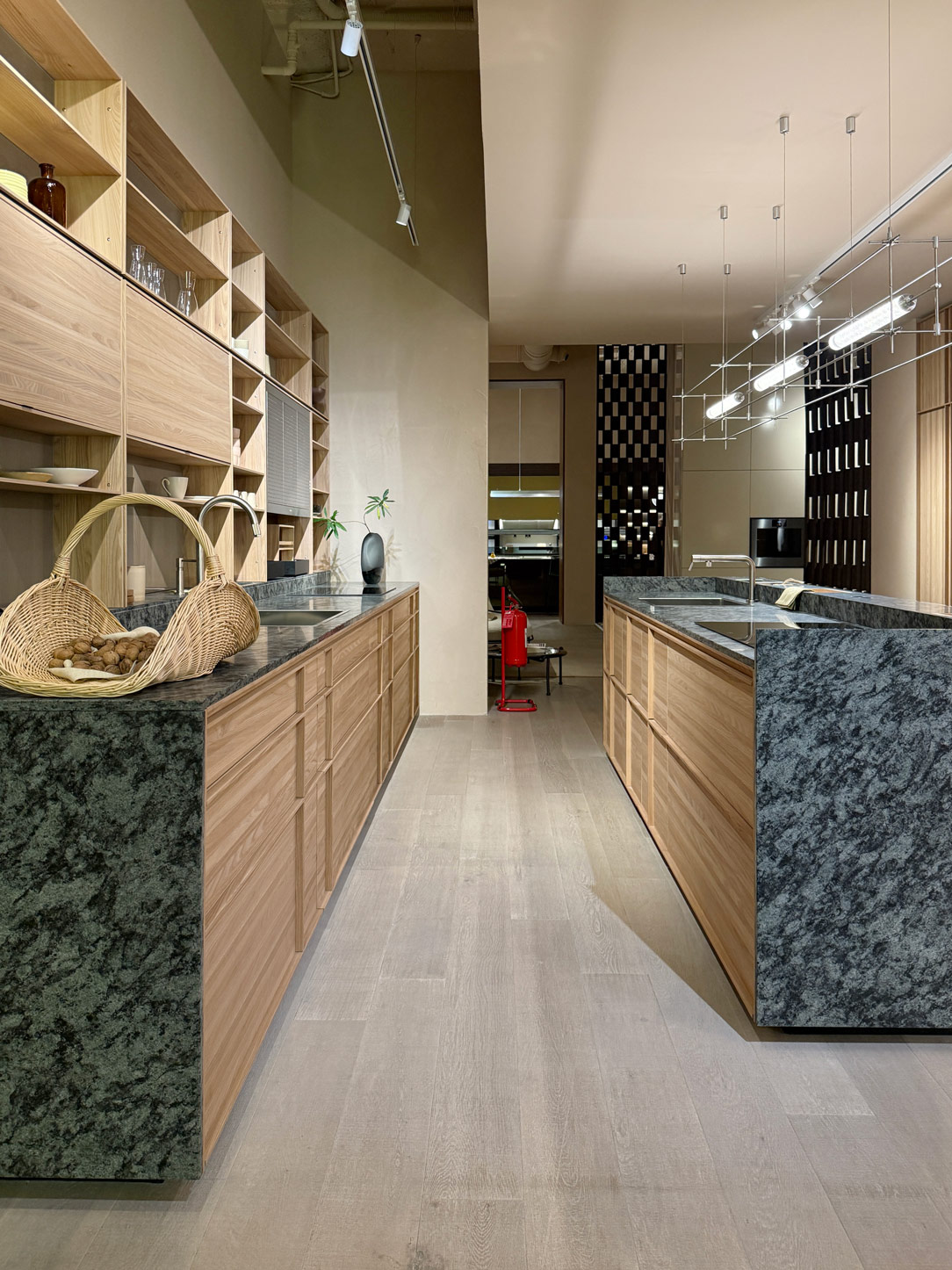
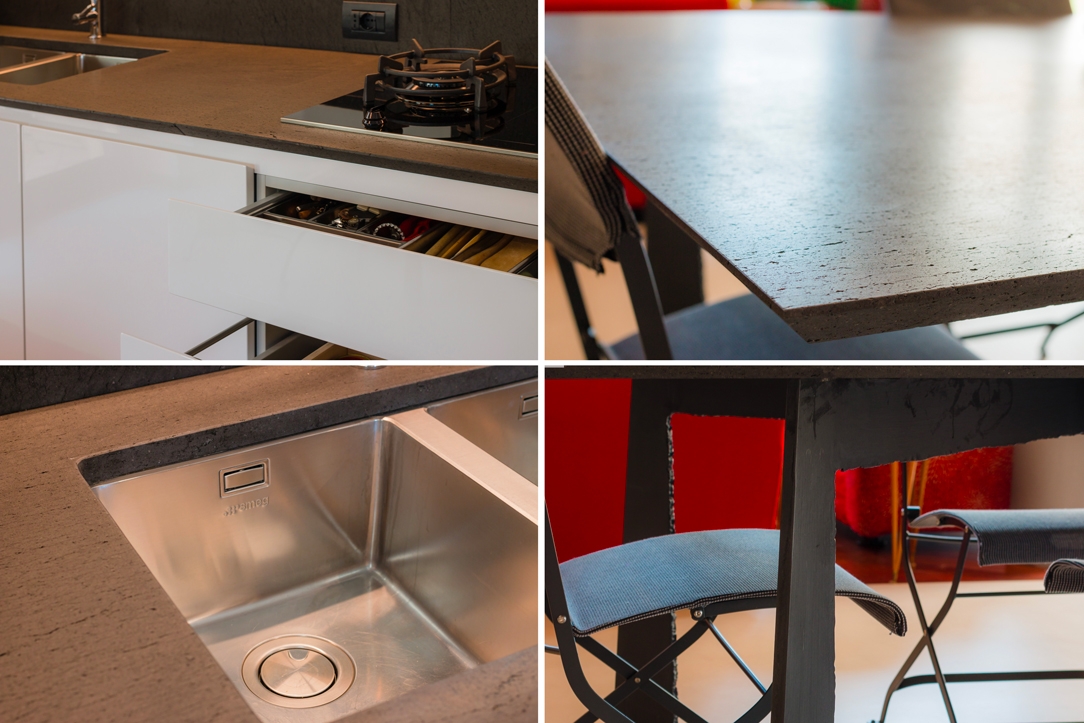
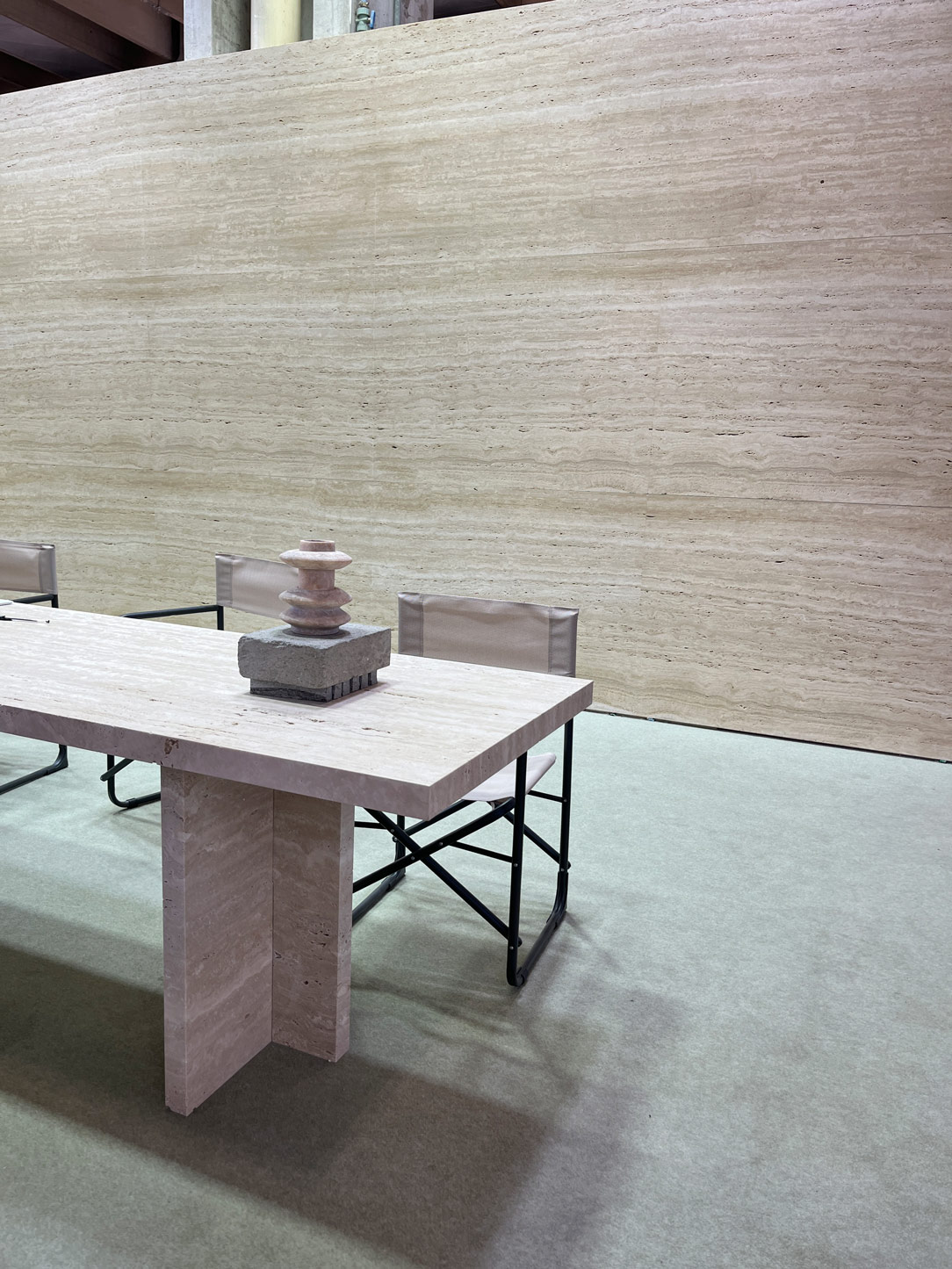
In addition to marble, other natural stones like travertine and lava stone can also be used for kitchen countertops. Travertine, a beige sedimentary limestone, has been renowned since Roman times for its distinctive striated appearance. Lava stone, such as Basaltina, offers deep gray tones and a textured, tactile surface that adds character to the kitchen design.

Both materials are naturally porous but can be treated with transparent fillers to enhance resistance against oils and flours, which might otherwise seep into the material’s natural crevices. This treatment preserves their beauty while improving their practicality for everyday kitchen use.

modern kitchen front
kitchen details

Maintenance of Natural Materials

Marble and natural stones require careful maintenance. Their porosity makes them vulnerable to staining from acidic substances such as tomato, lemon, or wine. To preserve their beauty, it is essential to use neutral cleaning products and regularly treat the surface with appropriate sealants or protective treatments.

lateral wasabi kitchen

A Place to Admire Them in Person

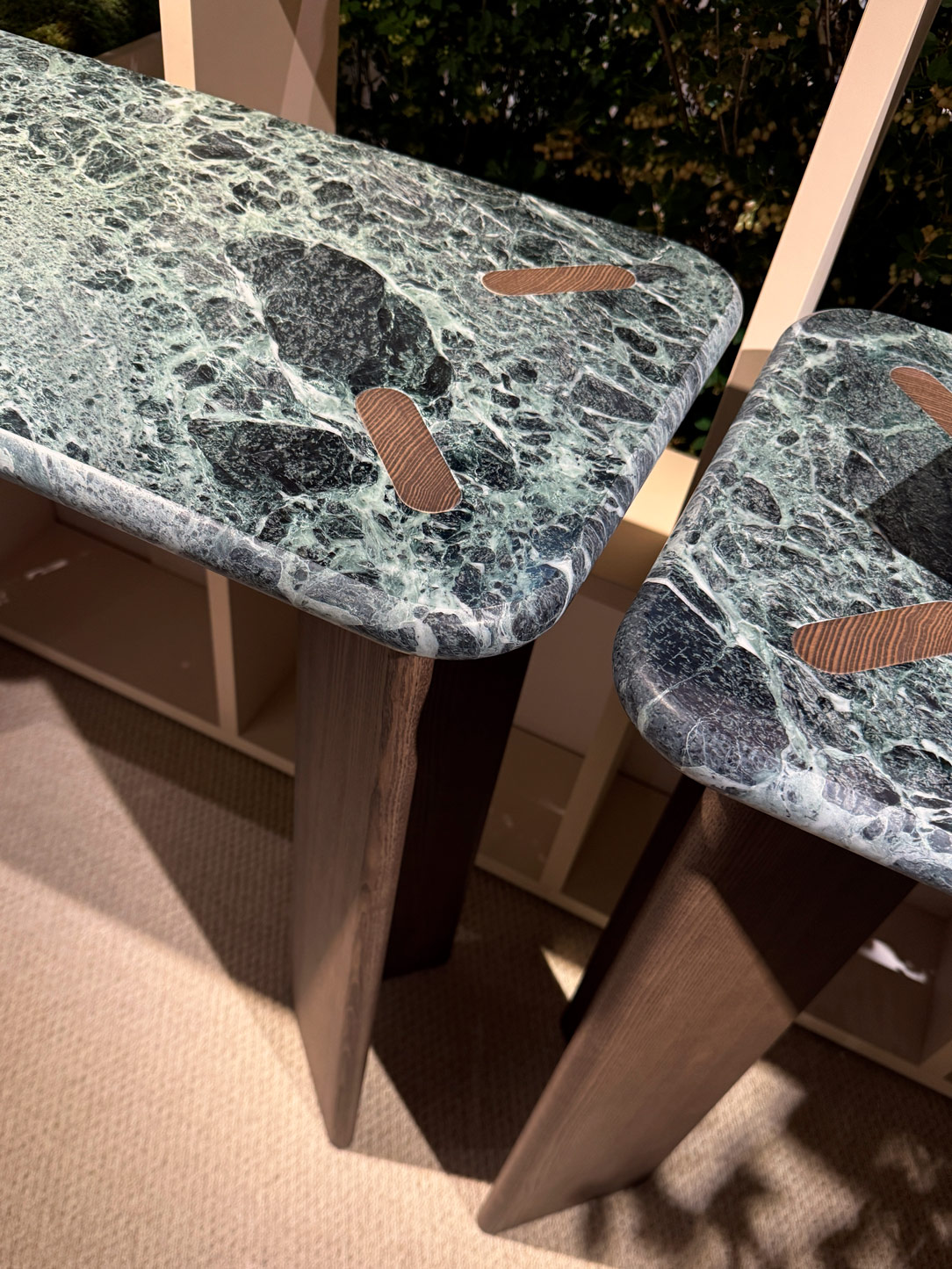
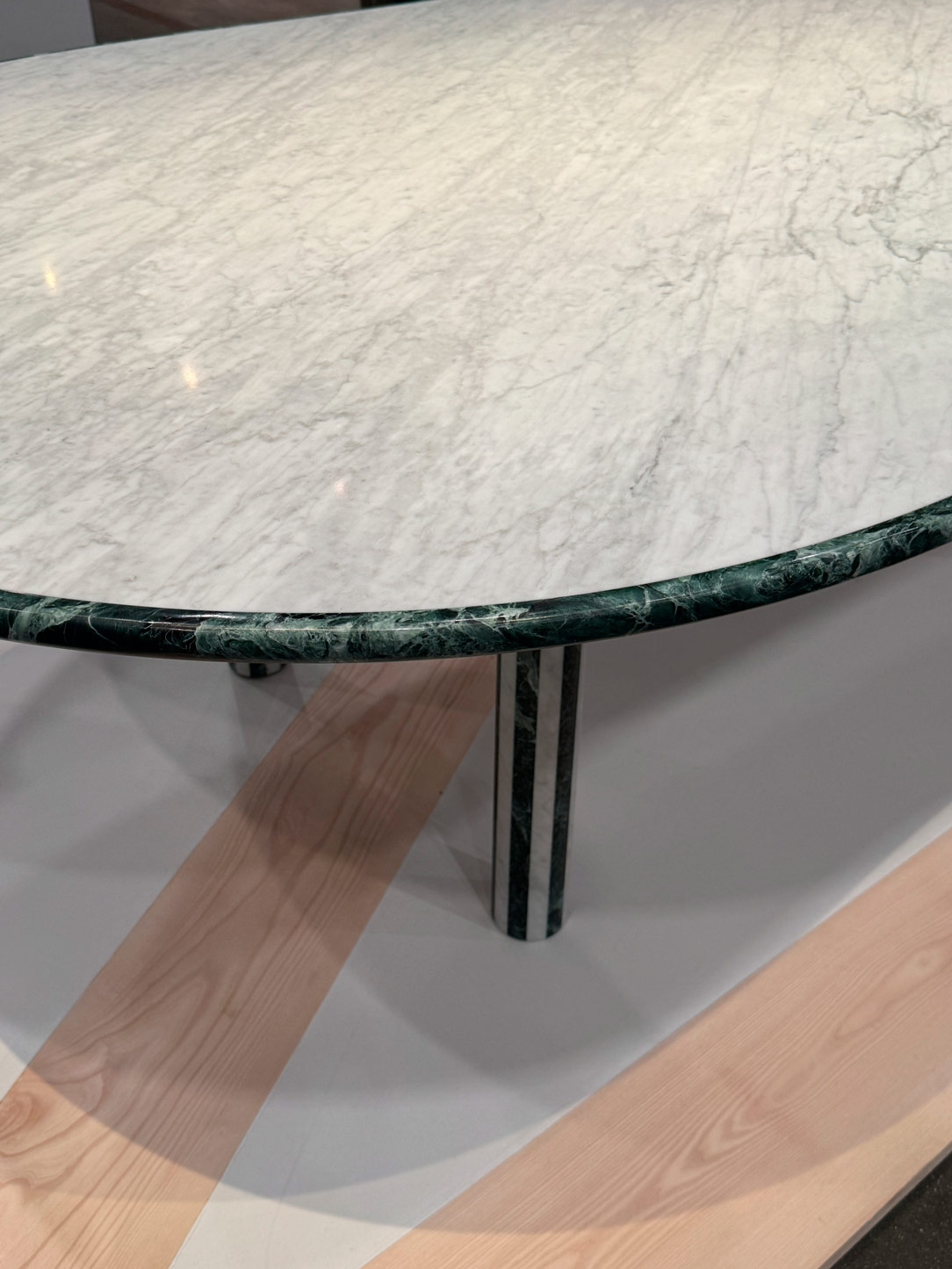
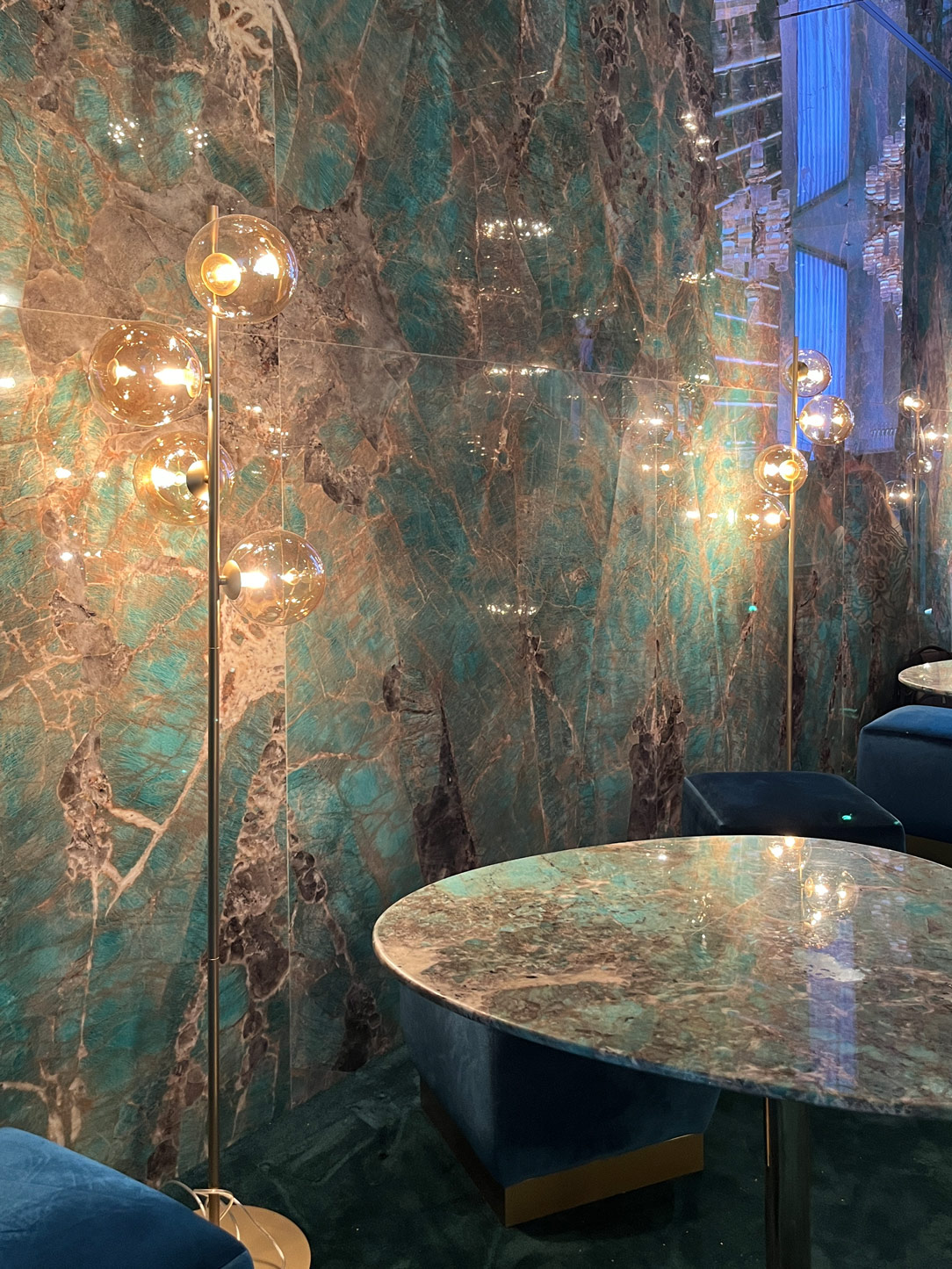
Marmomac, held annually in Verona (considered the second home of marble after Carrara), is the premier event for marble and natural stone enthusiasts. This exhibition showcases unique slabs from around the world, offering a chance to explore the diversity and beauty of these materials. Below is an example of Travertine and green Amazonite.

amazzonite
travertine

Ceramic Materials and Quartz Agglomerates: Innovation and Practicality

Quartz Agglomerates

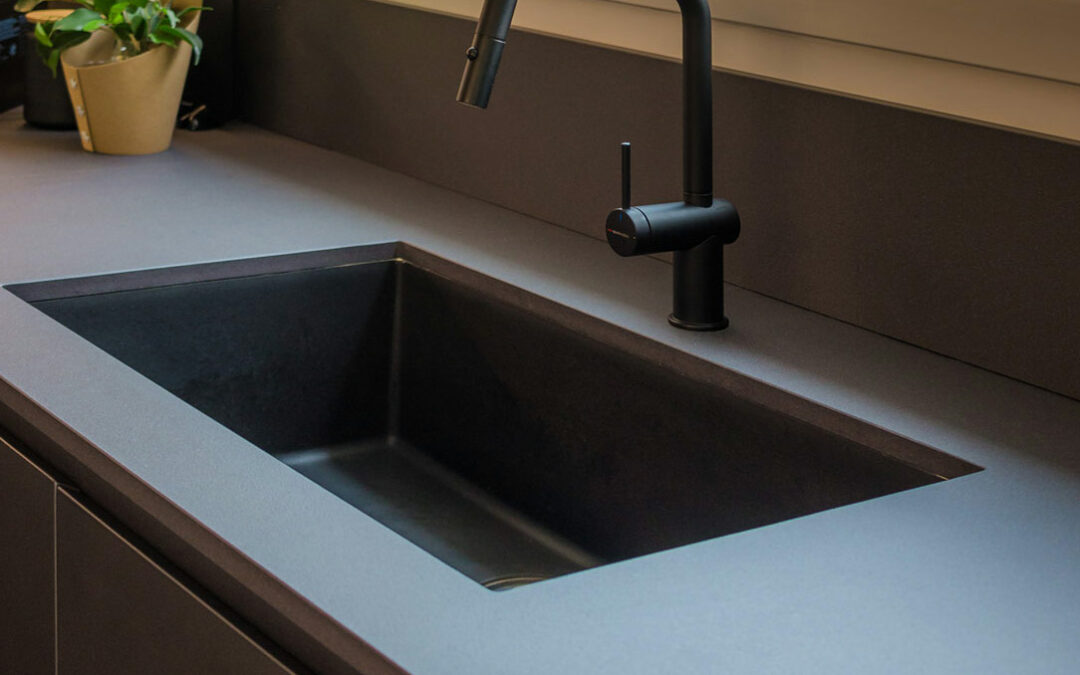
Quartz agglomerates are among the most versatile and sought-after options for kitchen countertops. Composed of approximately 95% natural quartz and 5% resins, this material combines the aesthetics of natural stones with the performance of technical materials. Its surface is completely smooth and non-porous, making these countertops particularly hygienic and resistant to liquid absorption and staining.

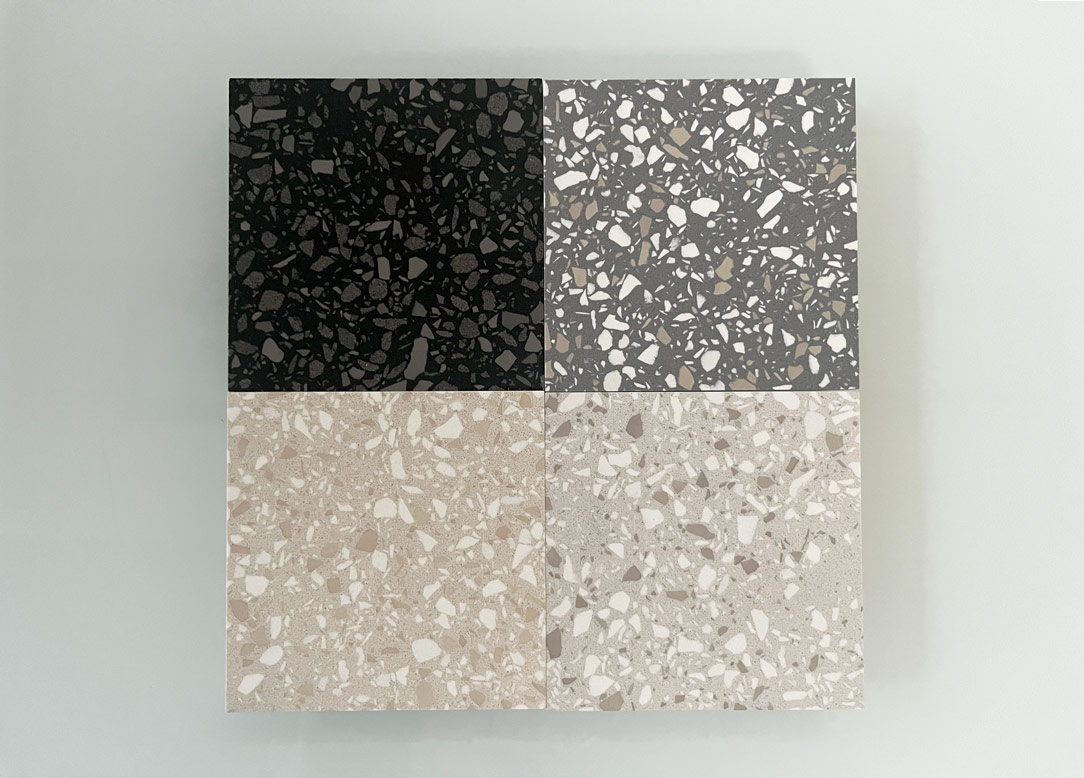
Thanks to quartz’s high hardness, these surfaces offer exceptional resistance to abrasion and scratches, making them ideal for everyday kitchen use. In recent years, quartz agglomerates have regained popularity due to their dynamic finishes, such as the “terrazzo finish,” which mimics the effect of small stones embedded in a neutral base for a fresh, contemporary look. Below are some examples from Stone Italiana’s collection.

terrazzo stone

Maintenance of Quartz Agglomerates

Despite their excellent performance, quartz agglomerates can be sensitive to high temperatures. Direct contact with hot pots or pans just off the stove may cause stains or cracks due to resin overheating. To protect the surface, it’s advisable to use trivets or other precautions.

Maintaining quartz countertops is straightforward, requiring only neutral cleaning products. Their non-porous surface makes cleaning easy and prevents bacterial buildup, ensuring a highly hygienic kitchen environment.

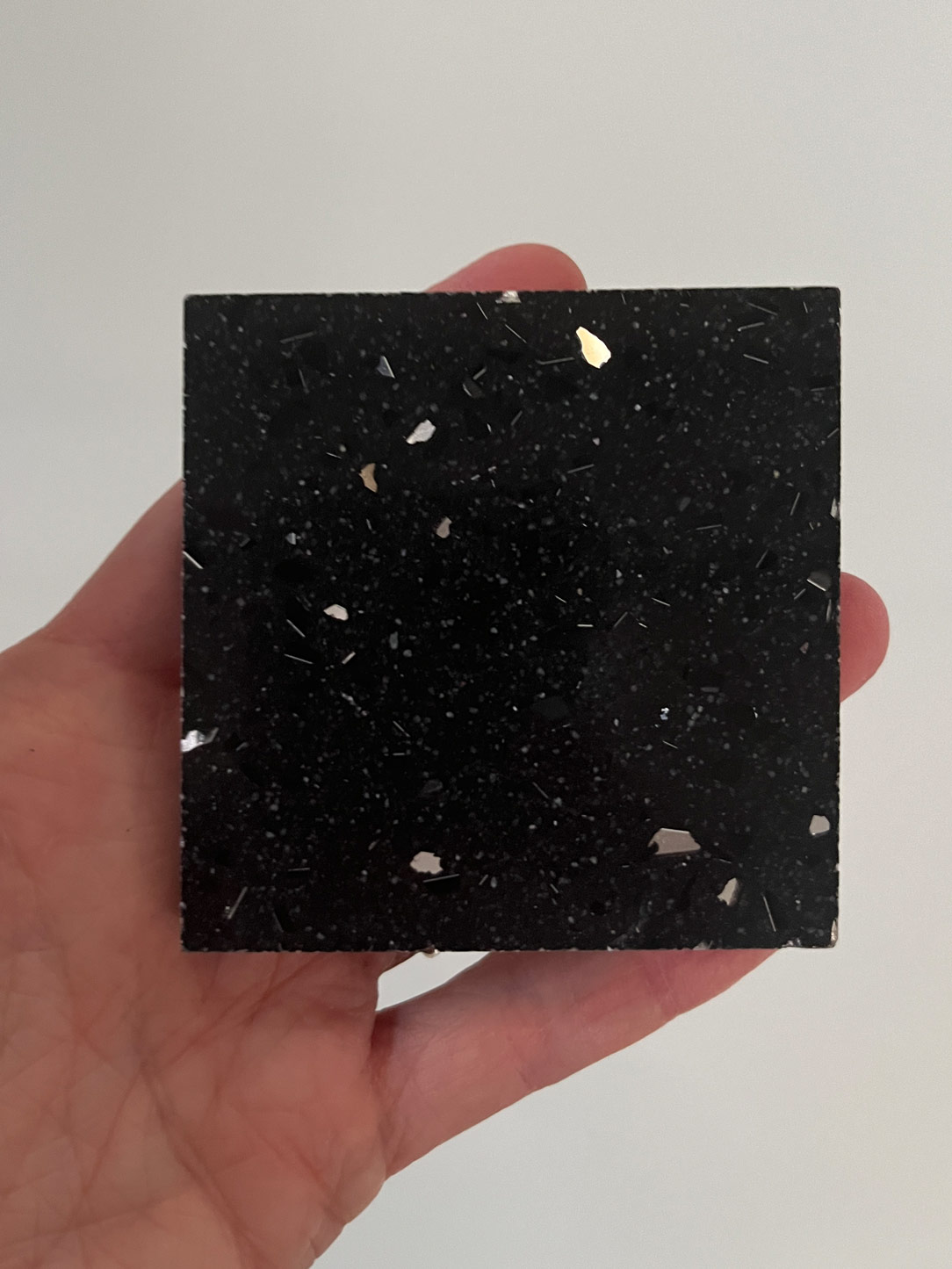
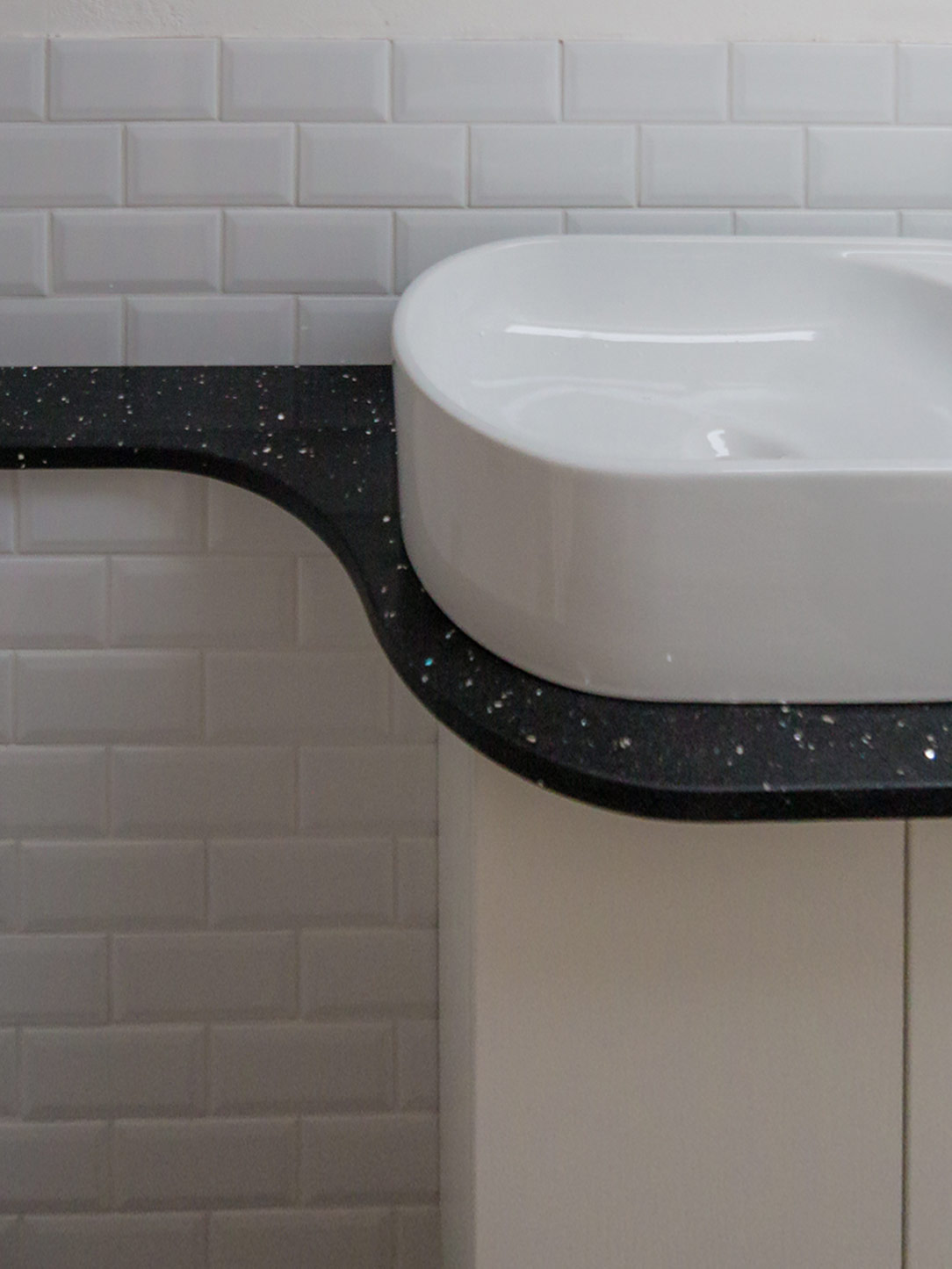
stone nero brillant
stone nero brillant

Ceramic Materials

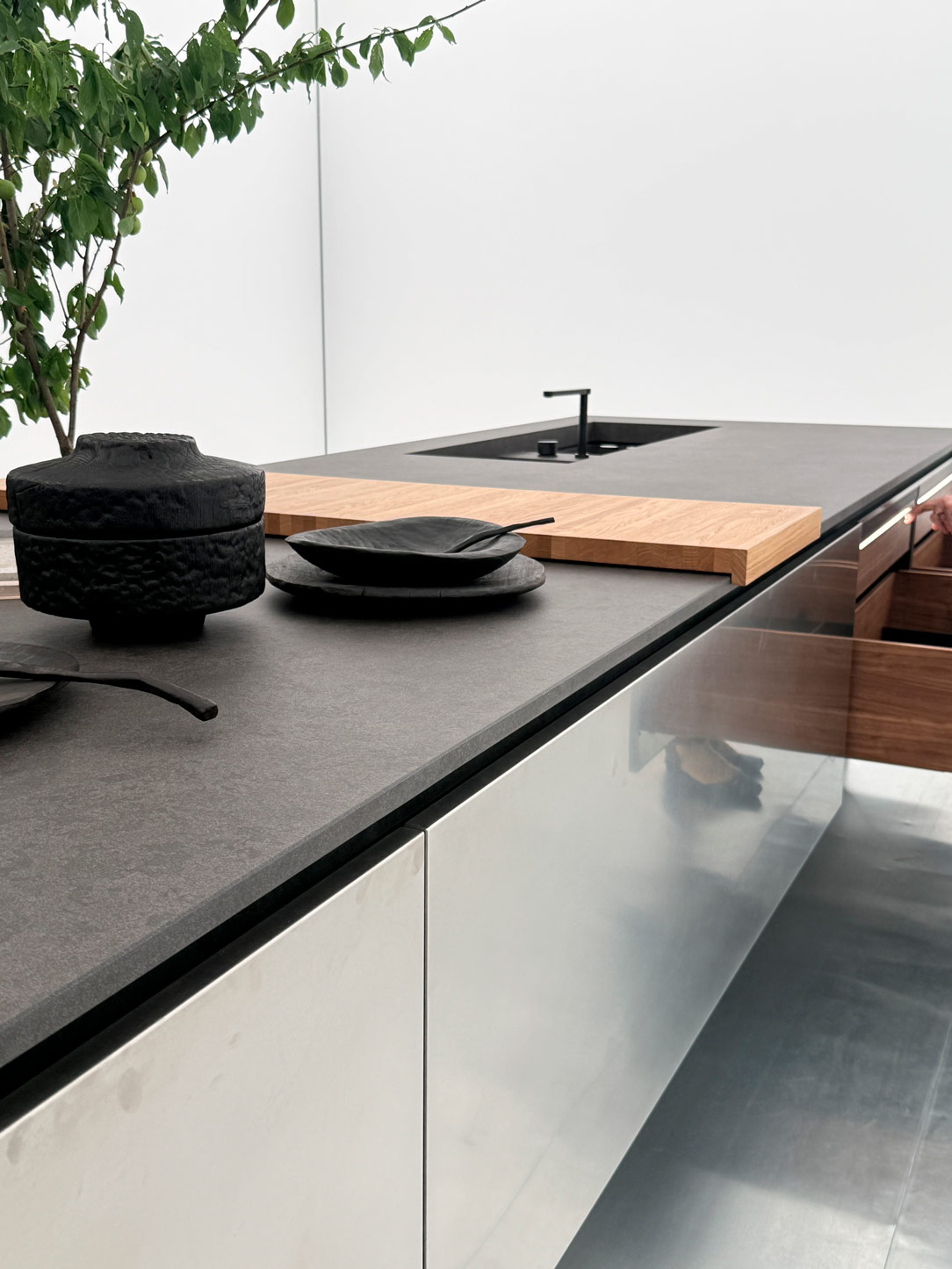
Ceramic materials represent a modern and highly functional solution for kitchen countertops. Made from a blend of mineral powders, glass, ceramics, and quartz, these materials are compacted and baked at high temperatures, ensuring exceptional durability.

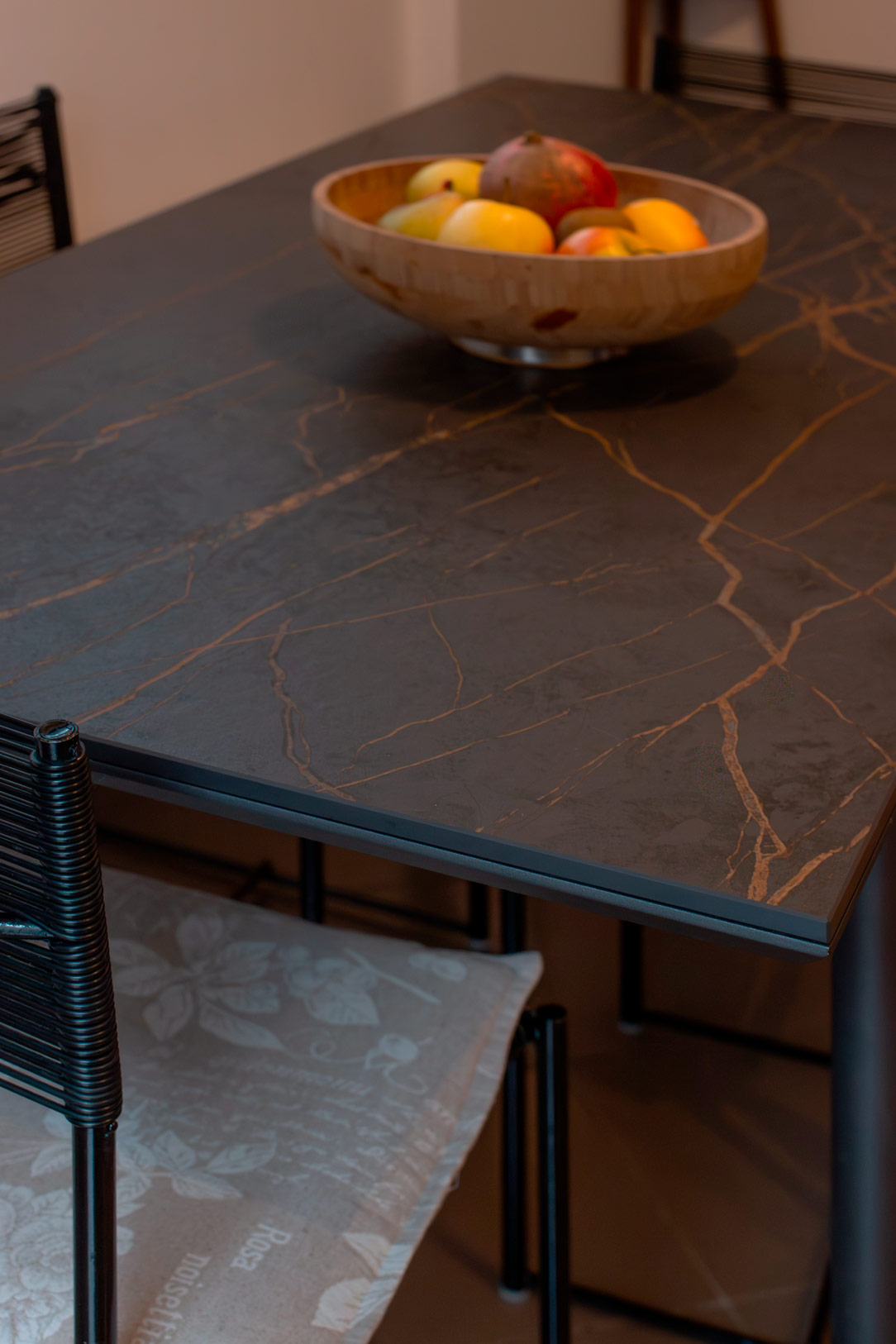
These materials are available in neutral textures or with finishes that mimic marble, wood, concrete, and even oxidized metal. Continuous research has led to highly realistic effects, such as marble veins or metal oxidation, making these products highly sought after for elegant and contemporary kitchens.

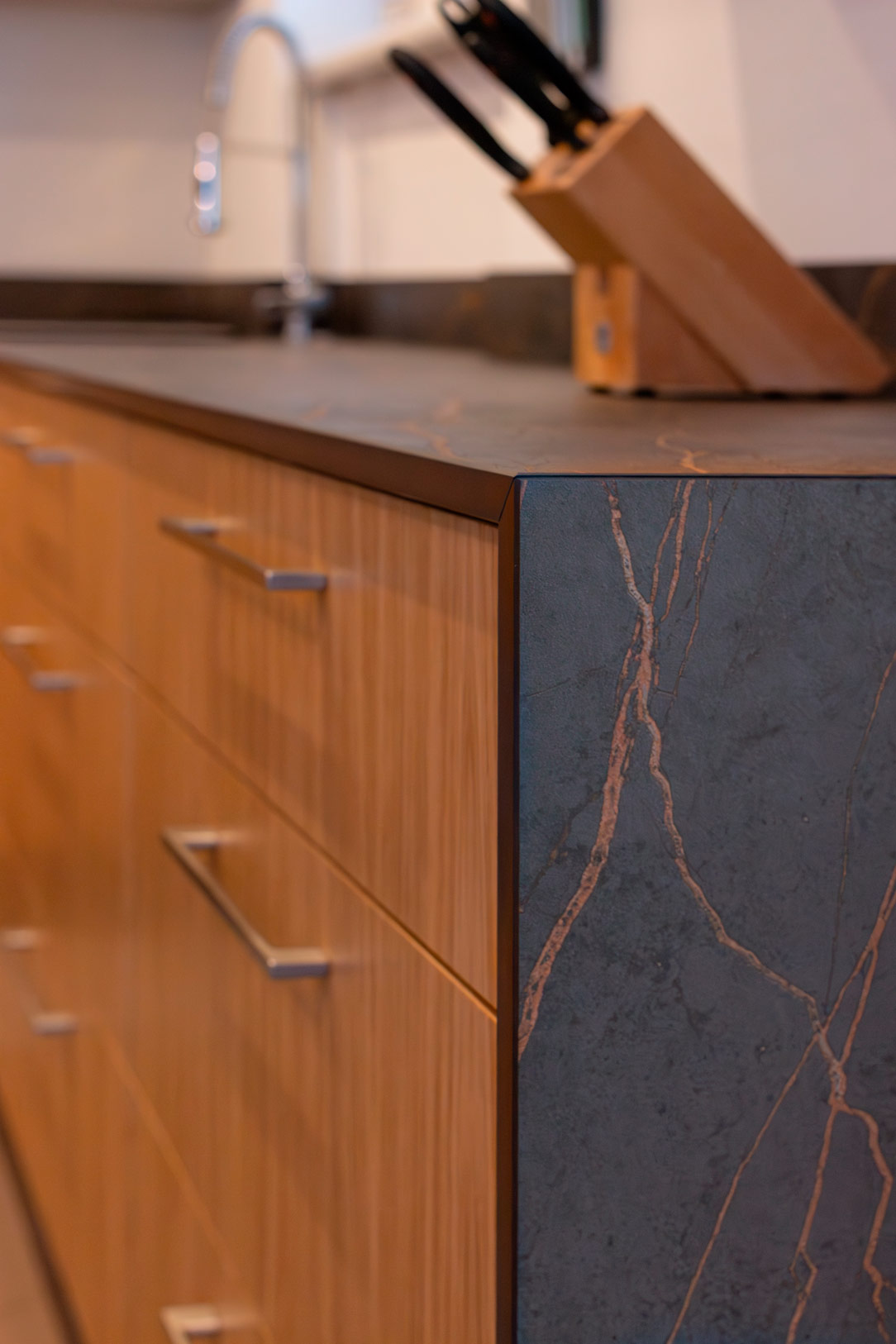
Dekton from the Cosentino group, is one of the most appreciated ceramic materials, not only for its aesthetics but also for the brand’s eco-sustainability efforts, aiming for carbon neutrality by 2030. Other brands like Neolith and Atlas offer top-quality solutions, while Lapitec, a compound made entirely of mineral stones and free from silicones, stands out for its innovation with Lapitec Chef, an induction cooktop integrated directly beneath the countertop.

One technical aspect to consider is the veining: in ceramic materials, the veins are not continuous through the entire thickness but are limited to the top surface. To address this, 45° joints are often used to create visual continuity along the edges.

The only ceramic material currently offering a true-through vein effect is Silestone, an agglomerate of quartz and crystalline silica.

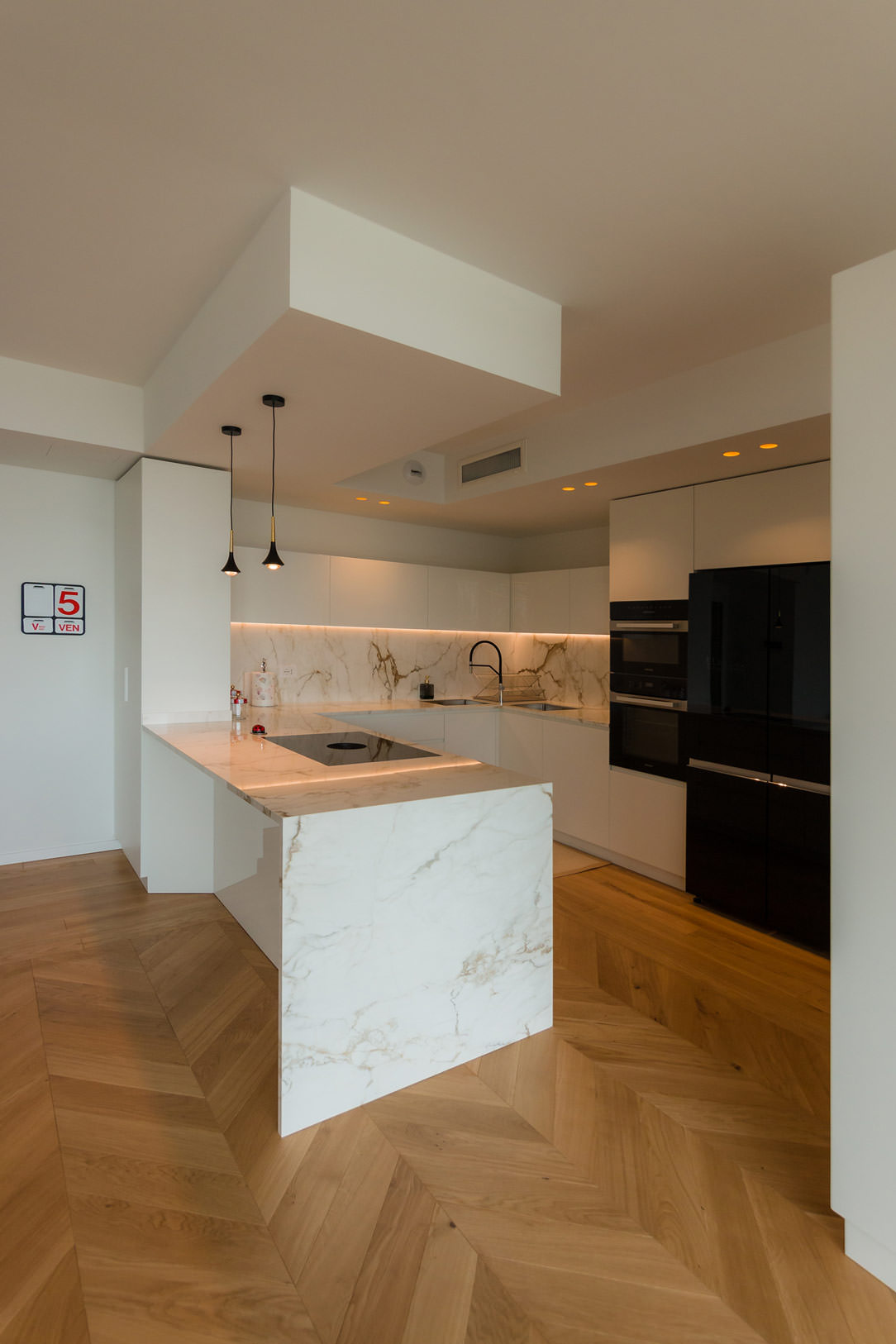
elegant kitchen in Calacatta
details top

Maintenance of Ceramic Materials

Ceramic materials are virtually indestructible. These materials are characterized by high resistance to scratches and stains, thanks to their low porosity and the absence of resins. They are highly resistant to thermal shock and, most notably, to heat, making them capable of withstanding contact with pots and pans just removed from the stove. Additionally, they are antibacterial, preventing the formation of germs and microbes. They are also extremely resistant to chemical agents and UV rays, which can often cause color alterations in materials over time.
lapitec kitchen

Where to Discover Ceramic Materials

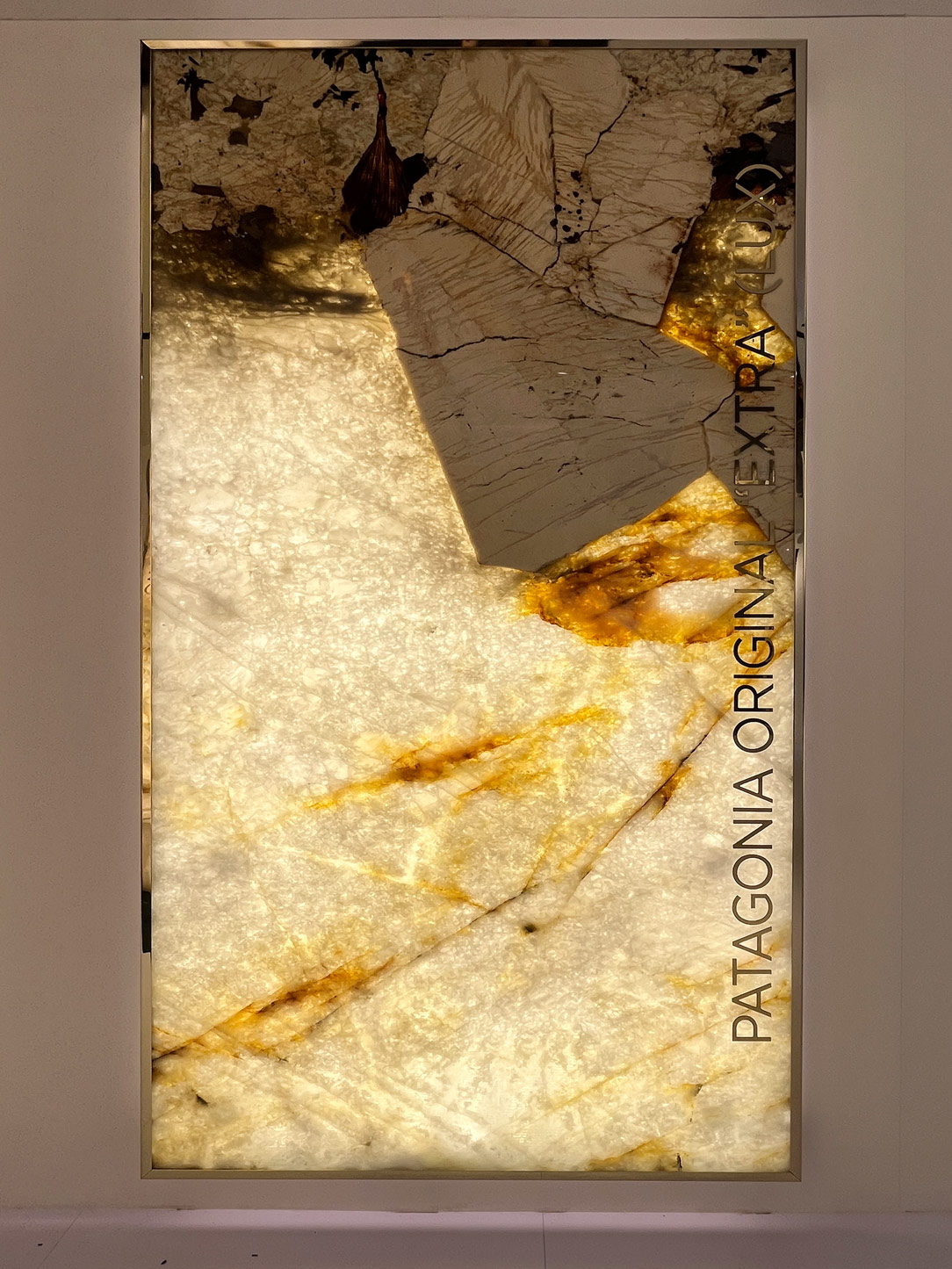
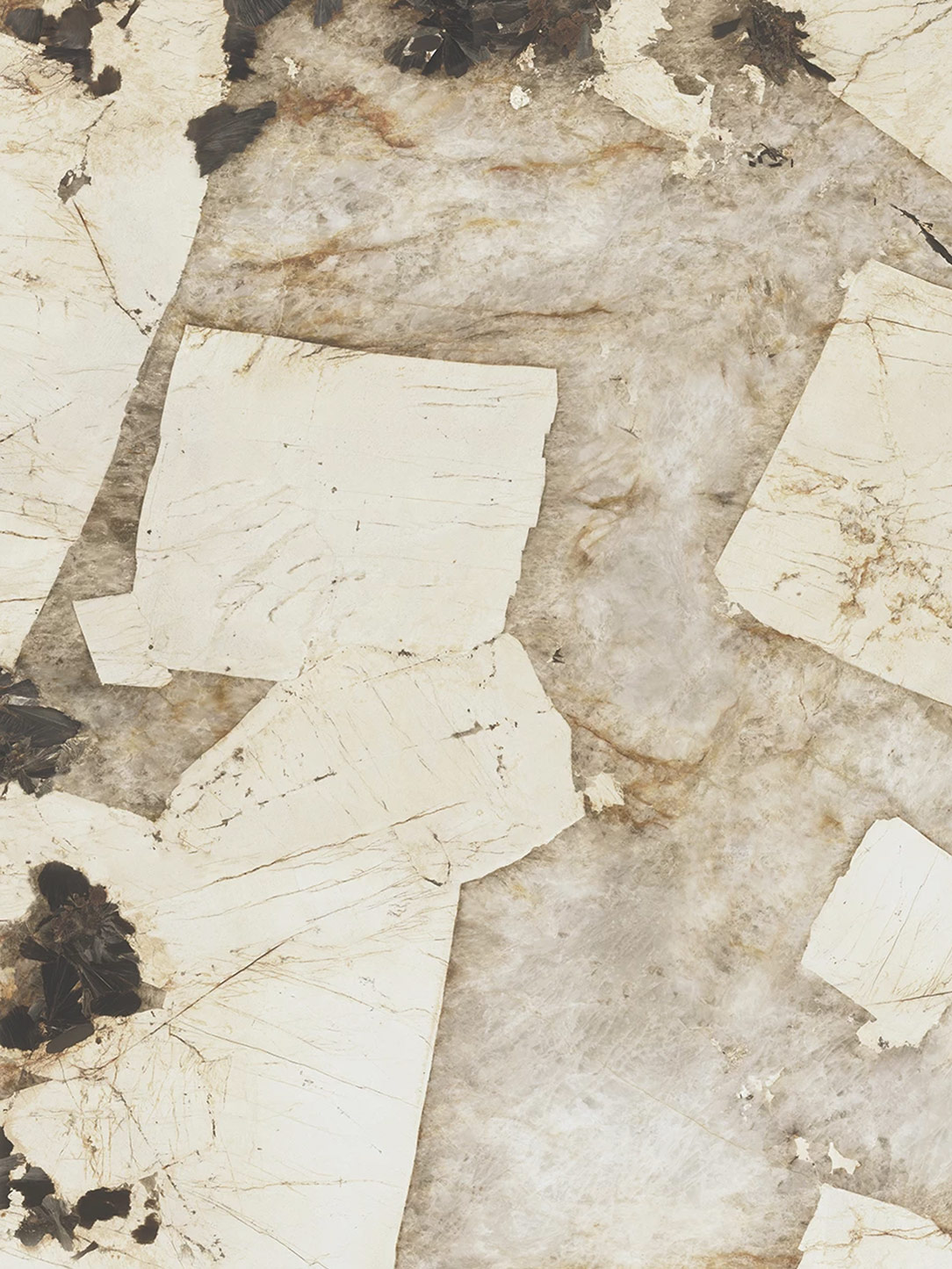
Cersaie in Bologna, held annually in September, is the international exhibition for ceramic tiles and architecture. It is the perfect place to discover the latest trends and most innovative solutions in the sector. Below, you can see a ceramic version of the popular marble from last year, created by Atlas. The texture definition is highly realistic, but the main difference is noticeable in the transparency. On the left, an original Patagonia slab by Antolini, backlit to emphasize its beauty, while on the right, Atlas’ reproduction, Gala Marvel, captures the high-resolution photograph of a Patagonia slab with remarkable detail.

patagonia antolini
Kitchen countertops: Patagonia.

Conclusion

The choice between natural materials and ceramic materials depends on personal needs and the desired style for the kitchen. Marble and natural stones offer a unique and timeless charm, thanks to their authenticity and irreplaceable beauty, but they require more careful maintenance in daily use. Ceramic materials, on the other hand, represent a modern and highly functional solution, offering durability and practicality without sacrificing elegance. With their realistic finishes and a wide range of textures available, they fit into any context, from contemporary designs to more traditional ones.

If you want to delve deeper into the materials used in the design world, don’t miss this article on furniture materials: a complete guide to MDF, veneer, solid wood, and melamine-faced panels!

Versatility in Study and Hospitality

Versatility in Study and Hospitality

In a world that demands increasingly flexible spaces, we reimagined the study of two friendly professors who often work from home, transforming it into a multifunctional room capable of welcoming both students and guests with ease.

The heart of this transformation lies in the long side bookshelf, an elegant composition that houses textbooks and novels, bringing both order and beauty to the space. At the center, a dedicated compartment for a large television becomes a didactic tool for interactive lessons and, at the same time, a source of entertainment for those staying in the room.

multifunctional studio

Study Mode

When the study comes to life, the space takes on a well-defined role. The desk, framed by a vertical bookshelf, becomes the focal point of the room. Positioned so that the student can sit directly across from the teacher, with the room unfolding in the background, it facilitates dialogue and learning.

study mode
study mode

Guest Mode

When the room hosts a guest, versatility takes center stage. The sofa transforms into a comfortable bed, while the desk, repositioned against the wall, disappears without disturbing the room’s harmony. Every movement flow is smooth and thoughtfully designed to ensure maximum comfort.

guest mode
guest mode

Balance Between Visible and Hidden

The bookshelf tells a story of balance between what is on display and what is concealed. On the open shelves, books that decorate and enrich the space find their place, while in the lower part, hidden behind doors and drawers, everything that shouldn’t distract such as files, documents, and electronic devices, is neatly stored. A difference in depth between the open and closed sections ensures greater storage capacity without overwhelming the overall aesthetic.

details drawers
details drawers
details anthracite

Colors and Atmosphere

Colors play a fundamental role in defining the space’s identity. The equipped shelves, with anthracite gray metallic uprights and white shelves, offer a neutral and sophisticated base. In contrast, the desk’s mustard-colored desktop adds a touch of vibrancy. This color not only catches the eye but stimulates creativity and concentration, making the space ideal for studying. The same yellow tone can be found on the wall behind the equipped bookshelf, enveloping the room with warmth and energy.

desk detail
details mustard shelf

In this way, the space becomes a haven for knowledge, a place of versatility and hospitality, ready to transform to meet every need.

bookshelf

The Art of Smartworking in an Equipped Wall with Poetic and Functional Design

The Art of Smartworking in an Equipped Wall with Poetic and Functional Design

In the heart of the modern home, where every corner is designed to combine aesthetics and functionality, the equipped wall by Officina Idea stands out as a poetic and innovative project that transforms the everyday experience of smartworking into a fluid one.

Equipped Wall

From Design to Realization

The initial renders created by Paolo of Officina Idea illustrated the project in great detail, including color schemes, providing a clear vision of how the unit should look. Thanks to this precise design foundation, we were able to realize the equipped wall as faithfully as possible.

Render Paolo
like Render Paolo

Organized Spaces for Every Need

Imagine a wall that, like a blank canvas, blends seamlessly with the surrounding environment, imparting a sense of order. This is not just a piece of furniture, but a true organizational system that embraces the needs of home working. The spaces have been divided so that one section is dedicated to storing useful materials, another is left open for easy access, and a third is designated for the desk.

front view equiped unit
olive green desk
detail hidden handle

Functionality in an Equipped Wall

The wall, extending up to the ceiling, is divided into carefully organized spaces. The upper section, featuring doors, is dedicated to storing files and books, neatly arranged on shelves designed to accommodate standard-sized containers. The lower section, with drawers and large drawers, holds stationery and equipment, keeping everything within reach. An open compartment is reserved for technology, with space for a printer and other mobile devices, while the desk serves as the central hub of creativity and productivity.

storing books
device in the open compartment
desk detail

The two lateral sections serve the living area, hosting kitchen supplies and, thanks to a hanging bar, some coats. Beneath the desk, an accessible rear compartment hides all the electrical connections and various devices, with switches and outlets available on both the desk surface and the back of the open element. In the desk niche, overhead LEDs provide targeted lighting for the work surface.

Here, we revisit our entire article dedicated to smartworking.

high LEDs
electrical connections
hanging bar

Chromatic Harmony and Style Details

The immaculate white that characterizes the entire structure provides the ideal backdrop for two distinctive elements: the olive green desk and the open compartment in stained oak. These touches of color not only enliven the space but also create a visual balance that lightens the environment while maintaining a refined elegance.

We also find olive green in this kitchen in the Orobic Prealps.

equipped wall open and close
desk detail
detail lamp and connection

Conclusions

In conclusion, the equipped wall by Officina Idea represents the perfect blend of form and function, combining aesthetics, practicality, and innovation in a project that makes smartworking not only more efficient but also more enjoyable. An ideal solution for those looking to transform their workspace into an oasis of tranquility and organization.

equipped wall smartworking